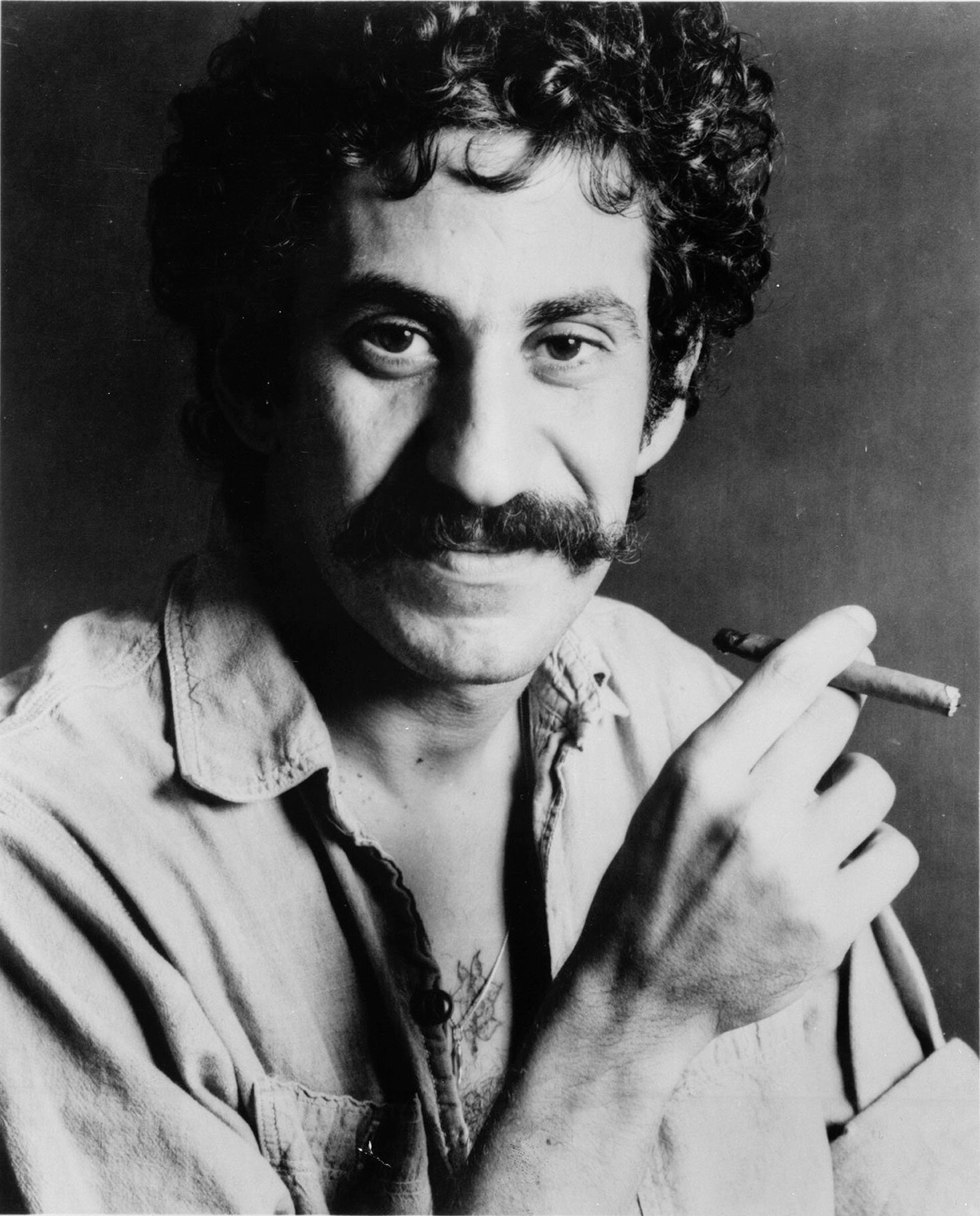
He had eighteen months of fame. That is all the world gave Jim Croce — a year and a half between obscurity and a pecan tree in Louisiana — and in that sliver of time he wrote some of the most beloved songs of the seventies. He was thirty years old when he died, one day before the release of the single that would define his legacy. Between 1966 and 1973 he had released five studio albums and a string of singles — and the world had barely begun to hear him. A week after the crash, his wife received a letter in which he promised her the rest of his life.
The South Philly Kid Who Needed Two Basic Trainings
James Joseph Croce was born on January 10, 1943, in South Philadelphia, to Italian-American parents, and grew up in the working-class neighborhoods outside the city. He attended Upper Darby High School, spent a year at Malvern Preparatory School, then headed to Villanova University in 1961, where he majored in psychology and German, sang in the Villanova Singers, ran the campus radio station, and formed a series of bands. He even interviewed his hero Mississippi John Hurt for the station and jammed with him — a moment that reminded the young singer what he really wanted to do with his life.
In 1966, a week after marrying his college sweetheart Ingrid Jacobson, Croce enlisted in the Army National Guard, hoping to avoid the draft and a trip to Vietnam. He served four months on active duty. Growing up in South Philly had left him with what he cheerfully called trouble with authority, and he had to go through basic training twice. He later joked that if there were ever a war in which America had to defend itself with mops, he would be well prepared.
It was during that service that he witnessed the scene that would become one of his greatest songs. Waiting in the rain at the Post Exchange, he watched lines of soldiers — sometimes two hundred deep — queue for the lone outdoor payphone bolted to the side of a building, raincoats pulled over their heads, each waiting to call home and find out if the Dear John letter he had received was true. The image lodged in him and never left.
A Duo, a Flop, and a Farmhouse Kitchen Table
After the service, Jim and Ingrid tried to make it as a duo, playing colleges, bars, and coffeehouses across the East and South. In 1969 they recorded an album, “Jim & Ingrid Croce,” for Capitol Records. It flopped. Broke and discouraged, they gave up touring and moved to a farm in rural Lyndell, Pennsylvania. Jim drove trucks, swung a hammer on construction crews, and played local bars at night. Ingrid baked bread, canned vegetables, and made pottery.
Then, in December 1970, Ingrid told him she was pregnant with their first child, Adrian James. Faced with another mouth to feed, Croce sat down at the farmhouse kitchen table and, in about ten days, wrote a staggering run of songs: “Time in a Bottle” — composed the very evening he learned Ingrid was pregnant, a tender meditation on wanting to freeze time for his wife and unborn child — along with “Operator,” “You Don’t Mess Around with Jim,” “New York’s Not My Home,” “Rapid Roy,” and “Photographs and Memories.” It remains one of the most astonishing bursts of songwriting in popular music history, and it happened because a truck driver from Philly needed to feed his family.
In 1972, producers Terry Cashman and Tommy West signed him to a three-record deal with ABC Records. His first album for the label, “You Don’t Mess Around with Jim,” arrived that spring, with his close friend and accompanist Maury Muehleisen — a shy kid from Trenton, New Jersey, whose delicate fingerpicking became Croce’s sonic signature — on guitar. The title track and “Operator (That’s Not the Way It Feels)” both became hits. Croce made his national television debut on “American Bandstand” on August 12, 1972, followed two days later by “The Tonight Show.” He co-hosted “The Midnight Special” in June 1973 and played London’s “Old Grey Whistle Test” that summer. He was, finally, a star.
The Tough Guy From the Guard
In July 1973, “Bad, Bad Leroy Brown” spent two weeks at number one on the Billboard Hot 100 — Croce’s first chart-topper. The song’s larger-than-life tough guy was inspired by a man Croce had known during his National Guard days, one of those characters a songwriter files away for years until the moment is right. “You Don’t Mess Around with Jim,” the album’s title track, had its own real-life seed: Croce had once been thrown out of a pool tournament in Upper Darby, tossed down a flight of stairs by a bouncer, and tucked the humiliation away until it became a song.
“Life and Times,” his second ABC album, arrived in early 1973. Then, that summer at the Hit Factory, Croce cut the songs for his third ABC record, “I Got a Name.” The title track came with a twist: unlike nearly everything else he sang, Croce hadn’t written it. It was the work of Charles Fox and Norman Gimbel — the team behind Roberta Flack’s “Killing Me Softly” — commissioned as the theme for the film “The Last American Hero,” starring Jeff Bridges as a moonshine-runner-turned-race-car-driver based on NASCAR legend Junior Johnson. Croce was hesitant about it. Cashman and West made him put down his acoustic guitar — “lose the crutch,” they told him — and sing it stone-cold solo. He cut it in two takes. There was an extra layer of ache in the session that no one in the room could have named: Croce’s own father had died just months before the release of “You Don’t Mess Around with Jim,” and here he was singing another man’s words about carrying a name like his daddy did. It would reach the top ten, and most listeners to this day assume he wrote it. He owned it that completely.
The Letter About Sixty Years
Success was devouring him. The “Life and Times” tour was a forty-five-date grind of southern colleges, and it had just been stretched by another month. Croce was desperately homesick for Ingrid and for A.J., whose second birthday was coming the following week. Before the show in Natchitoches, he called Ingrid from Louisiana and teased her about the local version of an Italian sandwich, which no Philadelphia boy could take seriously. He told her he loved her and A.J. He sounded worn down.
He had also mailed her a letter. In it, he laid out a plan for a second life. When he got home, everything would change: he would look after his health, go back to school for a master’s degree, pull back from public life — he called himself a future hermit — and quit music to write short stories and movie scripts. “We’re gonna have a life together, Ing, I promise,” he wrote. And he closed with the line people still repeat, half a century later: “Remember, it’s the first sixty years that count and I’ve got thirty to go.”
The letter arrived at the family’s home in San Diego about a week after he died.
Croce finished recording the album “I Got a Name” just one week before his death. While on his tours, he had grown increasingly homesick, and had decided to take a break from music and settle with his wife and infant son when the “Life and Times” tour ended.
The Pecan Tree at the End of the Runway
On the evening of September 20, 1973, Croce played Northwestern State University’s Prather Coliseum in Natchitoches, Louisiana. Two student reporters timed the set at barely half an hour — ten songs in forty-two minutes — and he closed, as always, with “Bad, Bad Leroy Brown.” The plan was to fly that night to Sherman, Texas, for a concert at Austin College the next day. The decision to fly out immediately was made late — the charter pilot, 57-year-old Robert N. Elliott, had already checked into his motel and had to make his way back to the airport.
Just after takeoff, the twin-engine Beechcraft E18S failed to gain enough altitude and clipped a pecan tree at the end of the runway. Everyone on board was killed: Jim Croce, thirty; Maury Muehleisen, twenty-four; comedian George Stevens, the tour’s warm-up act; manager and booking agent Kenneth Cortese; road manager Dennis Rast; and the pilot. The NTSB named the probable cause as the pilot’s failure to see the obstruction, citing physical impairment and fog-reduced vision — Elliott suffered from severe coronary artery disease and, remarkably, had run roughly three miles from his motel to the airport. A later analysis blamed a downwind takeoff into what investigators called a “black hole” of darkness, robbing the pilot of visual references.
The single “I Got a Name” went to radio the very next day.
The Number One He Never Heard
What happened next is one of the eeriest chart stories in music history. ABC released “Time in a Bottle” — the song Croce had written the night he learned he was going to be a father — as a posthumous single that November. On December 29, 1973, it reached number one on the Billboard Hot 100: his second American chart-topper, an achievement he did not live to witness. The album “I Got a Name” followed in December and climbed to number two. In 1990, he was inducted into the Songwriters Hall of Fame.
Ingrid Croce kept his legacy alive — in 2012 she published the memoir “I Got a Name: The Jim Croce Story,” sharing the letter and the phone call and everything in between — and their son A.J. Croce — who was two when his father died — grew up to become a respected musician in his own right, eventually recording his father’s songs himself, including “I Got a Name” for a national campaign. The boy Jim once sang about in a bottle had grown into the man carrying the name.
Jim Croce’s career lasted about eighteen months. He left behind three ABC albums, a handful of singles, and a letter promising thirty more years he never got. But listen to “Operator” — to a heartbroken man at a payphone who can’t quite bring himself to place the call — and you hear what those Dear John soldiers taught him back in 1966: that the smallest human moments, honestly observed, outlive us all. He couldn’t save time in a bottle. He did the next best thing. He saved it in songs.
Leave a Reply