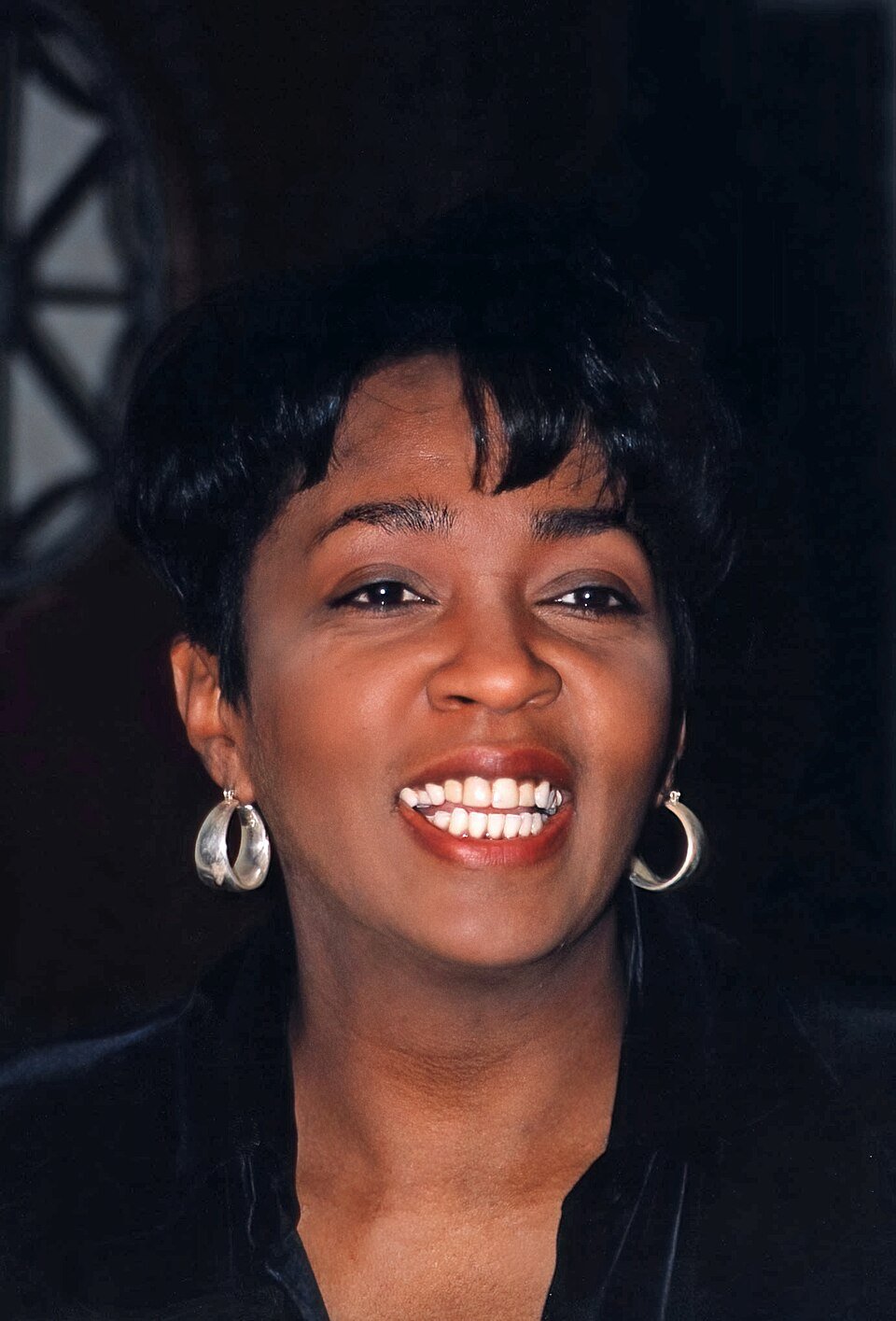
In March 2021, at sixty-three years old, Anita Baker did something almost no star of her stature had ever done: she asked her fans to stop listening to her music. Don’t stream it. Don’t buy it. Pretend, for a while, that the voice that defined quiet storm didn’t exist. It was the most radical move of a career built on radical moves — and it worked. Six months later, she owned her life’s work outright.
To understand why a woman would silence her own songs, you have to understand what Anita Baker had been fighting for since she was two years old: ownership. Of her voice, her choices, her children, and finally, her masters.
The Foster Child’s Vow
Anita Denise Baker was born on January 26, 1958, in Toledo, Ohio, to a sixteen-year-old mother struggling with substance abuse. When Anita was two, her mother abandoned her, leaving the toddler with a family friend, Mary Lewis, who became her foster mother. When Anita was twelve, Mary Lewis died — and an older sister in the household told her the truth: the woman she had believed was her mother was not.
Years later, speaking to Essence magazine, Baker described the wound with devastating simplicity: as a child, she believed her mother had abandoned her because she was not good enough. Not good, period. Her foster sister Lois Landry — the beautician Baker would call her “earth mother” — and Lois’s husband Walter raised her after that, giving her the stable, church-centered home that produced the singer.
That early story is usually told as tragedy. But it is also an origin story. A child who learns at twelve that nothing in her life is truly hers grows into a woman who is determined that everything will be. Baker’s entire career — the fights with labels, the refusal to be rushed, the long silences, the masters battle — can be read as a single lifelong vow: no one will ever take what’s mine again.
Control from the Start
The music industry met that vow early. Her first label experience was a legal nightmare: Beverly Glen, the tiny label that released her 1983 debut “The Songstress,” became what one profile called a legal morass for her. She learned, before she was famous, that contracts could be cages.
So when Elektra Records signed her in the mid-eighties, she came armed. She named herself executive producer of “Rapture.” She fought for creative control on every record, refused material she didn’t believe in, and would not be hurried into the studio to meet a marketing calendar. Where other stars ground out an album a year, she made the industry wait — four years between “Compositions” and “Rhythm of Love” — because the songs weren’t ready and she wasn’t bluffing. Some called it difficult. Her fans called it quality control. The records speak for themselves.
In 2001, she went to war again, filing a lawsuit against Zomba Recording and its Dreamhire division over alleged damage to her recordings caused by a hired 24-track tape machine. The defective equipment had made her original tracks unsalvageable; she had to start an entire album over from scratch — months of work, gone to a faulty machine. Most artists would have swallowed the loss. Baker sued. It was never just about the money. It was about the principle she had carried since she was twelve: what I make is mine.
Marriage, Motherhood, and Walking Away
The same steel ran through her personal life. She married Walter Bridgforth Jr. on Christmas Eve, 1988 — the man to whom she sang “Giving You the Best That I Got,” betting everything on a wedding ring. The marriage ended in divorce in 2007. But her devotion to their two sons, born in 1993 and 1994, never wavered. She famously scheduled her touring around their school calendars, playing summers and weekends — the world’s most glamorous substitute teacher.
And at the very top, she did the unthinkable: she stopped. After the “Rhythm of Love” tour ended in the mid-nineties, she stepped away for the better part of a decade to raise her boys, determined that her children would not know the abandonment she had known. The industry called it a hiatus. It was really a woman keeping a promise to herself. She returned in 2004 with “My Everything,” which debuted at number four on the pop chart — proof that the audience had waited, patiently, for the voice to come home.
The Masters Fight
Which brings us to March 2021. Baker took to Twitter with an extraordinary request: she asked her supporters not to buy or listen to her songs on digital platforms. Her reasoning was simple and devastating. She had outlived all her recording contracts, she said — and under the 1976 Copyright Revision Act, ownership of master recordings reverts to artists thirty-five years after their initial release. When “Rapture” reached its thirty-five-year mark on March 20, 2021, she asked Warner Music Group — the successor to her Elektra contracts — to return the masters for “The Songstress” and “Rapture.” When the company initially balked, she went public.
Between March and September, she provided legal updates in short, punchy tweets. She revealed that negotiations with Warner Music Group had begun in May 2021 and that she was making progress. And then, on September 3, 2021, she published a photo of her catalog and announced that all her children were coming home. Her word for the moment: “STREAM ON.”
It was a complete victory. Her first five Elektra albums — the records that made her a legend — were hers again, available through streaming and stores under a new deal with Rhino Records. She had done what few artists of her generation managed: she had taken back her life’s work from one of the biggest music companies on earth, armed with nothing but a statute, a Twitter account, and absolute determination.
She was not alone in the fight, and she knew it. Ownership of masters had become the defining business battle in music — Taylor Swift’s decision to re-record her entire catalog after her own masters dispute had made the issue front-page news. But where Swift’s solution was to remake her songs from scratch, Baker’s was to reclaim the originals themselves: the actual tapes, the actual performances, the voice exactly as it sounded in the room. Legal scholars noted the elegance of her approach. She wasn’t asking for sympathy; she was exercising a right Congress had written into law in 1976, waiting thirty-five years with the patience of a woman who had waited for everything else in her life, and then collecting what was hers. It was, in every sense, the most Anita Baker victory imaginable: quiet, methodical, and total.
The Sound-Quality Crusade
The masters fight wasn’t only about money or legal principle. Baker was furious about something more intimate: the quality of the music itself. She told fans that the recordings currently available lacked the original instrumentation, that the songs had been sped up, and that the vinyl being sold wasn’t pressed from analog masters but from re-processed digital copies. Her life’s work was being sold back to the world in degraded form, and she couldn’t stand it.
This is the detail that tells you who Anita Baker is. Most masters battles are about royalties. Hers was also about fidelity — about the idea that a song is a sacred object and deserves to be heard the way it was made. The perfectionist who once labored over a single vocal phrase until it sat exactly right was never going to accept sped-up, re-processed versions of her legacy. Owning the masters meant she could protect the sound, not just the revenue.
An Unlikely Ally
Every great battle story needs an unexpected hero, and Baker’s had one: Chance the Rapper. The Chicago rapper, famous for his fierce advocacy of artist independence — from 2012 to 2019, he made it nearly impossible for publishers and labels to get him to sign anything — lent his experience to Baker’s cause. The exact details of his role were never disclosed, but Baker made sure the world knew he mattered.
On May 29, 2022, during her Las Vegas residency at the Venetian Theatre — she had come out of retirement for the residency — Baker spotted him in the crowd and stopped the show. “Would you guys say hello to a friend of mine by way of the music industry, by way of helping me get a hold and ownership of my master records,” she told the audience. “Mister Chance the Rapper is right there.” He stood and saluted her to loud applause. She later tweeted that his attendance had brought her to tears. The queen of quiet storm and the king of independence, saluting each other across forty years of music history.
The Return, On Her Terms
Victory agreed with her. The farewell tour she had announced in 2017 — twenty-five shows, ending in February 2019 — turned out not to be a farewell at all. The pandemic canceled its planned extension, but Baker kept going: the Vegas residency, and in 2023, “The Songstress Tour,” celebrating forty years since her debut — her first full tour in nearly three decades. Night after night, she stood alone on stage — just Anita, a microphone, and forty years of songs — and the voice was exactly where she had left it: unhurried, unmistakable, and utterly her own.
The honors caught up, too. Berklee College of Music awarded her an honorary doctorate — the Detroit nightclub singer, recognized by the most prestigious music school in America. In 2023, Rolling Stone ranked her among the greatest singers of all time. She had gone from answering phones in Detroit to accepting doctorates, from a foster child’s vow to a catalog she owned outright. And through it all, she never left Detroit behind — the city where she was raised, where she filmed the “Same Ole Love” video at Baker’s Keyboard Lounge on Livernois Street, where her roots run deeper than any contract ever could.
Anita Baker’s career has been one long lesson in a single subject: ownership. She owned her voice when labels wanted to shape it. She owned her time when the industry wanted to spend it. She owned her family when fame wanted to take it. And finally, at sixty-three, she owned her masters when the biggest company in the business wanted to keep them. The child who believed she wasn’t good enough grew into the woman who decided she was worth fighting for — every song, every time. She had spent forty years giving the world the best that she got. In the end, she made sure the world couldn’t take it away. Stream on.
Leave a Reply