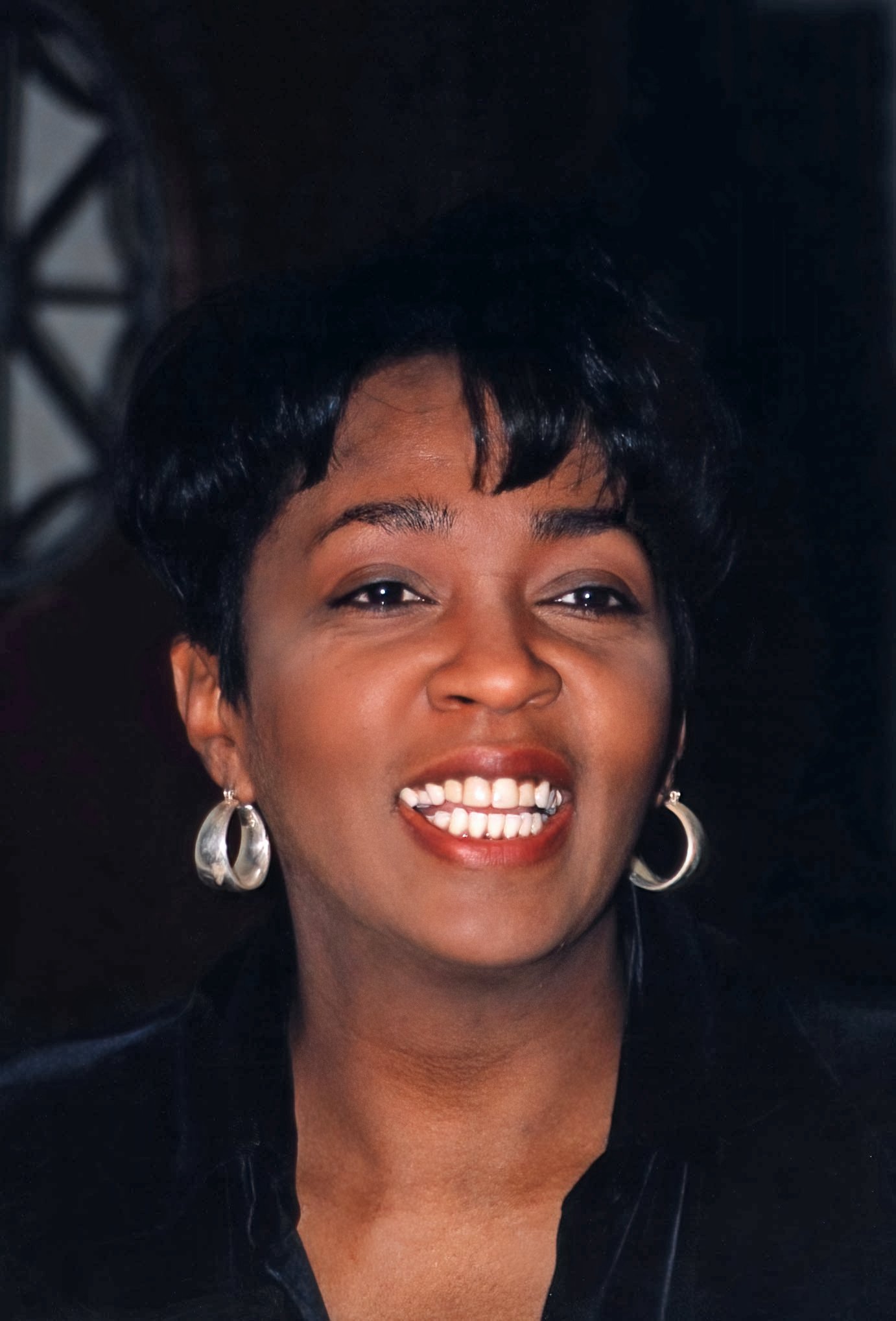
By the summer of 1990, Anita Baker had nothing left to prove and everything to lose. “Rapture” had sold eight million copies. “Giving You the Best That I Got” had gone triple platinum, hit number one on both the pop and R&B album charts, and won her Grammys in two consecutive years — twice for the same song. She was the undisputed queen of quiet storm, the contralto that made restraint feel like the most passionate thing in the world.
So what did she do? She tore up the formula. For her fourth album, she decided to write most of the songs herself, record her vocals live with the band playing around her, and lean harder into jazz than she ever had before. She called it “Compositions” — a title that was both a description and a declaration. This is the story of the bravest album Anita Baker ever made.
The Question
“When I started thinking about doing a new album the main thing I was concerned with was, ‘How do I do something different and yet maintain my style?’” Baker said at the time. It is the question every great artist faces at the peak, and most of them answer it by repeating themselves. Baker answered it by changing the way she recorded music.
The answer she came up with was radical in its simplicity: she would record most of her vocals live, with the rhythm section playing in the room — a technique more commonly used by singers in the sixties and early seventies, before the era of multilayered, painstakingly overdubbed studio perfection. For a singer famous for her meticulousness, famous for laboring over a single phrase until it sat exactly right, it was a leap into the unknown. No safety net. No fixing it in the mix. Just Anita, a microphone, and a band.
Live in the Studio
“I’m the kind of person who’s very methodical and focused,” Baker explained. “I like to have everything planned out when I’m recording. For me, writing songs as we were working on the album was something I’d never done before — it was risky.”
Risky barely covers it. Songs like “No One to Blame,” “Lonely,” and “Perfect Love Affair” were written while the album was being recorded — composed in the white heat of the sessions, with the clock running and the tape rolling. But the live-recording method gave her something she hadn’t expected. “Recording the way we did, with me singing while the musicians were playing, gave me a confidence I never knew I had,” she said. The perfectionist discovered that she could fly without the net. The woman who had built her reputation on control found freedom in letting go.
It was a vindication of everything her fans had always believed about her: that the voice was real, that the emotion wasn’t studio magic, that Anita Baker could stand in a room with great musicians and simply sing them into the ground.
The Living-Room Sessions
Before the studio, there was a living room. Baker worked closely with Vernon Fails — producer Michael J. Powell’s assistant, who had played on and written material for each of her two prior albums — on preproduction. “He gave me some piano lessons!” she laughed. “We did preproduction arrangements for the material right here in my living room.”
Picture it: one of the biggest stars in R&B, sitting at a piano in her own house, taking lessons, working out arrangements on the living-room floor. No entourage, no studio clock, just the work. It is the least diva-like image imaginable, and the most Anita Baker one. She had fought Elektra for creative control on every record; now she was using that control to go back to basics, to the unglamorous labor of making songs one chord at a time.
Fails would become one of her most important collaborators on the album, co-writing “Talk to Me,” “No One to Blame,” “More Than You Know,” and “Fairy Tales” with her. The living room was where the album’s confidence was born.
The Players
To record live, you need musicians who don’t make mistakes — or rather, musicians whose mistakes sound like inspiration. Baker and Powell assembled a band of absolute killers. On bass: Nathan East, the session giant whose groove anchored countless hits. On piano and keyboards: Greg Phillinganes, a veteran of Stevie Wonder’s and Michael Jackson’s bands. On drums: Steve Ferrone, late of the Average White Band, and Ricky Lawson. On percussion: Paulinho da Costa, the Brazilian master whose shaker and congas colored half the records of the eighties.
These were not hired hands; they were collaborators in the truest sense. When Baker sang live with this rhythm section, she was leaning on decades of collective experience — players who could follow her anywhere her voice wanted to go, who could catch her if she leapt. The result, as one contemporary review noted, was an album with greater vitality in its instrumentals and more freedom for Baker to fashion her impassioned vocal improvisations. The band didn’t just back her up. They set her free.
The Songs
“Compositions” consists almost entirely of songs Baker wrote or co-wrote — seven of the album’s nine tracks, the most personal songwriting statement of her career to that point. And she knew exactly which one should lead.
“Talk to Me,” co-written with Powell and Fails, was the first single — and Baker chose it herself. “Anita decided early on to make ‘Talk to Me’ the first single because it was one of the first things we did that I really liked,” the session histories note. It was a canny choice: a piano-led plea for emotional honesty, a woman asking her man to open up, built on the kind of grown-up romantic negotiation that was Baker’s signature subject. It reached number three on the R&B chart, number four on the adult contemporary chart, and number forty-four on the pop Hot 100.
“Fairy Tales,” another Baker-Fails-Powell collaboration, reached number eight on the R&B chart. “Soul Inspiration” — one of the album’s two outside songs, written by Terry Britten and Graham Lyle — showed she could still interpret others’ material with total command. And “Whatever It Takes,” co-written with the late Gerald Levert and Marc Gordon, brought a Detroit soul pedigree to the sessions. The choicest cuts, critics said, were the first four — “Talk to Me,” “Perfect Love Affair,” “Whatever It Takes,” and “Soul Inspiration” — but taken as a whole, the album proved what the title promised: Anita Baker was a composer now, not just a voice.
The Jazz in Her
What set “Compositions” apart from everything Baker had done before was its jazz heart. The album featured even stronger jazz inflections than her previous work — not just in the harmonies and the live-in-the-room feel, but in the way Baker used her voice. Contemporary critics reached for jazz language to describe her: a lustrously textured contralto that she uses like an instrument, carefully shaping the contours and shadings of each note, bending melodic fragments into fresh forms with absolute control and amazing fluidity.
This was the Sarah Vaughan and Ella Fitzgerald influence she had absorbed growing up in Detroit, finally given full rein. On “Rapture” and “Giving You the Best That I Got,” the jazz had been a seasoning; on “Compositions,” it was a main ingredient. The all-live instrumentation — no synthesizers standing in for a band, no programmed drums — gave the record the warmth of a Blue Note session. It was no accident that, fourteen years later, she would sign with Blue Note Records itself. “Compositions” was the album where Anita Baker stopped hinting that she was a jazz singer and simply became one.
The critics heard it. Phyl Garland, writing in Stereo Review, called Baker “a major artist with the sort of staying power that should bring us much musical joy in the Nineties,” praising an album that “epitomizes the qualities that have set her apart.” The key insight, Garland wrote, was that Baker doesn’t just sing — she embraces you with her voice. It was the perfect description of what the live recording method had captured: not a performance constructed in pieces, but a woman in a room, holding nothing back.
Platinum and the Grammy
By the standards of “Rapture” and “Giving You the Best That I Got,” “Compositions” was a commercial step down. It peaked at number five on the Billboard 200 and number three on the R&B albums chart — and “only” went platinum. In any other career, a platinum album with two top-ten R&B singles would be a triumph. In Baker’s, it was evidence that she had chosen art over commerce and paid a small price for it.
The industry, to its credit, recognized what she had done. “Compositions” won the Grammy for Best Female R&B Vocal Performance at the 1991 Grammy Awards — another trophy for a woman who collected them the way other people collected platinum plaques. The award felt like an acknowledgment not just of the singing, which was flawless as ever, but of the gamble: the live recording, the songwriting, the jazz inflections, the refusal to make “Rapture II.”
The Last Dance with Powell
“Compositions” would be the last album Baker made with Michael J. Powell, her collaborator since the Chapter 8 days, the producer who had helped sculpt the Anita Baker sound from the beginning. It was the end of an era — the close of the Elektra golden age that had produced three of the defining R&B albums of the eighties.
In the aftermath, Elektra secured the rights to her 1983 debut “The Songstress” and re-released it with new cover artwork in 1991. Baker herself took a breath — and then did something delightful. In 1993, she entered the studio with Frank Sinatra to record the jazz standard “Witchcraft” for his “Duets” album: the quiet-storm queen trading phrases with Ol’ Blue Eyes himself. It was a fitting coda to the “Compositions” era — the jazz singer in her, finally and fully acknowledged by the master.
Anita Baker never made another album quite like “Compositions.” She never needed to. It stands as the record where she proved that the voice everyone worshipped belonged to a complete artist — a writer, a producer, a bandleader, a woman who could walk into a room with the best musicians alive and sing live, no net, no tricks. She had asked herself how to do something different while maintaining her style. The answer was to trust herself completely. She never really stopped. Thirty-five years on, when the opening piano of “Talk to Me” plays, it still sounds like what it was: an artist betting everything on herself — and winning.
Leave a Reply