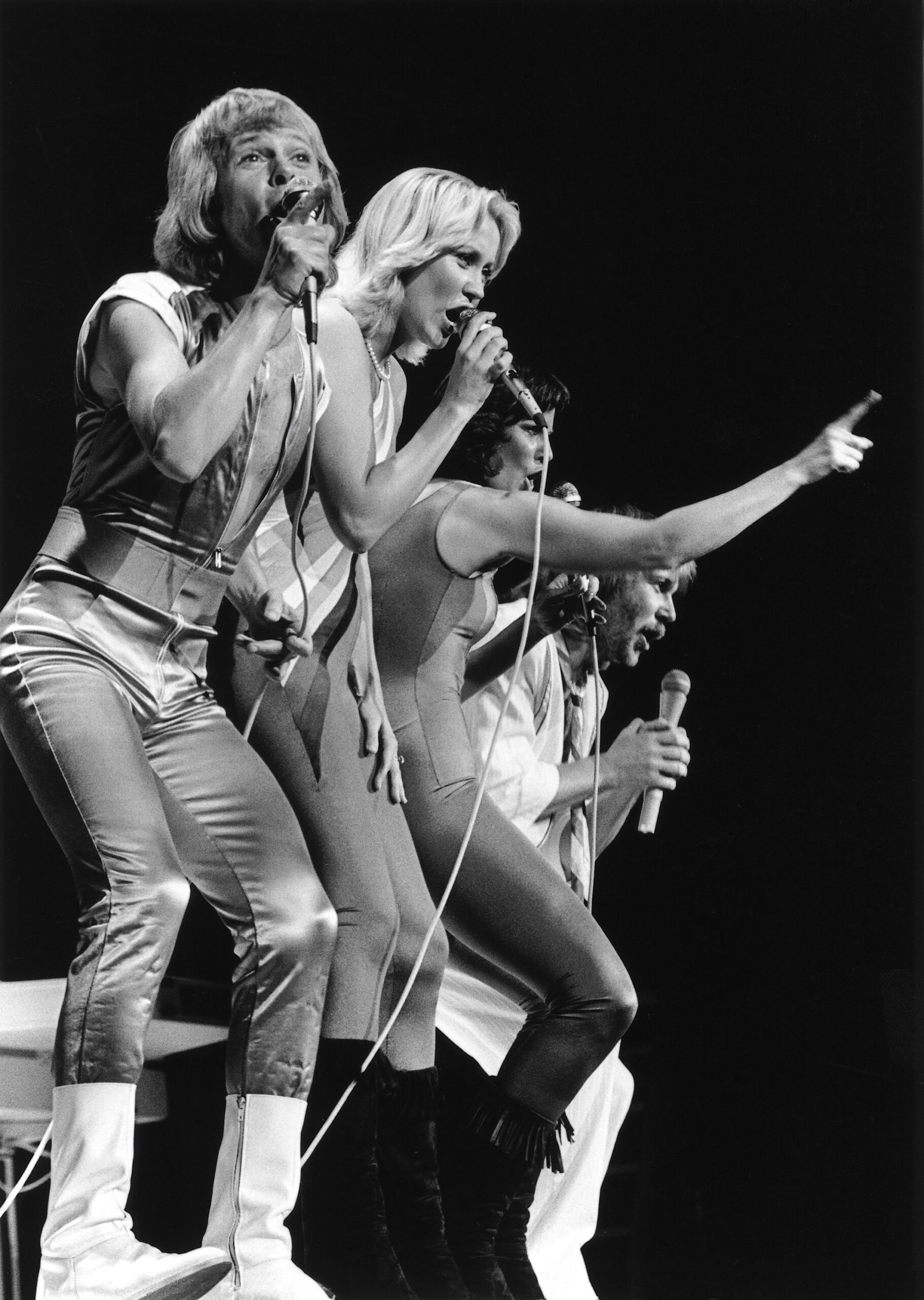
It is hard to imagine now, but the song that would one day give its name to a stage musical, two blockbuster films, and an entire pop-cultural empire was once a song ABBA did not quite want. In the spring of 1975, Benny Andersson and Björn Ulvaeus thought so little of Mamma Mia that they offered it to another group. The other group turned it down. ABBA recorded it themselves almost as an afterthought — the last track cut for their third album — never released it as a single in their own country, and then watched, astonished, as Australia dragged it to the top of the charts and refused to let go.
The story of Mamma Mia is really the story of how close the defining ABBA sound came to not existing at all — and how a marimba gathering dust in the corner of a Stockholm studio changed everything.
Written at Home, Named by the Manager
By early 1975, ABBA were famous but not yet secure. Waterloo had won them the Eurovision Song Contest the previous spring and given them a hit across Europe and a Top 10 single in America, but Eurovision winners were supposed to be one-hit wonders. The follow-ups had performed modestly, and the quartet — Benny, Björn, Agnetha Fältskog, and Anni-Frid Lyngstad — knew their third album would decide whether they were a phenomenon or a footnote.
The new songs came, as they always did, from Benny and Björn working side by side. Mamma Mia took shape at the home Björn shared with Agnetha, the two men building the tune the way they built all their early work: Benny at the piano, Björn with a guitar, hunting for a melody strong enough to carry words that did not exist yet. The title came from their manager and sometime lyricist Stig Anderson, who reached for the Italian exclamation — an expression of surprise, anguish, and exasperation all at once — and the whole song grew around it: a woman who has been cheated on, again, who knows she should leave, again, and who keeps going back anyway.
Musically, it was the fullest expression yet of what made ABBA different. Where most pop of the era was built on a single hook, Mamma Mia is a chain of them — verse, bridge, and chorus each carrying a melody most songwriters would have saved for a chorus of its own, stacked one after another in barely three and a half minutes.
Offered Away — and Refused
Here is the part that still makes ABBA fans shudder. Benny and Björn were not convinced the song was an ABBA record at all, and they offered it to Brotherhood of Man, the British pop group then being groomed for Eurovision. Brotherhood of Man passed. As they later explained, they left it for the next session because they wanted to record Save Your Kisses for Me instead — the song that would win them Eurovision in 1976. The rejection turned out to be one of the luckiest accidents in pop history, for everyone except Brotherhood of Man’s bank manager.
So ABBA kept the song, and on March 12, 1975, they went into Metronome Studio in Stockholm to record it as the final track for the album ABBA. The session band included drummer Roger Palm, bassist Mike Watson, and guitarists Janne Schaffer and Finn Sjöberg, with engineer Michael B. Tretow capturing the wall-of-sound density that was becoming the group’s trademark — layers of piano, guitars, and doubled vocals polished until the record gleamed.
The Marimba in the Corner
The most famous sound on the record — the ticking, clockwork figure that opens the song and stalks through it — was pure chance. According to biographer Carl Magnus Palm, there happened to be a marimba in the studio that day, and Benny spotted it and decided to try it. Its dry “tick tock” rhythm, played against the piano, gave the track its distinctive mechanical pulse, like a countdown running beneath the lyric’s emotional dithering. It was added at the last minute, but it became the song’s fingerprint: within two seconds, anyone anywhere in the world knows exactly what record is playing.
Agnetha and Frida shared the lead vocal, their two voices braided together in the bright, close harmony that no imitator has ever quite reproduced, pleading and defiant in the same breath. Strings were overdubbed a few days later, and the song was finished on March 15 — less than six weeks before the album reached the shops, with Mamma Mia placed, fatefully, as its opening track.
The Single Nobody Planned
When ABBA appeared in April 1975, nobody at Polar Music regarded Mamma Mia as a single. It was an album track, no more. The singles campaign ran through other songs, and in most of the world the record might have stayed buried at the front of an LP forever.
Australia had other ideas. ABBA’s music had caught fire there — I Do, I Do, I Do, I Do, I Do topped the Australian charts for three weeks — and the group’s promotional films were in heavy rotation on the television show Countdown, hosted by the tireless Molly Meldrum. Those films existed for a practical reason: four Swedes could not physically tour every market that wanted them, so director Lasse Hallström shot simple, bright performance clips for the album’s songs and shipped them around the world instead. It was a cheap substitute for touring that turned into an accidental revolution — decades before the music-video era, ABBA were becoming stars in countries they had never visited, purely on the strength of those clips. Of all of them, it was Mamma Mia that viewers responded to most. RCA, ABBA’s Australian label, asked Polar for permission to release it as a single. Polar refused, preferring to push SOS first. But Stig Anderson gave his agreement, and in August 1975 Mamma Mia came out in Australia.
It spent ten weeks at No. 1.
That was impossible to argue with. Epic Records in Britain, which had largely lost interest in ABBA after the Eurovision novelty wore off, suddenly paid attention again. SOS climbed to No. 6 in the UK, and Mamma Mia followed as a single there at the end of 1975. In January 1976 it reached No. 1 in Britain — ABBA’s first UK chart-topper since Waterloo — and stayed there for two weeks. It topped charts across Europe, and even in the United States, where ABBA would always struggle relative to their global fame, it reached No. 32. The album track that was never meant to be a single had become the record that re-established ABBA as a permanent act rather than a Eurovision memory.
The Name That Ate the World
Most hit songs fade into oldies rotation. Mamma Mia went the other way. When Benny and Björn’s catalogue was woven into a stage musical in the 1990s, the producers needed a title, and there was only ever one candidate. Mamma Mia! opened in London in 1999 and became one of the most successful musicals of all time, playing in dozens of countries and languages. The 2008 film adaptation, starring Meryl Streep, grossed over $600 million worldwide, and its soundtrack sent a new generation back to the original recordings. A sequel followed in 2018. The song itself opened and closed the show — the refused, nearly-given-away album track now serving as the flagship of a multi-billion-dollar entertainment franchise.
There is a final irony in the chronology. Benny and Björn offered Mamma Mia away because they could not hear what it was. Brotherhood of Man turned it down because they could not hear it either. It took television viewers on the other side of the planet, watching a promotional clip between other acts on a Sunday-evening pop show, to recognize instantly what the professionals had missed. Sometimes the people are simply right, and the ticking marimba keeps the time while history catches up.
Leave a Reply