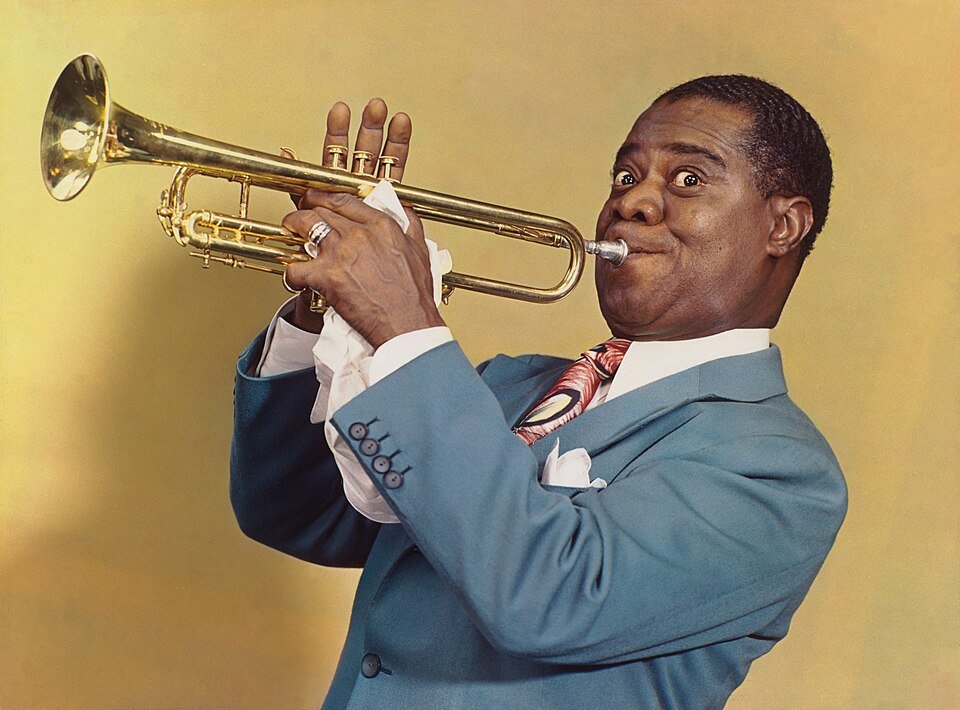
On December 3, 1963, Louis Armstrong walked into a New York recording studio for the first time in about two years. He was sixty-two years old, the most beloved entertainer jazz had ever produced, and he had come to do somebody a favour. His manager, Joe Glaser, had connections to a new Broadway musical that had not yet opened, and the show’s publisher needed a demonstration record of its title song to help sell the production. Armstrong cut the song in a single session, sang his own name into the lyric — “Hello, Dolly, this is Louis, Dolly” — and went back to the road, promptly forgetting all about it. Five months later that throwaway demo ended the Beatles’ fourteen-week stranglehold on the American charts, made Armstrong the oldest artist ever to top the Hot 100, and became the biggest hit of his life.
No one involved expected any of it — least of all the singer, who had to relearn the song from scratch when his own audiences started demanding it.
A Favour for the Manager
The song was written by Jerry Herman, a young composer-lyricist building a Broadway career, for a musical adapted from Thornton Wilder’s play The Matchmaker. Hello, Dolly! — the story of widowed matchmaker Dolly Levi engineering her own romance in 1890s New York — was in rehearsal under producer David Merrick, with Carol Channing in the title role. Its title number is a homecoming: Dolly returns to the Harmonia Gardens restaurant, where the waiters greet her with a swelling chorus of welcome. It is a showstopper by design, built to bring a theatre to its feet.
Armstrong was an inspired and unlikely choice to demonstrate it. Glaser agreed to the session as a goodwill gesture toward the show’s people, and Armstrong — who had not seen the show and had no particular attachment to the song — treated it as a professional courtesy, one more date in a touring life that had recently kept him too busy, and too in demand on stage, for studio work. With producer Michael Kapp overseeing and his touring band, the All Stars, around him at Columbia’s 30th Street studio, he gave the tune the full treatment anyway: the gravel voice grinning through the lyric, the trumpet answering his own phrases, and that improvised self-introduction — this is Louis, Dolly — that turned a theatrical number into a personal greeting. It was meant to be heard by a handful of Broadway insiders. Kapp Records, scenting something more, decided otherwise.
A Demo Escapes
The musical opened on Broadway on January 16, 1964, and was an immediate sensation. The same month, Kapp released Armstrong’s demo as a commercial single, backed with A Lot of Livin’ to Do. It entered the Billboard Hot 100 in mid-February and began a slow, stately climb unlike anything else on the chart that spring — because everything else on the chart that spring was the Beatles. The group had arrived in America in a blaze of publicity, performed for a record television audience on The Ed Sullivan Show, and proceeded to occupy the number one position for fourteen consecutive weeks: seven with I Want to Hold Your Hand, two with She Loves You, five with Can’t Buy Me Love. At one point that April they held the entire top five. The British Invasion was not a trend; it was an occupation.
Armstrong’s record simply kept rising through it — into the top fifteen by March, gathering the kind of momentum that no marketing plan manufactures. The difference between his record and the invasion around it was generational and total: a sixty-two-year-old Black trumpeter from New Orleans singing a Broadway show tune in Dixieland style, in a season supposedly owned by four young Englishmen with guitars. Radio programmers discovered that audiences did not experience it as nostalgia. They experienced it as joy — the one commodity Armstrong had been manufacturing for forty years.
The Song He Had to Relearn
The most Armstrong-like part of the story is what happened on tour. Having recorded the song once, as a favour, and discarded it from his mind, he began encountering audiences who shouted for it. His bassist Arvell Shaw later recalled that Armstrong barely remembered the tune at all: the band had to work it up properly so their leader could perform his own hit. There is something perfectly characteristic in that — the supreme professional who had given a publisher’s demo his absolute best in a single afternoon, and then, having no more use for it, let it go entirely.
Television closed the sale. Armstrong performed the song for national audiences that spring — including an impromptu rendition on the panel show What’s My Line? and a full-dress performance on The Hollywood Palace — and each appearance sent the single higher. By now it was his show-closing reality: whatever else happened in a Louis Armstrong concert in 1964, it ended with the waiters’ greeting from a show he had never needed to see.
May 9, 1964: The Old Man and the Beatles
On May 9, 1964, Hello, Dolly! reached number one on the Billboard Hot 100, ending the Beatles’ fourteen-week run and making Armstrong, at sixty-two, the oldest artist ever to top the chart. The record he set would stand for nearly sixty years, until Brenda Lee’s Rockin’ Around the Christmas Tree finally reached the top in December 2023 with its singer aged seventy-eight; Armstrong remains the oldest man ever to hold the honour. The single also spent nine weeks atop Billboard’s adult contemporary chart, finished as the magazine’s number three song of the entire year — behind only two of the Beatles records it had interrupted — and became the best-selling single of Armstrong’s six-decade career. The album built around it, also titled Hello, Dolly!, went gold and reached number one on the album chart, an almost absurd commercial peak for a jazz musician of his vintage in the year of Beatlemania.
The honours followed the sales. At the 1965 Grammy Awards, the song won Song of the Year for Jerry Herman, and Armstrong himself took home Best Vocal Performance, Male. The recording was inducted into the Grammy Hall of Fame in 2001. Even the year’s politics bent toward the tune: Lyndon Johnson’s re-election campaign adopted a rewritten version, Hello, Lyndon!, which Carol Channing performed at the Democratic National Convention. A copyright lawsuit from composer Mack David, who claimed the song’s opening bars echoed his 1948 tune Sunflower, briefly threatened the planned film version; Herman, protesting that he had never heard the earlier song, settled rather than endanger the movie. The demo that nobody was supposed to hear had become valuable enough to litigate over.
Hello, Louis
Armstrong kept the song at the centre of his act for the rest of his life — seven more years of touring in which the gravel-voiced greeting that bore his own name became his public signature, as inseparable from him as the handkerchief and the grin. In 1969 he stepped into the film of Hello, Dolly! itself, appearing as the orchestra leader and performing the title song alongside Barbra Streisand: the favour returned, on screen, with the man who had demonstrated the song now standing inside the story he had helped to sell. He died in July 1971, at home in Corona, Queens, still a working bandleader.
The achievement is worth pausing over. Armstrong had already changed music once, in the 1920s, when his Hot Five and Hot Seven records reinvented what a soloist could be. Almost nobody gets a second revolution — and his, in 1964, was in its way as improbable as the first: proof, delivered at the exact moment pop music was supposedly being handed to the young, that a voice carrying forty years of New Orleans, Chicago and the road could still stop the future in its tracks for a week and say hello. The Beatles resumed their reign soon enough, as they were always going to. But for the rest of his life, and for long after it, whenever Louis Armstrong walked onto a stage anywhere in the world, there was only one way for the evening to begin — and he had recorded it in an afternoon, as a favour, and forgotten it by dinner.
Leave a Reply