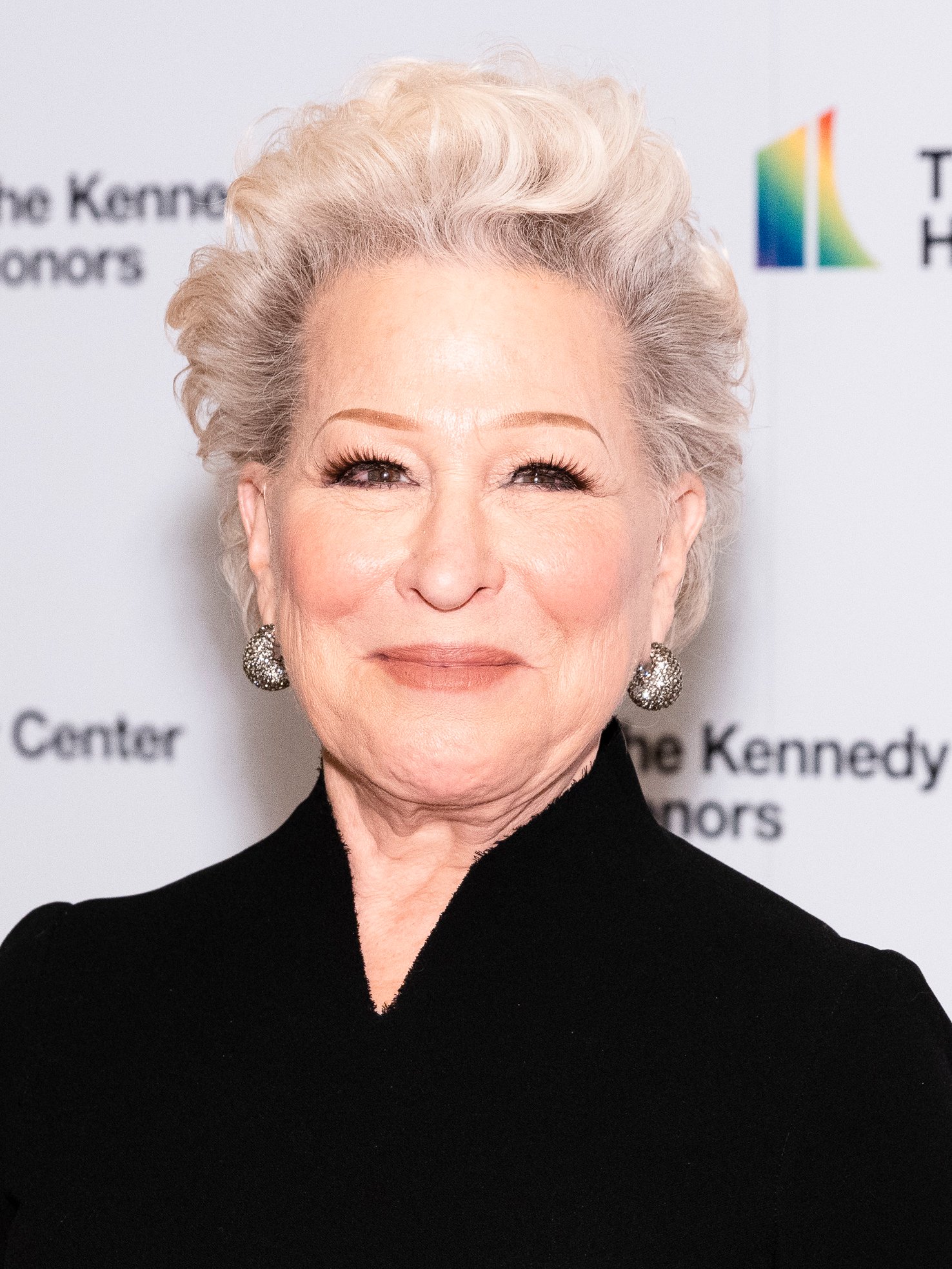
Every generation gets one song that becomes the official music of gratitude — played at graduations, retirements, weddings, and funerals, dedicated to the quiet people who hold up the loud ones. For the last thirty-five years, that song has been Wind Beneath My Wings, and it belongs, immovably, to Bette Midler. Yet the song was seven years old and had been recorded by a parade of other singers before Midler touched it — and Midler herself thought it was too sentimental to sing. She had to be threatened into the studio by one of her oldest friends. What she called her “failure of imagination” became the biggest hit of her career.
A Poem on a Legal Pad
The song began, unusually, with its title. Larry Henley, a Nashville songwriter who had been the falsetto voice of the Newbeats’ 1964 hit Bread and Butter, had years earlier written a poem called “Wind Beneath My Wings” for his ex-wife. In 1982, Henley and his writing partner Jeff Silbar were preparing for a session in which they hoped to pitch songs to Bob Seger. Silbar, glancing at Henley’s legal pad, saw the title written there and stopped. Silbar had recently taken up flying lessons, and the phrase lit something in him. Apart from the title, nothing of the poem survives in the song: Henley wrote the lyrics, Silbar wrote the music, and together they produced a mid-tempo demo — pleasant, professional, and, as events would show, nowhere near finished revealing itself.
Because for years, Wind Beneath My Wings was the song everyone recorded and nobody could make a standard. The Australian singer Kamahl was the first to record it, in 1982, for an album project; his version went unreleased at the time. Roger Whittaker recorded it. Sheena Easton recorded it. Lou Rawls took it into the Adult Contemporary Top 10 in 1983. Gary Morris carried it to No. 4 on the country chart that same year and collected Song of the Year honours from both the Academy of Country Music and the Country Music Association. Gladys Knight & the Pips cut it under the title Hero. Perry Como recorded it. It was, by any measure, a successful copyright — and still it waited, because every one of those versions treated it as a handsome ballad, and the song was actually a scene from a film that hadn’t been made yet.
It is worth dwelling on how casually the song itself had been born. Silbar and Henley were not labouring over a future standard; they were two working Nashville writers trying to get a cut, and by Silbar’s account they wrote and demoed the song in about a day. Their demo was brighter and brisker than the ballad the world now knows — a mid-tempo tune with a beat to it. The transformation of that cheerful workshop product into a hymn of gratitude required two things the writers could not supply: the right story to attach it to, and a singer willing to slow it down until every word hurt. Both arrived six years later, in Hollywood.
“I’ll Never Speak to You Again”
The film was Beaches, Garry Marshall’s adaptation of Iris Rainer Dart’s novel about a lifelong friendship between two women: CC Bloom, a brassy, ambitious performer, and Hillary Whitney, the privileged friend who quietly sustains her. Midler played CC — in effect, played a version of herself — opposite Barbara Hershey. As the production assembled the songs Midler would perform, her longtime arranger and friend Marc Shaiman pressed a candidate on her. Shaiman had long admired Wind Beneath My Wings, and he understood before she did that the song was the film’s whole story in five minutes: the star, at the end, finally saying thank you to the friend who made the stardom possible.
Midler did not want it. “It was a country song at first,” she recalled years later, “and I didn’t want to sing it because I thought it was too sentimental.” Shaiman’s response has become the making-of legend of the record: “If you don’t sing this song, I’ll never speak to you again.” Midler relented — “So I said, ‘OK’” — and later judged herself more harshly than anyone else did: “As the years have gone by, I revised my opinion because I could see how moving it was. That was my failure of imagination.”
Arif Mardin Builds the Moment
In the studio, producer Arif Mardin — the Atlantic Records eminence who had shaped everyone from Aretha Franklin to the Bee Gees — made the crucial decision: he slowed the song down and stripped it back. Where the earlier versions had been mid-tempo country-pop, Mardin’s was a ballad that begins in near-whisper. Midler sings the opening verses with an almost conversational restraint, as if the words are costing her something, while piano and strings gather underneath; by the final choruses the arrangement has swelled to full orchestral size, and her voice opens with it. The performance works because it mirrors the lyric: gratitude that starts as embarrassment and ends as surrender.
Placed at the emotional climax of Beaches — as CC reckons with the loss of Hillary, the friend who stood in the cold and the wind so that she could fly — the song detonated. Audiences left cinemas in tears, and the soundtrack album became one of the best-selling of its year. The song was no longer a Nashville copyright looking for a home. It was the answer to a scene, and the scene was every friendship in which one person shines and the other holds the ladder.
No. 1, and Two Grammys
Released as a single in early 1989, Midler’s Wind Beneath My Wings climbed to No. 1 on the Billboard Hot 100 in June, spending one week at the top and also leading the Adult Contemporary chart. For Midler — whose recording career had peaked commercially with The Rose a decade earlier — it was a full-scale second act, powered entirely by a song she had nearly refused.
The industry’s verdict arrived in February 1990, at the 32nd Annual Grammy Awards, where the record achieved the rare double: Wind Beneath My Wings won Record of the Year for Midler’s performance and Song of the Year for Silbar and Henley, beating competition that included Billy Joel’s We Didn’t Start the Fire and Don Henley’s The End of the Innocence. The Nashville writers who had dashed off a demo for a Bob Seger session that never produced a Seger recording now owned the most honoured song in America. The Beaches soundtrack itself was certified triple platinum in the United States — an album carried, almost single-handedly, by a song its star had tried to turn down.
The Song That Belongs to Everyone
Since then, the song has passed into that small category of standards that seem less performed than inherited. It is sung at school graduations and military homecomings, at retirement dinners and memorial services; it has been voted among the most popular funeral songs in Britain; it remains the dedication of choice for anyone trying to thank the person who never stood in the spotlight. Its writers’ royalties reportedly transformed their lives — the legal pad title Henley had carried around for years turned out to be worth a fortune, once the right singer finally sang it.
And that, in the end, is the making of Wind Beneath My Wings: a chain of people refusing to let the song drop. A songwriter who kept a poem’s title. A partner who spotted it on a legal pad. A half-dozen singers who kept it alive through the 1980s. An arranger who threatened his best friend. And a star who thought it was too sentimental, sang it anyway, and discovered — in public, at the exact moment her character did — what it was actually about.
Leave a Reply