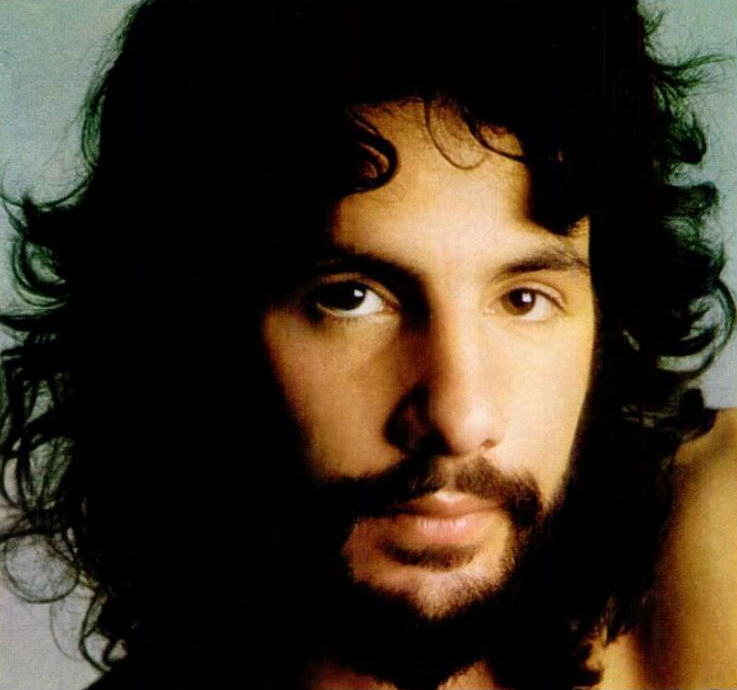
It is one of the gentlest break-up songs ever written, and one of the most argued over. Wild World sounds like a lullaby and lands like a warning: a young man watches someone he loves walk out into a world he insists is full of danger, and hopes, against the evidence of the lyric itself, that she will be careful. When Cat Stevens recorded it in the summer of 1970, he was rebuilding a career that illness had nearly ended, and falling out of a love affair that had given him some of his finest songs. The result was his first American hit, the track that carried Tea for the Tillerman onto FM radio — and, in one of pop’s stranger twists, a song another singer took into the charts before Stevens’s own version had finished its work.
The Pop Star Who Nearly Died
To understand the tenderness in Wild World, you have to know how close its writer came to not writing anything at all. Stevens, born Steven Georgiou in London, had been a teen pop idol in the mid-sixties, a dandy in ruffled shirts scoring hits with Matthew and Son and I’m Gonna Get Me a Gun for Deram Records. The fame was real and so was the misery. In 1969 he contracted tuberculosis, a disease that nearly killed him and put him in hospital and convalescence for the better part of a year.
He emerged a different artist. The pop machinery was discarded; in its place came an acoustic guitar, a beard, and songs about searching, leaving and letting go. Island Records in Britain and A&M in America signed the reborn Stevens, former Yardbirds bassist Paul Samwell-Smith took over production, and guitarist Alun Davies became his right hand. The comeback album, Mona Bone Jakon, arrived in April 1970 and opened with Lady D’Arbanville — a song that turned his girlfriend into a corpse in a love song while she was still very much alive. Her name was Patti D’Arbanville, an American model and actress, and the relationship that produced that strange, beautiful record was already coming apart as Stevens wrote its follow-up.
A Parting Song — But Whose Parting?
Stevens has given two accounts of Wild World, and they do not quite agree, which may be the most honest thing about it. In 2009, on The Chris Isaak Hour, he insisted the song was not about anyone specific: he was, he said, warning himself. He had done the fame career once before and nearly lost everything; now it was happening again, and the song was about “losing touch with home and reality — home especially.” A decade later, talking to Billboard in 2019, he said the opposite with a smile: “‘Wild World’ was really my parting song with my girlfriend Patti D’Arbanville. We’d had some great times together, but I started recording and she was doing her modeling and it just became like two different worlds.” He added that, having nearly fallen off the planet himself, he knew the dangers waiting out there — so the song was him talking to himself about his second career, and to her about hers. “We’d basically split at that point,” he said, “and that was the ode to our parting.”
Musically, the song came from older soil. Stevens told Mojo that its melody grew from “one of those chord sequences that’s very common in Spanish music. I turned it around and came up with that theme — which is a recurring theme in my work — which is to do with leaving, the sadness of leaving, and the anticipation of what lies beyond.” Leaving, sadness, anticipation: in three words, that is the whole architecture of Wild World, a song that never raises its voice because it does not need to.
Three Minutes in July
Wild World was recorded in July 1970 during the London sessions for Tea for the Tillerman, with Samwell-Smith producing. The arrangement is a lesson in restraint. Stevens plays classical and acoustic guitar and keyboards; Davies adds acoustic guitar and backing vocals; Harvey Burns plays drums, congas and tambourine; and John Ryan’s double bass gives the song its soft, walking heartbeat. Nothing is hurried and nothing is wasted. The famous opening plea arrives over a figure so simple a child could play it, and the chorus — a wish for the departing lover to make a lot of nice friends, shadowed instantly by the warning that there is a lot of bad out there — repeats like something the singer is trying to convince himself of.
That restraint was the sound of the new Island Records singer-songwriter era being invented in real time. Tea for the Tillerman, released in November 1970, would become the album that defined Stevens, and Wild World was its passport. The song has been credited with giving the record “enough kick” to win FM radio play in America, and Island’s founder Chris Blackwell later called the album the best the label had ever released.
The Hit He Produced for Somebody Else
Before Stevens’s own recording had run its course, the song escaped. Jamaican star Jimmy Cliff heard the demo at his publisher’s office and loved it instantly. As Cliff recalled to Mojo, the publisher told him Stevens had written it but did not much like it. A phone call followed: Stevens asked Cliff his key, played the guitar down the line, and insisted they record it together. Stevens produced the session and played the track; Cliff came in the next day, added backing voices alongside Doris Troy, and sang the lead with Stevens coaching him through the high notes. Cliff’s reggae-tinged version reached No. 8 on the UK Singles Chart — a remarkable fate for a song its author had supposedly shrugged at.
Back home, Stevens’s version was never even issued as a single in Britain, where Island preferred to sell albums rather than 45s. In America, A&M took the opposite bet, and the single climbed to No. 11 on the Billboard Hot 100 in 1971 — just missing the Top 10, but becoming Stevens’s first hit in the United States and the foundation of everything that followed: Peace Train, Morning Has Broken, and a run of albums that made him one of the defining voices of the decade.
The Argument That Never Ended
Success did not settle the song’s meaning; it sharpened the dispute. As early as 1971, critic Ellen Willis used Wild World in her famous gender-reversal test, arguing that its gentle, sympathetic warning was harder to imagine sung by a woman to a man than far more aggressive rock songs — a charge of quiet condescension that has trailed the record ever since. Stevens, who later converted to Islam, took the name Yusuf and left pop music for decades, seems to have felt the criticism land. His later re-recordings omit the word “girl” and the line about not being a bad girl; the 2020 remake on Tea for the Tillerman², cut for the album’s fiftieth anniversary, replaces “girl” with “baby” and “child” and drops one of the warning verses altogether — the older singer editing the younger one’s manners.
Meanwhile the song kept travelling without him. Maxi Priest took a reggae reading to No. 5 in Britain and No. 25 in America in 1988, consciously following Cliff’s trail. Mr. Big turned it into an acoustic rock ballad in 1993 and reached No. 27 on the Hot 100. At the Live Earth concerts on July 7, 2007, it was performed twice in one day — James Blunt singing it at Wembley while Yusuf himself sang it in Hamburg, a neat emblem of a song that belongs to two eras at once.
What endures is the doubleness Stevens built into it and spent fifty years alternately denying and confirming. Wild World is a love song and a lecture, a blessing and a guilt trip, addressed to a departing girlfriend and to a frightened young man who had already survived fame once and was not sure he would survive it again. He gave it away to Jimmy Cliff, shrugged at it, argued about it, rewrote it — and it outlasted every verdict, his own included. That is usually what happens with parting songs. They are the ones that never actually leave.
Leave a Reply