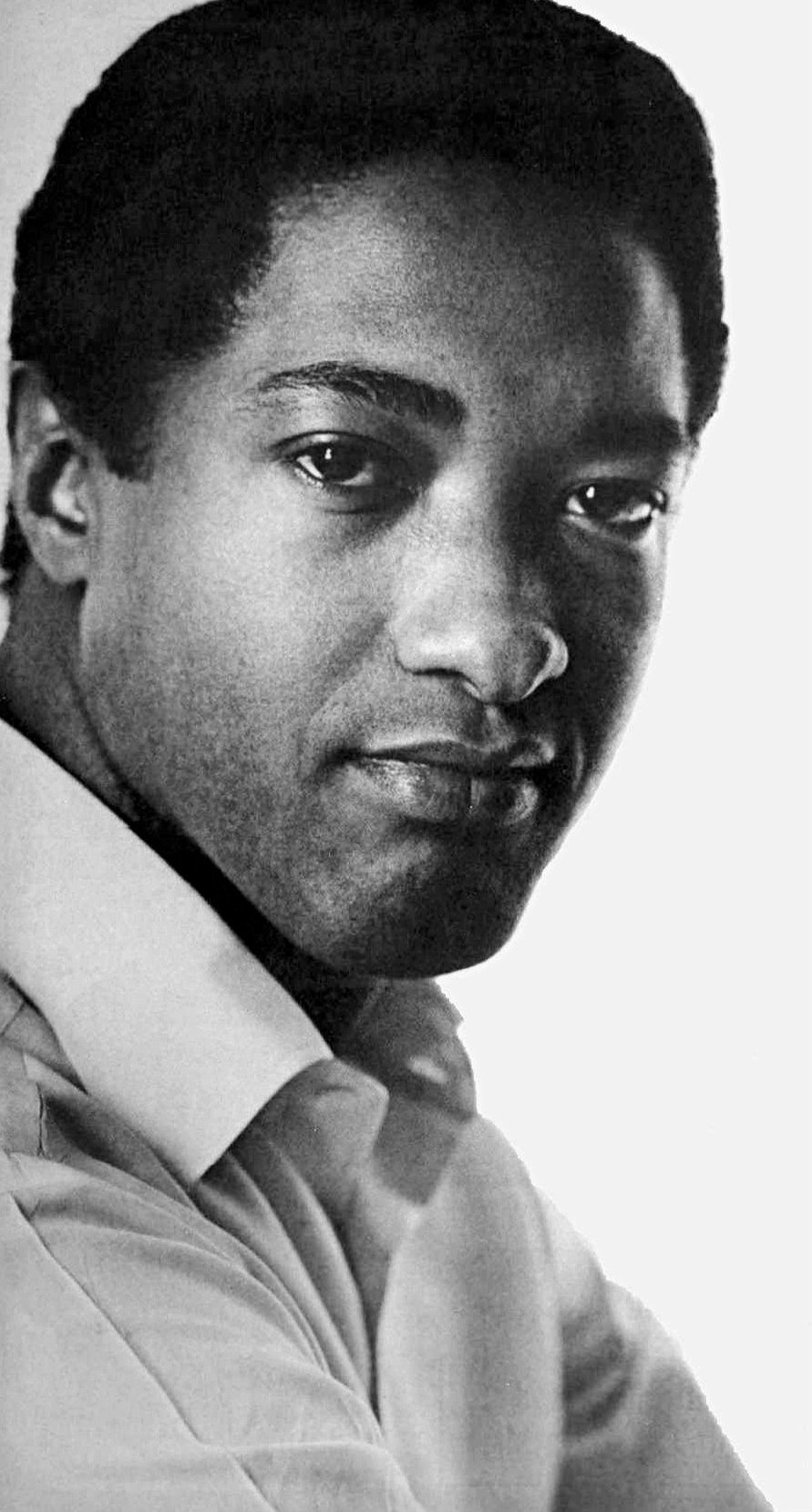
In the autumn of 1957, American radio performed a small act of rebellion. A brand-new record label issued its first single, a Sam Cooke record with the Gershwin standard Summertime on the side the label wanted played. Disc jockeys across the country took one listen, turned the disc over, and played the other side instead. The other side was You Send Me — two minutes and forty-one seconds of feather-light singing that Cooke had written himself, recorded almost as an afterthought to fill out a session. By December it sat at No. 1 on both the rhythm & blues chart and the pop chart, a double conquest almost unheard of for a Black singer in 1957, and the man who had spent the summer sleeping in his producer’s apartment was, in the words of one chronicler, a secular superstar overnight.
What makes the story remarkable is how close the song came to never existing at all — and how much Cooke risked by singing it. He was not an unknown. He was one of the biggest stars in gospel music, the golden voice of the Soul Stirrers, and gospel stardom in the 1950s came with a contract written in church ink: you did not sing the devil’s music. You Send Me was the devil’s music at its most seductive — a love song, sung to a woman, with nothing sacred about it except the voice.
Written in Winter, Credited to His Brother
Cooke wrote You Send Me early. In the winter of 1955, while still a gospel star, he made a private demo of it, accompanying himself on guitar alone. Even then, he was protecting himself and positioning the song carefully. When it was finally prepared for release, the writing credit went not to Sam Cooke but to L.C. Cook — his younger brother, who used the original family spelling of the surname. Cooke’s reasoning was coldly practical: he did not want his own publisher to profit from the song, and he half-hoped L.C. might record it himself. The most important composition of his life entered the world under somebody else’s name.
The song itself could hardly be simpler. Its lyric is little more than a lover’s delighted disbelief — you send me, honest you do — repeated and varied like a man turning a jewel in the light. There is no story, no twist, no drama. The drama was always intended to be in the voice: in the melisma Cooke had perfected in church, where a single syllable could be stretched into a run of notes, and in that famous, floating whoa-oh-oh that gospel audiences knew from his sermons in song. Cooke understood, earlier than almost anyone, that a pop record did not need to say much if the singing said everything.
The Gamble: A Gospel Star Goes Secular
To appreciate the risk, consider what Cooke was walking away from. As lead singer of the Soul Stirrers since 1951, he was a headline attraction on the gospel highway, worshipped by church audiences who regarded his voice as close to anointed. Gospel fans of the era did not merely disapprove when one of their own crossed over to rhythm & blues; they treated it as a fall. Singers who tried it could lose both audiences at once.
So Cooke tested the water in disguise. In December 1956, in New Orleans, he recorded his first secular sessions — including a first version of You Send Me — but the one single that emerged appeared under the transparent pseudonym “Dale Cook,” a fig leaf intended to keep his gospel reputation intact. His producer Bumps Blackwell, who had worked with him at Specialty Records, believed the voice could conquer the pop world, but both men knew the crossing had to be managed. When Blackwell parted ways with Specialty, the sessions came with him, and the plan became bolder: a new label, a proper Los Angeles recording, and Sam Cooke’s own name on the label. The surname on the record would even be adjusted — the family’s “Cook” gained a final “e,” and You Send Me would become the first single ever credited to “Sam Cooke.”
One June Afternoon in Hollywood
The definitive version was cut on June 1, 1957, at Radio Recorders in Hollywood. Blackwell produced; the arranger and conductor was René Hall, a superb guitarist and musical director who wrapped Cooke’s voice in the lightest of frames — soft strings, a gentle rhythm section, and space, always space, for the singer. The band was first-call Los Angeles: Earl Palmer, the New Orleans drummer who was quietly inventing rock and roll’s backbeat, played drums; Clifton White and Hall himself played guitar; Ted Brinson played bass. Behind Cooke, the Pied Pipers and other session singers supplied the pillowy backing harmonies.
Everything about the record is restraint. The tempo floats. The arrangement never once raises its voice. And at the centre, Cooke sings with a control so complete it can be mistaken for ease — this from a man who had learned his trade holding church congregations in the palm of his hand. Gospel technique is all over the record, in the ornamented turns of phrase and the testifying warmth, but it is aimed, for the first time in his career, at a sweetheart instead of a saviour. When the session produced both You Send Me and a version of Summertime, the label men made their choice for the A-side. They chose wrong.
The B-Side That Ate the A-Side
You Send Me was released on September 7, 1957, as the debut release of Keen Records, the new label founded by brothers John and Alex Siamas — with Summertime billed as the side to push. The disc jockeys’ revolt followed within weeks. Radio flipped the single, the song broke nationally in October, and by December it held No. 1 on the R&B chart and No. 1 on the Billboard Hot 100 for two weeks, with sales estimated at a million and a half copies. It was to remain the only pop No. 1 of Cooke’s career — not because he stopped having hits, but because he had set his standard impossibly high at the first attempt.
The industry’s old reflexes fired anyway. As was standard practice when a Black artist’s record showed pop potential, a cover version aimed at the white pop market was rushed out by Teresa Brewer. In an earlier era, the cover would have buried the original. This time the original won: Brewer’s version reached a respectable No. 8, but Cooke’s own record eclipsed it completely, a landmark moment in the long, slow collapse of the cover-version economy that had kept Black artists off the pop chart for a decade.
The Door It Opened
The consequences radiated outward for years. You Send Me demonstrated that a Black singer, singing in a style rooted in gospel, under his own name and with his own songwriting (whatever the label credit claimed), could top the American pop chart without sanding himself down. The template Cooke established — gospel feeling, pop polish, total vocal command — became the working definition of soul music. Aretha Franklin, herself a gospel singer who would make the same crossing, covered the song in 1968. The Manhattans took it back into the charts in 1985. The industry eventually ratified what the disc jockeys of 1957 had already decided: the song was inducted into the Grammy Hall of Fame in 1998, named by the Rock & Roll Hall of Fame among the most important recordings in the music’s history, and placed at No. 115 on Rolling Stone‘s list of the 500 greatest songs of all time.
Sam Cooke had spent a winter evening in 1955 singing a little love song into a tape recorder, alone with his guitar, and had then spent two years finding the courage — and the camouflage — to let the world hear it. The courage was justified in a single December. A gospel star had sung a love song under his own name, and American music had changed its mind about what was allowed.
Leave a Reply