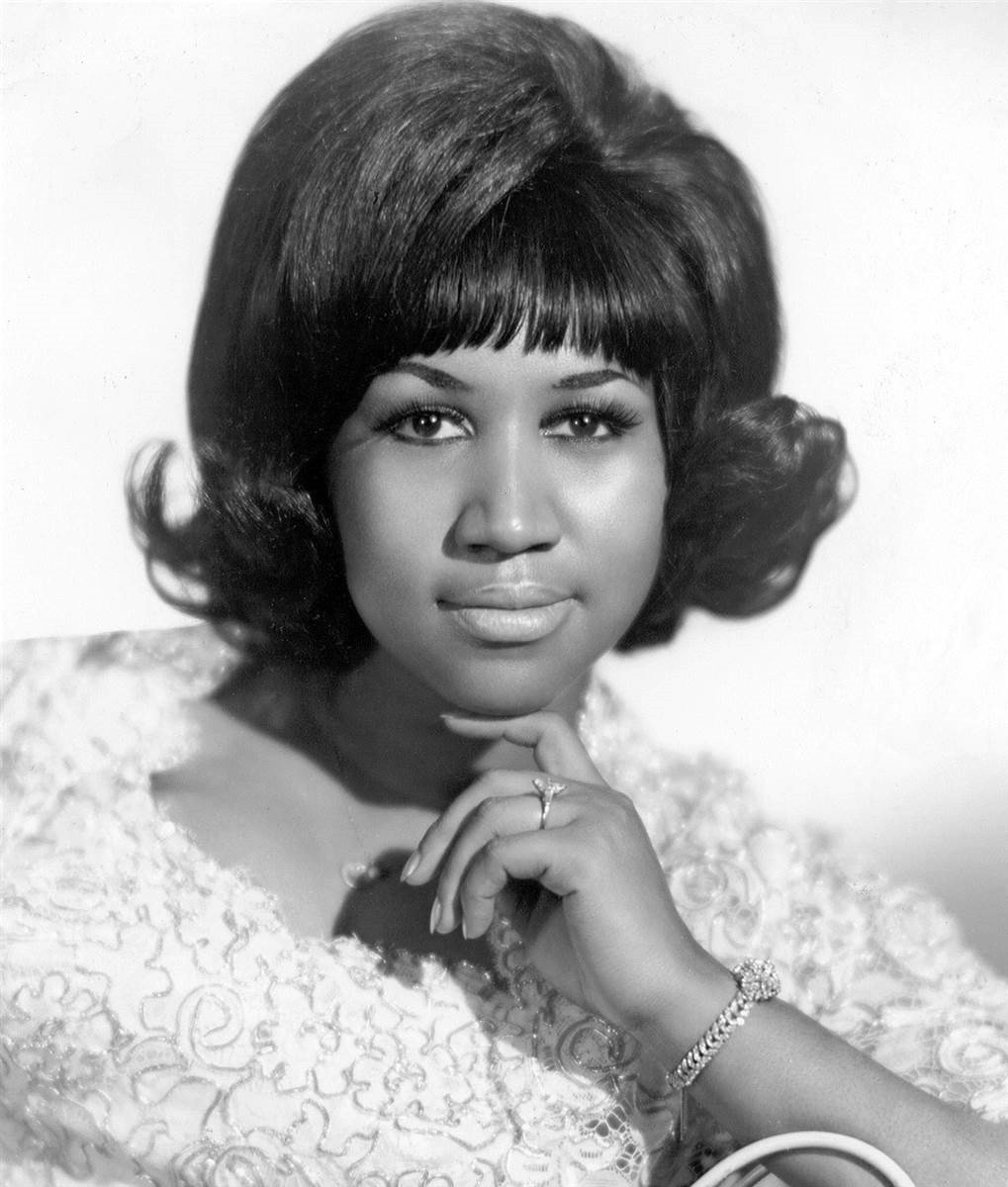
On the morning of 24 January 1967, a twenty-four-year-old singer with nine failed albums behind her walked into a small studio in Muscle Shoals, Alabama, sat down at a piano, and started to sing. By the end of that single day, Aretha Franklin had recorded the song that would turn her into the Queen of Soul — and the session around her had collapsed in accusations, a fistfight, and a brawl at a motel that ended the most consequential working relationship of her career before it had properly begun. I Never Loved a Man (The Way I Love You) was cut in a matter of hours, by musicians she had never met, in a town she would never record in again. It remains the foundation stone of everything she became.
Franklin arrived in Alabama as a talent everyone acknowledged and nobody had managed to sell. What happened at FAME Studios was not a gradual breakthrough. It was a detonation — musical, personal and professional — and the record that came out of it still sounds like one.
Six Years of Being Someone Else
Aretha Franklin had been famous in the wrong way for years. Signed to Columbia Records in 1960, the Detroit preacher’s daughter with the once-in-a-generation voice was steered toward jazz standards and polite pop — nine albums of what FAME’s founder Rick Hall would later call feckless, light material, arranged by other people to make her sound like somebody else. The records were respectable. They were also, commercially, a dead end. When her Columbia contract expired in 1966, Franklin was twenty-four, respected by musicians, and nowhere.
Jerry Wexler of Atlantic Records signed her in late 1966 with a simple theory: the problem was not the singer but the setting. Wexler had helped build Atlantic on rhythm and blues, and he believed Franklin’s voice belonged where it had been raised — in church, at a piano, in front of a hard Southern rhythm section. “They just told me to sit on the piano and sing,” Franklin recalled of his instructions. To get that sound, Wexler took her south, to the studio that had recently produced hits for Wilson Pickett and Percy Sledge: FAME Studios in Muscle Shoals.
One Afternoon in Muscle Shoals
The song waiting for her was by Ronnie Shannon, a young Detroit songwriter whose demo had reached Wexler. I Never Loved a Man (The Way I Love You) was a slow, waltzing blues — a woman confessing that the man who mistreats her is the man she cannot leave. It needed a groove, and the groove arrived by accident. As the band ran the song down, keyboard player Spooner Oldham began fooling with a riff on the Wurlitzer electric piano — a funky, circling blues figure that seemed to pace the floor of the song. As Hall remembered it, the moment Oldham hit that riff, everything about the track started coming together: Aretha’s own gospel piano answering his electric one, the two keyboards gluing the rhythm section into a single slow sway.
Around her sat the FAME house band — Roger Hawkins on drums, Tommy Cogbill on bass, Jimmy Johnson on rhythm guitar, Chips Moman on lead guitar, and a horn section that included David Hood on trombone and Charlie Chalmers on saxophone. They were white Southern session men; she was a Black gospel singer from Detroit who had never recorded with any of them. None of that survived the first take. Franklin leaned into the piano and sang the confession like testimony — “you’re a no good heartbreaker, you’re a liar and you’re a cheat” — and everyone in the room understood what they had. Wexler knew within the session that it was a hit. Hall, listening to the singer he had just met out-sing every act he had ever recorded, reached the same conclusion from the other side of the glass: he would describe her, simply, as the most talented artist he had ever worked with. By the end of the day, the group had also begun a second song, Do Right Woman, Do Right Man, written by Moman and Dan Penn, which would become the single’s B-side.

The Night It Fell Apart
Then the session detonated. Accounts differ in their details, as accounts of fistfights tend to, but the outline is consistent. Franklin’s husband and manager, Ted White, accused one of the horn players of making a pass at his wife. Tempers ignited; Wexler had the musician fired on the spot, and the session ended in disarray, with Do Right Woman still unfinished on the tape machine. That evening, Hall drove to the motel where Franklin and White were staying, hoping to smooth things over. The peace mission failed spectacularly: the argument between Hall and White turned physical, by some accounts spilling onto a balcony. The next morning, Franklin, White and Wexler were on a plane out of Alabama. Franklin would never record at FAME again, and Wexler never worked with Hall again either.
Franklin then vanished for roughly two weeks, leaving Wexler with half an album, a furious studio owner, and a career-defining single in the can. It is worth pausing on how close the whole thing came to producing nothing at all: one completed song and one half-finished one, salvaged from a ruined week.

Finished in New York
Wexler’s solution was to bring Muscle Shoals to New York. He flew the Alabama musicians north to Atlantic’s studios, where the album was completed with the same players who had started it. In those New York sessions, on 14 February 1967, Franklin recorded Respect — and the B-side, Do Right Woman, Do Right Man, was finished too, with her sisters Erma and Carolyn singing behind her.
The single was released on 10 February 1967, with I Never Loved a Man (The Way I Love You) on the front and Do Right Woman, Do Right Man on the back — two classics on one piece of vinyl, one of them finished in a different city from the one where it started. The title track climbed to No. 1 on Billboard‘s R&B chart, where it stayed for seven weeks, and reached No. 9 on the Hot 100: her first million-seller and her first pop Top 10. The album, I Never Loved a Man the Way I Love You, followed on 10 March 1967 and reached No. 2 on the Billboard 200, filling out the Muscle Shoals recordings with New York performances — her smouldering reading of Ray Charles’ Drown in My Own Tears, the Sam Cooke cover A Change Is Gonna Come, and Respect itself. It opened the floodgates for Aretha Arrives, Lady Soul and one of the greatest runs in recording history, and it fixed the team around her: Wexler producing, Tom Dowd engineering and Arif Mardin arranging, with the Muscle Shoals rhythm men returning to New York again and again.
The irony at the center of the story never fades. Aretha Franklin’s liberation as an artist — the moment she stopped being arranged and started being heard — happened in a single day, in a studio she fled the next morning, in a session remembered as much for a fight as for a song. FAME Studios still stands in Muscle Shoals, still a working studio and now a place of pilgrimage, and the day its most famous visitor stormed out remains the most famous day in its history. But the fight is not what endures. What endures is the sound of a singer sitting down at a piano in Muscle Shoals, a stranger’s riff circling underneath her, singing about a man she could not leave — and a roomful of musicians realizing, all at once, that they were present at the creation. She never loved a studio the way she loved that one day. She never needed to. One day was enough.
Leave a Reply