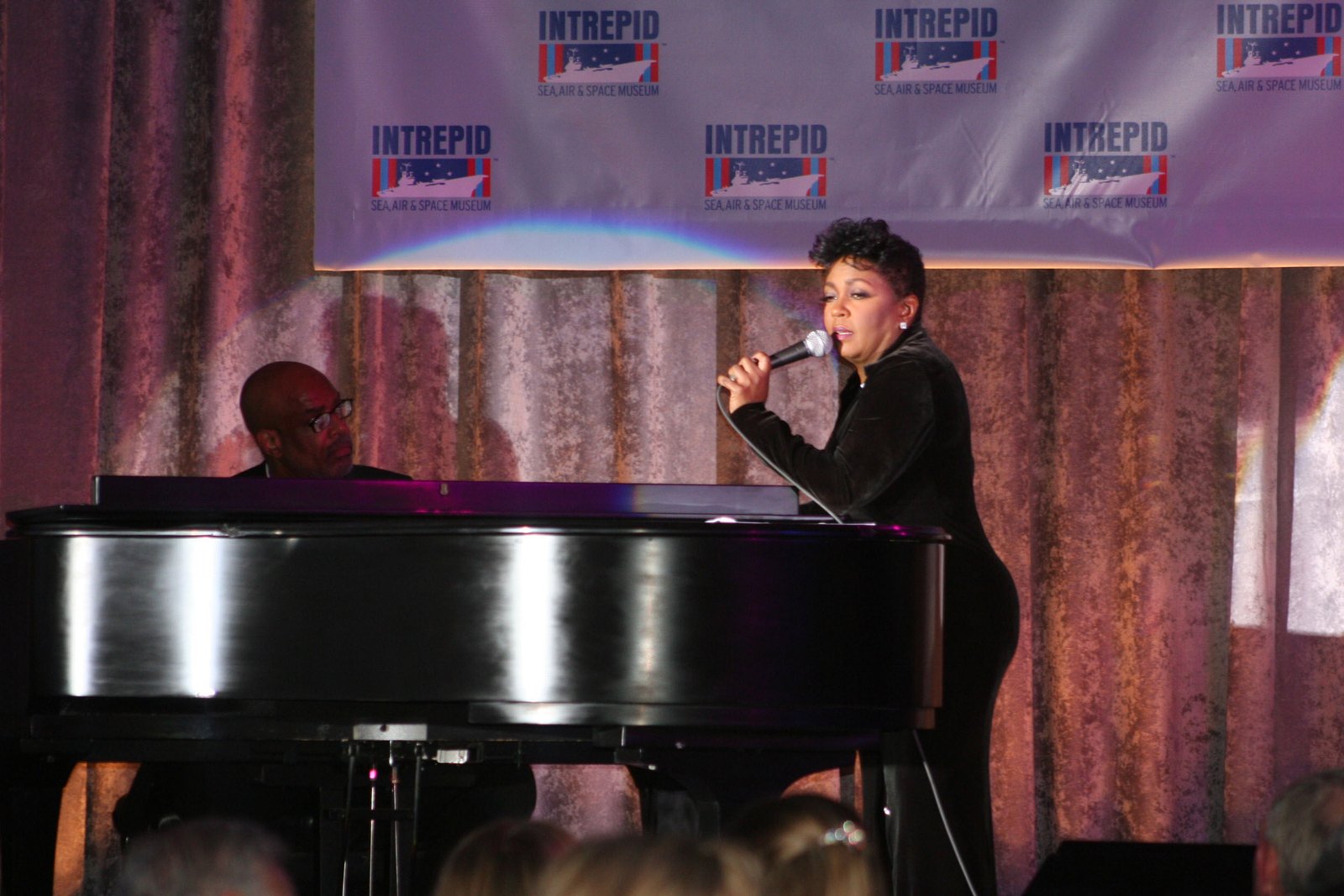
Anita Baker sang like she had all the time in the world — and then, at the height of her fame, she took it. At the peak of the quiet-storm era, with eight Grammy Awards and millions of records sold, she walked away from the spotlight to raise her children, turned down the machinery of stardom, and came back only on her own terms. Her story begins in heartbreak, runs through Detroit nightclubs and record-label wars, and ends — well, it hasn’t ended. Because Anita Baker has never done anything on anyone’s schedule but her own.
Abandoned at Two
Anita Denise Baker was born on January 26, 1958, in Toledo, Ohio. Her birth mother was sixteen years old, struggling with substance abuse, and when Anita was two, her mother abandoned her — leaving the toddler in the care of a family friend named Mary Lewis, who became her foster mother.
When Anita was twelve, Mary Lewis died. It was then that an older sister in the household told her the truth about her past: the woman she had believed was her mother was not. Years later, in an interview with Essence magazine, Baker described the wound with devastating simplicity — that as a child she believed her mother had abandoned her because she was not good enough. Not good, period.
Her foster sister, Lois Landry, a beautician, and Lois’s husband Walter took over her upbringing, giving her a stable home built on hard work and church. Anita joined the choir and fell in love with the deep, commanding voice of gospel legend Mahalia Jackson — the first hint that her own instrument, a rich contralto with an astonishing range, was something special. She would later call Lois Landry her “earth mother,” and was shattered by her death in 2002.
Singing in Detroit Nightclubs at Sixteen
By sixteen, Baker was singing R&B in Detroit nightclubs, her mature, smoky voice belying her age. After one performance, bandleader David Washington handed her his card and urged her to audition for Chapter 8, a local funk band. She got the gig. Chapter 8 signed with Ariola Records and cut an album, but when the label dropped the band in 1979, Baker was suddenly unemployed in a city with no safety net for soul singers.
She went back to Detroit and took jobs as a waitress and a law-firm receptionist. It is one of the great “what if” moments in music history: the future queen of quiet storm, refilling coffee and answering phones, her career seemingly over before it began. Then, in 1982, Otis Smith — a former Ariola associate who had always believed in her — persuaded her to try again as a solo artist on his small Beverly Glen label.
The Songstress Nobody Saw Coming
Her 1983 debut, “The Songstress,” was a modest affair on a tiny label, but it contained the seeds of everything. The title track became a quiet-storm radio staple, and Baker’s voice — intimate, unhurried, emotionally exact — began to find its audience. The big labels had passed on her; Elektra Records, to its eternal credit, did not. She signed with Elektra in the mid-eighties, just as producer Michael J. Powell was helping her sculpt what would become known as the Anita Baker sound: lush, jazzy, late-night R&B with not a wasted note.
What happened next is the stuff of legend. Her second album, “Rapture,” arrived in March 1986 and detonated. It sold more than eight million copies worldwide, five million in the United States alone, and carried the singles “Sweet Love,” “Caught Up in the Rapture,” “Same Ole Love,” and “No One in the World.” “Sweet Love” won the Grammy for Best R&B Song, and Baker took home Best Female R&B Vocal Performance. She had gone from answering phones to accepting Grammys in three years.
Betting Everything on Her Wedding Ring
If “Rapture” made her a star, “Giving You the Best That I Got” made her an institution. The story of the title song is pure Baker. While staying in a bungalow at the Sunset Marquis in West Hollywood, she heard a bare-bones demo tape that contained nothing but the chorus hook. She played it over and over. There was no bridge, no verses — she wrote the melody and the verses herself around that inescapable hook, finishing it with co-writers Randy Holland and Skip Scarborough.
Released in September 1988, the song peaked at number three on the pop chart and number one on the R&B chart, becoming her biggest hit. It was a vow sung directly to her new husband — she had married Walter Bridgforth Jr. on Christmas Eve, 1988 — and its centerpiece image, betting everything on a wedding ring, became one of the most quoted sentiments in R&B.
Then came a Grammy quirk worthy of Baker’s singular career. The single was released just before the cutoff for the 1989 Grammy eligibility year, while the album arrived just after it. The result: she won Best Female R&B Vocal Performance and Best R&B Song in 1989, and then won Best Female R&B Vocal Performance again in 1990 — twice for the same song. The album itself went triple platinum and hit number one on both the pop and R&B album charts.
“Compositions,” “Rhythm of Love,” and the Art of Saying No
Success gave Baker something she valued more than fame: leverage. She used it to slow down. Where other stars of her stature were grinding out an album a year, Baker released “Compositions” in 1990 — a record on which she took a far greater songwriting role — and then made the industry wait four full years for “Rhythm of Love” in 1994.
“Rhythm of Love” was worth the wait. It debuted near the top of the charts and gave her two more signature ballads in “Body and Soul” and “I Apologize,” the latter earning her another Grammy nomination. But the long gaps between records were not accidents or laziness; they were strategy. Baker fought Elektra for creative control, refused to record material she didn’t believe in, and would not be hurried into the studio to meet a marketing calendar. In an era when labels treated artists as product lines, she behaved like an artisan — and her sales gave her the power to get away with it.
It was during this period, too, that her perfectionism became the stuff of industry legend. She was known to labor over a single vocal phrase until it sat exactly right, and to walk away from sessions that didn’t meet her standard. Some called it difficult. Her fans called it quality control. The records speak for themselves: every Anita Baker album of the Elektra years sounds like it was made by someone who would rather release nothing than release something she didn’t love.
https://www.youtube.com/watch?v=rUSddpvB4X0
The Long Silence
At the very top, Baker did the unthinkable: she stopped. After the “Rhythm of Love” tour ended in the mid-nineties, she stepped away from the industry to raise her two sons, Walter Jr. and Edward, born in 1993 and 1994. She had suffered two miscarriages while trying to start her family during the pressures of her high-profile career, and she was determined that her children would not know the abandonment she had known. She retreated to her home outside Detroit and, for the better part of a decade, simply lived.
She returned in 2004 with “My Everything” on Blue Note Records, which debuted at number four on the pop chart and number one on the R&B chart and went gold — proof that her audience had been waiting patiently. A Christmas album, “Christmas Fantasy,” followed in 2005, earning another Grammy nomination. In 2017 she announced her retirement from recording, then promptly un-retired to keep performing. In 2018, BET honored her with its Lifetime Achievement Award, a long-overdue coronation.
Her marriage to Bridgforth ended in divorce in 2007, but her devotion to her sons never wavered — she famously scheduled her touring around their school calendars, playing summers and weekends like the world’s most glamorous substitute teacher.
The Babyface Blowup
In 2023, Baker mounted “The Songstress Tour,” celebrating the fortieth anniversary of her debut album — her first full tour in nearly three decades. She recruited fellow R&B legend Kenneth “Babyface” Edmonds as her special guest and opening act. What should have been a victory lap turned into one of the messiest public feuds in recent R&B history.
It started in Newark, New Jersey, on May 10, when technical problems with the video wall delayed the show and Babyface’s set was canceled so Baker could perform her full set. His fans erupted online, accusing Baker of diva behavior and insisting the tour had been billed as a co-headlining venture. Baker fired back in a series of now-famous tweets, calling his supporters “Kenny’s Crazies” and insisting he was contracted as a support act.
On June 12, 2023, she ended it: after enduring what she described as cyberbullying, verbal abuse, and threats of violence from his fan base, she removed Babyface from the remaining dates and declared she would continue “The Songstress Tour” alone, offering refunds to anyone who wanted them. Babyface responded with grace, saying he had nothing but love and respect for her. The shows went on — just Anita, a microphone, and forty years of songs.
It was vintage Baker: no publicist’s polish, no carefully worded statement, just a woman protecting her stage and her peace at full volume. You could argue about the tactics, but nobody could argue about the principle. She had spent a lifetime refusing to be managed, molded, or rushed — why would she start at sixty-five?
Anita Baker’s catalog is not large by superstar standards, but it is close to perfect. Eight Grammy Awards. Four platinum albums. A contralto that made restraint feel like the most passionate thing in the world. She was abandoned at two, orphaned at twelve, dropped by a label at twenty-one, and told in every way that the industry had no place for her — and she answered by becoming the defining voice of quiet storm, on her own schedule, in her own time.
There is a particular kind of artist who treats fame as a tool rather than a goal, and Baker is its purest R&B example. She never chased trends, never remade herself for radio, never apologized for disappearing when her family needed her. The music waited, the audience waited, and when she returned — whether in 2004, in 2018, or on a summer stage in 2023 — the voice was exactly where she had left it: unhurried, unmistakable, and utterly her own. The best, as the song says, that she got.
Leave a Reply