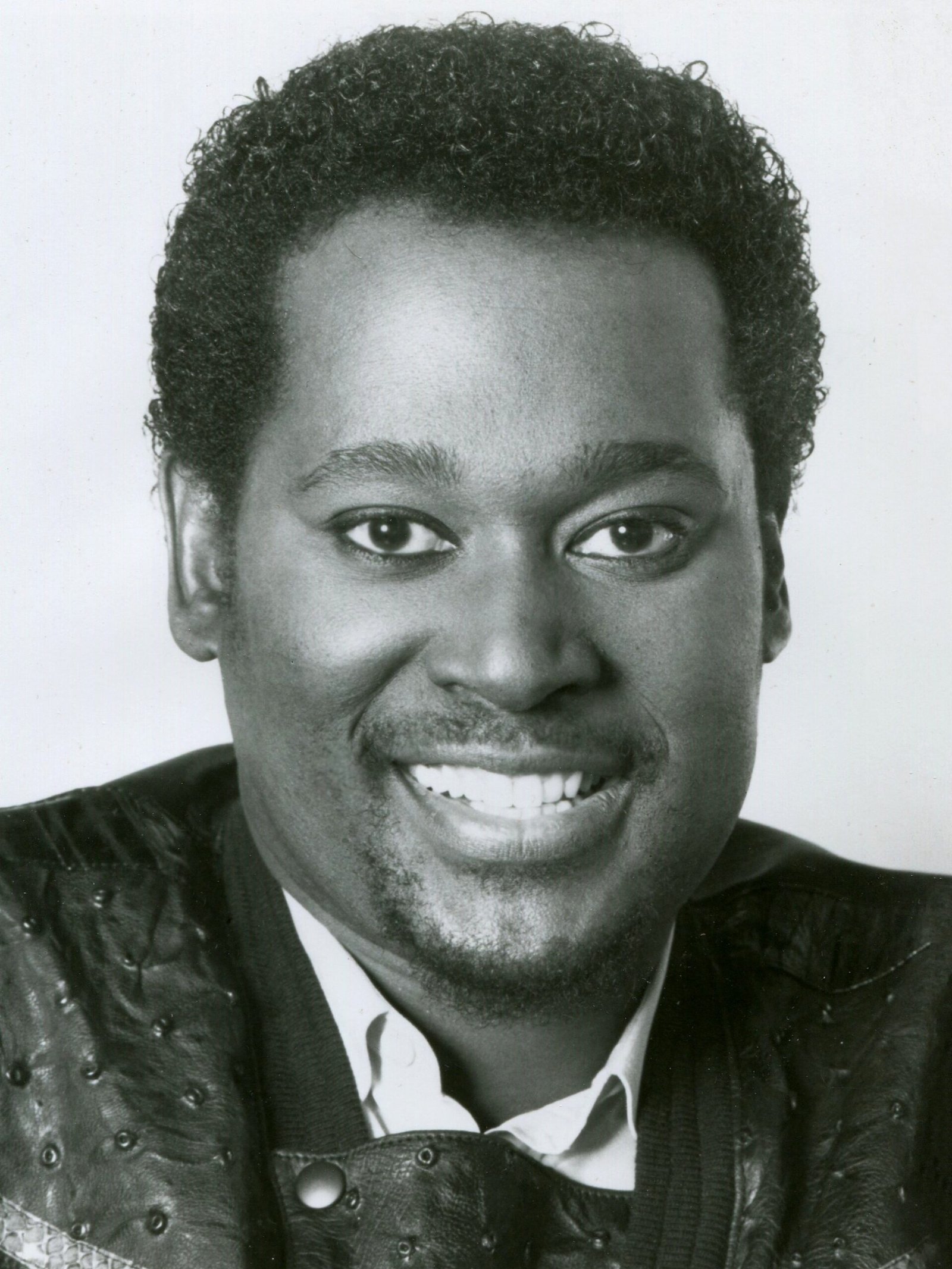
Before he was the velvet voice of romance, before the eight Grammys and the eleven straight platinum albums, Luther Vandross was a teenager from the Alfred E. Smith housing projects teaching children how to count to twenty on television. His road to stardom ran through church basements, commercial jingles, David Bowie’s touring band, and a disco group he quit — a decade of dues-paying that made his overnight success anything but overnight. It is one of the great apprenticeships in pop history, and it ended far too soon.
Counting to Twenty on Sesame Street
Luther Ronzoni Vandross Jr. was born on April 20, 1951, at Bellevue Hospital in Manhattan and raised in the Alfred E. Smith Houses on the Lower East Side. Music was everywhere in the Vandross home — his father sang, his mother sang, his older sisters dragged him to the Apollo to see Dionne Warwick and Aretha Franklin. At three years old he had his own phonograph and taught himself piano by ear.
As a teenager at William Howard Taft High School in the Bronx, he formed the vocal group Shades of Jade with friends including Carlos Alomar and Fonzi Thornton — names that would echo through his whole career. All of them joined Listen, My Brother, a sixteen-member musical theater workshop run by the Apollo, created to write and perform uplifting material for urban youth. In 1969 the group cut a single, “Listen, My Brother,” produced by Van McCoy of later “Hustle” fame. It went nowhere.
But the workshop landed something better: an invitation to appear on a brand-new children’s show. Vandross and his bandmates performed on the very first season of “Sesame Street” in 1969, singing cheerful numbers about numbers and letters. Years later he would laugh about it: they had no idea the show would become an institution, and at the time they were genuinely puzzled about why they were singing songs about counting to twenty. He also entered the Apollo’s brutal Amateur Night competition as a solo act several times. He never won — not once.
The Jingles That Paid for a Dream
Through the seventies, Vandross became one of New York’s busiest invisible voices. From 1977 into the early eighties he wrote and sang commercial jingles for NBC, Kentucky Fried Chicken, Burger King, Mountain Dew, Juicy Fruit, Miller and Löwenbräu beers, and Gino’s Pizza. His song “Everybody Rejoice” — also known as “A Brand New Day” — turned up in a Kodak campaign, and he sang on the famous AT&T “Reach Out and Touch Someone” spot.
There is a delicious footnote here: asked to convey that Gino’s Pizza was sizzling hot, Vandross invented the quivering, melismatic vocal run that would become his signature. The most seductive ornament in eighties R&B was born selling pizza.
The jingle money wasn’t just survival — it was seed capital. Vandross banked those faceless paychecks to pay for studio time, producing his own sessions on a shoestring while the industry still thought of him as a background singer. Every “Never Too Much” was funded by fried chicken and chewing gum.
Bowie’s Secret Weapon
Vandross’s big break came through his old Shades of Jade bandmate Carlos Alomar, who had become David Bowie’s guitarist. Alomar invited Vandross to tag along to Sigma Sound Studios in Philadelphia, just to watch, while Bowie recorded the soul-inflected album “Young Americans” in 1974. Bowie heard Vandross inventing vocal parts on the spot and was floored. He asked the young singer to arrange the backing vocals for the entire album — and then adapted one of Vandross’s own songs into “Fascination.”
Vandross toured with Bowie and sang on the records of Roberta Flack, Donny Hathaway, Bette Midler, Diana Ross, Carly Simon, Barbra Streisand, Chaka Khan, Donna Summer, Ringo Starr, and Sister Sledge. He sang ad-libs alongside Syreeta Wright and Philip Bailey on Stevie Wonder’s 1985 smash “Part-Time Lover,” and in 1986 he voiced a cartoon character named Zack for a series of ABC Saturday-morning public-service spots. He was the man other stars called when they needed to sound magnificent.
The Group Named Luther
Vandross wanted his own name on the marquee. In 1975 he formed the quintet Luther with former Shades of Jade members Anthony Hinton and Diane Sumler, plus Theresa V. Reed and Christine Wiltshire. With a push from the legendary Arif Mardin, they signed to Cotillion Records and released two albums, “Luther” (1976) and “This Close to You” (1977). Neither made the charts, and Cotillion dropped them — though Vandross cannily held on to the rights.
Then came Change, the studio-disco concept masterminded by French-Italian impresario Jacques Fred Petrus. Vandross sang lead on their 1980 debut “The Glow of Love,” scoring hits with the title track and “Searching.” But after one gold album he walked away. He had spent a decade making other people sound great; he was done lending his voice to other people’s concepts.
Epic Records signed him on the strength of a two-song demo that included the title track of what would become his debut. In August 1981, “Never Too Much” arrived — seven songs, thirty-six minutes, written and produced by Vandross himself. The title track topped the R&B chart, the album went to number one on the R&B album chart, and the closing ballad, his towering cover of the Bacharach-David standard “A House Is Not a Home,” announced that a new king of the slow jam had arrived — even though it was never released as a single.
Perfectionism and Its Price
Vandross ran his sessions like a watchmaker. He arranged every background vocal himself, stacking harmonies with a handpicked choir that over the years included Cissy Houston, Tawatha Agee, and Fonzi Thornton, his friend since the Sesame Street days. He was notorious for demanding take after take until a vocal shimmered exactly as he heard it in his head. The result was a run of eleven consecutive platinum albums and more than 40 million records sold.
The perfectionism made him a brilliant producer for others — his work on Aretha Franklin’s 1982 album “Jump to It” gave the Queen of Soul a number-one R&B album — but it also sparked legendary feuds. He clashed with Aretha herself, and with fellow quiet-storm royalty Anita Baker, among others. When Vandross believed in a sound, compromise was not on the menu.
The hits piled up through the eighties and nineties: “Here and Now,” which finally won him his first Grammy in 1991; “Power of Love/Love Power,” which won two more; the duets “Endless Love” with Mariah Carey and “The Best Things in Life Are Free” with Janet Jackson. In 1997 he sang the national anthem at the Super Bowl. Eight Grammy Awards in all, and a reputation as the definitive male voice of modern romance.
The King of the Duet
Some singers duet by trading verses. Vandross duetted by building cathedrals. His 1992 pairing with Janet Jackson, “The Best Things in Life Are Free,” was effervescent pop-soul; his 1994 remake of “Endless Love” with Mariah Carey was pure velvet, climbing to number two on the Hot 100 and going platinum. In both cases, what made them unmistakably his was the architecture underneath the lead vocal — the stacked, interlocking background harmonies he arranged himself, often singing many of the parts on his own.
That was the true Vandross signature, hiding in plain sight. On his records he is credited as lyricist, composer, producer, lead vocalist, and background vocalist all at once, and the backgrounds were never filler. Listen to the end of “Never Too Much” and you can hear Cissy Houston — Whitney’s mother — woven into the choir he conducted like an orchestra. Other artists hired him as an arranger precisely because he could hear a finished cathedral of voices where everyone else heard a demo. It was the jingle singer’s discipline, the Bowie arranger’s ear, and the church choir’s soul, all fused into one unmistakable sound.
Weight, Loss, and the Crash
Behind the polish, Vandross fought punishing private battles. His weight seesawed dramatically for years. In May 1985 he began a diet at 325 pounds and lost 85 of them — only to have a British magazine attribute the transformation to AIDS. In December 1985 he sued the magazine for libel, one of the first times a major star used the courts to swat down the era’s cruelest rumor mill.
Then, on January 12, 1986, came the crash. Driving his convertible on Laurel Canyon Boulevard in Los Angeles, Vandross veered across the double yellow line and collided with two oncoming cars. He suffered three broken ribs; his teenage passenger, singer Jimmy Salvemini, was injured, and Salvemini’s brother was killed. The tragedy shadowed him for years.
Through it all he kept recording, kept touring, kept chasing the perfect take. Diabetes — the disease that had killed his father when Luther was eight — stalked him too. He rarely spoke about his private life at all, guarding it with a ferocity that only fed the public’s fascination.
The Last Song
In 2003, Vandross called an old acquaintance, pop-rock star Richard Marx, whom he’d befriended backstage at an American Music Awards show in the early nineties. He had an idea for a song, he said, and only Marx could help him write it. All he had was a title: “Dance with My Father.”
It was the most personal song Vandross had ever attempted. His father, Luther Vandross Sr., had died of complications from diabetes when Luther was eight years old, and the song reached back across four decades for the memory of his father dancing with his mother in their living room. Marx later said writing it was emotional because it was subject matter Vandross had never touched before. Vandross himself called it his “career song” — his “Piano Man,” the signature he would sing for the rest of his life.
He recorded it just ten days before the stroke. In the spring of 2003, as he prepared to promote the finished album, Vandross collapsed in his New York apartment, victim of a massive stroke. He never got to see what the song became: his first number-one album, his final Top 40 hit, and at the 2004 Grammys, four trophies including Song of the Year. He lingered for two years, never really recovering, and died on July 1, 2005, at the age of 54.
The tributes were fit for royalty. Thousands braved drenching rain at Riverside Church in New York, where Aretha Franklin, Patti LaBelle, Stevie Wonder, Usher, Alicia Keys, and a multigenerational choir of legends sang him home with “Power of Love/Love Power.”
Luther Vandross spent the seventies making everyone else sound like stars, then spent twenty years proving he was the brightest of them all. In 2024, the documentary “Luther: Never Too Much” introduced his story to a new generation; that same year, Kendrick Lamar and SZA’s chart-topping single “Luther” carried his name to the top of the charts again. In 2026 he was named to the Rock & Roll Hall of Fame. The boy who once sang about counting to twenty taught the world to count its blessings instead — one perfect, quivering note at a time.
Leave a Reply