Some hits are written. Turn It On Again was salvaged. The song that carried Genesis into the 1980s — their second British Top 10 single, the signature track of the album that first took them to No. 1 at home — was assembled from two pieces of music that Tony Banks and Mike Rutherford had each written for their own solo albums and thrown away. It was then intended to be thrown away a second time, used up as a thirty-second link inside a long concept suite. Instead, sped up almost by accident, it turned out to be the most durable thing on the record.
It also contains one of progressive rock’s quietest jokes. Underneath one of the most straightforward choruses Genesis ever released runs a rhythm in thirteen-eight — a time signature the song’s own composer did not know he had written, on a song about a man who cannot tell the television from real life. This is the story of how the leftovers became the hit.
Written in a Borrowed House, from Rejected Pieces
In the summer of 1979, Genesis tried a new way of working. Previously the members had arrived at albums with songs written separately; this time, at Phil Collins’s house in Surrey, they wrote together, jamming in rooms Collins had converted into rehearsal space after the break-up of his first marriage emptied the house. The three men — Collins, Banks and Rutherford, the trio left standing after the departures of Peter Gabriel and Steve Hackett — lived and played together for weeks, building the album that became Duke out of collective improvisation.
Turn It On Again came from the reject pile twice over. Its driving main riff was Rutherford’s, discarded from his solo album Smallcreep’s Day. Its surging chorus section — the passage where Collins sings of being shown the way — was Banks’s, discarded from his solo album A Curious Feeling. “We kind of put the bit he didn’t use on Smallcreep’s Day,” Banks explained, “with the bit I didn’t use on A Curious Feeling, and put these two together.” Both fragments became, in his words, “much more rocky” in the joining.
The transformation was Collins’s doing. Rutherford’s riff had originally been slow and heavy; Collins suggested playing it faster, and then delivered the news that has followed the song ever since: “Do you realize it is in 13/8?” Rutherford, astonished, replied: “What do you mean, it’s in 13? It’s in 4/4, isn’t it?” It was not. The verses alternate bars of six and seven beats, giving the song a lurching, merry-go-round momentum that audiences have been failing to clap along to for forty years — “You can’t dance to it,” Collins cheerfully admitted. “You see people trying to dance to it every now and again. They get on the off beat but they don’t know why.”
Too Good to Be a Link
The song nearly died of modesty. The band’s plan for Duke included a long suite — a sequence of songs following a character they called Albert, taking in Behind the Lines, Duchess, Guide Vocal, Duke’s Travels and Duke’s End. Turn It On Again was earmarked as an interlude inside it, a link between grander statements. “We realised it was too good to use as a link,” Banks recalled. “Our solution was to play the riff twice, stick my bit on the end and then write a song around it.” The suite was duly broken up into separate songs scattered across the album, and the link became a single.
Rutherford wrote the lyric, and it was ahead of its time: a portrait of a man who does nothing but watch television and listen to the radio, who has come to believe that the people on the screen are his friends — that they know him, rely on him, would miss him if he switched off. Psychologists now have a term for this, the parasocial relationship; in 1980 it was simply a shrewd, sad little character study, delivered by Collins with such conviction that the loneliness under the joke took a verse or two to register. Even the recording kept the band’s sense of play: among the instruments credited on the track is a duck call, which Collins used to trigger the synthesizer brass stabs — progressive rock’s most complicated rhythm, punctuated by a toy.
The riff itself had begun as a feat of endurance. Rutherford devised it on bass pedals, cheating with an echo unit that repeated every other note because playing the whole pattern was, in his words, too tiring. In the studio he refused the shortcut and played every note properly — which may explain why the finished record sounds less like a machine than like a man pedalling very fast downhill, just about in control.

Recording at ABBA’s Studio
Genesis recorded Duke between October and December 1979 at Polar Studios in Stockholm — ABBA’s studio — producing themselves with David Hentschel, their collaborator since A Trick of the Tail. The album was released at the end of March 1980 and became a landmark in the band’s history: their first No. 1 album in Britain, and a No. 11 success in the United States, where their cult was rapidly becoming a constituency.
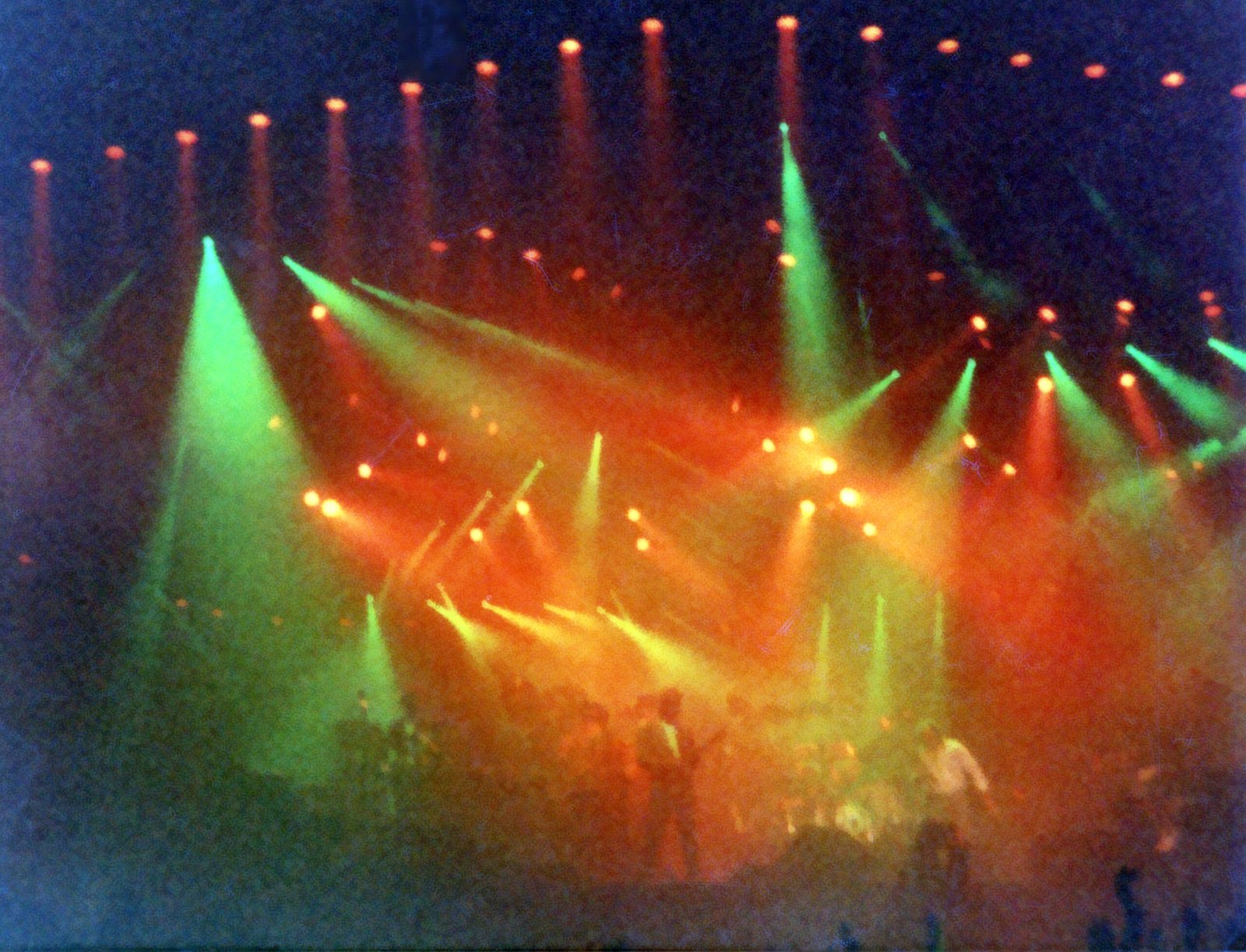
Duke was really two albums shaking hands. Alongside the remains of the suite stood the new compact Genesis: Misunderstanding, the first song Collins wrote entirely on his own for the band, drawn from the same marital wreckage that had set the album’s writing in motion, became a substantial American hit. The suite pieces and the pop songs no longer sounded like enemies. On the Duke tour the band even stitched the Albert sequence back together on stage, performing it as the continuous suite it was designed to be — with Turn It On Again restored to its old job as the connecting link, except that now the link was the song the crowd had come to hear.
Turn It On Again preceded it as a single, released in Britain on 3 March 1980 with an edit of Behind the Lines on the B-side. It climbed to No. 8 in the UK Singles Chart — Genesis’s second Top 10 hit, following Follow You Follow Me two years earlier, and proof that the trio’s pop instincts were now a commercial fact rather than an experiment. In America it stalled at No. 58 that autumn, but FM radio adopted it anyway, and in concert it quickly became untouchable: a song that sounded, to audiences, like pure forward drive, and felt, to anyone trying to count it, like a staircase with a missing step.

The Song That Named a Reunion
The song’s afterlife outgrew the album. It stayed in the Genesis set for the rest of the band’s career; in the 1980s it carried their rock-and-roll medley, and in 1982, at the one-off Six of the Best reunion concert, Peter Gabriel himself sat in on drums and — as Banks delighted in reporting — found himself baffled by the time signature of the band’s new hit. The group’s 1999 compilation was titled Turn It On Again: The Hits. And when the trio reunited in 2007 for their first tour with Collins in fifteen years, there was never any doubt about what the tour would be called: Turn It On Again, with the song transposed down from its original key to suit Collins’s older voice — down again, further still, by the final tour of 2021.
There is something perfect in all of it. A band famous for twenty-minute epics about mythology and madness made its most permanent mark with a three-minute song about a man watching television — a song built from two pieces of music its writers had rejected, in a rhythm its composer couldn’t count, that was almost used up as a link in a suite nobody would have remembered. Genesis spent the 1970s proving how much music they could fit into a song. Turn It On Again proved how much song they could fit into a riff nobody else wanted.
Leave a Reply