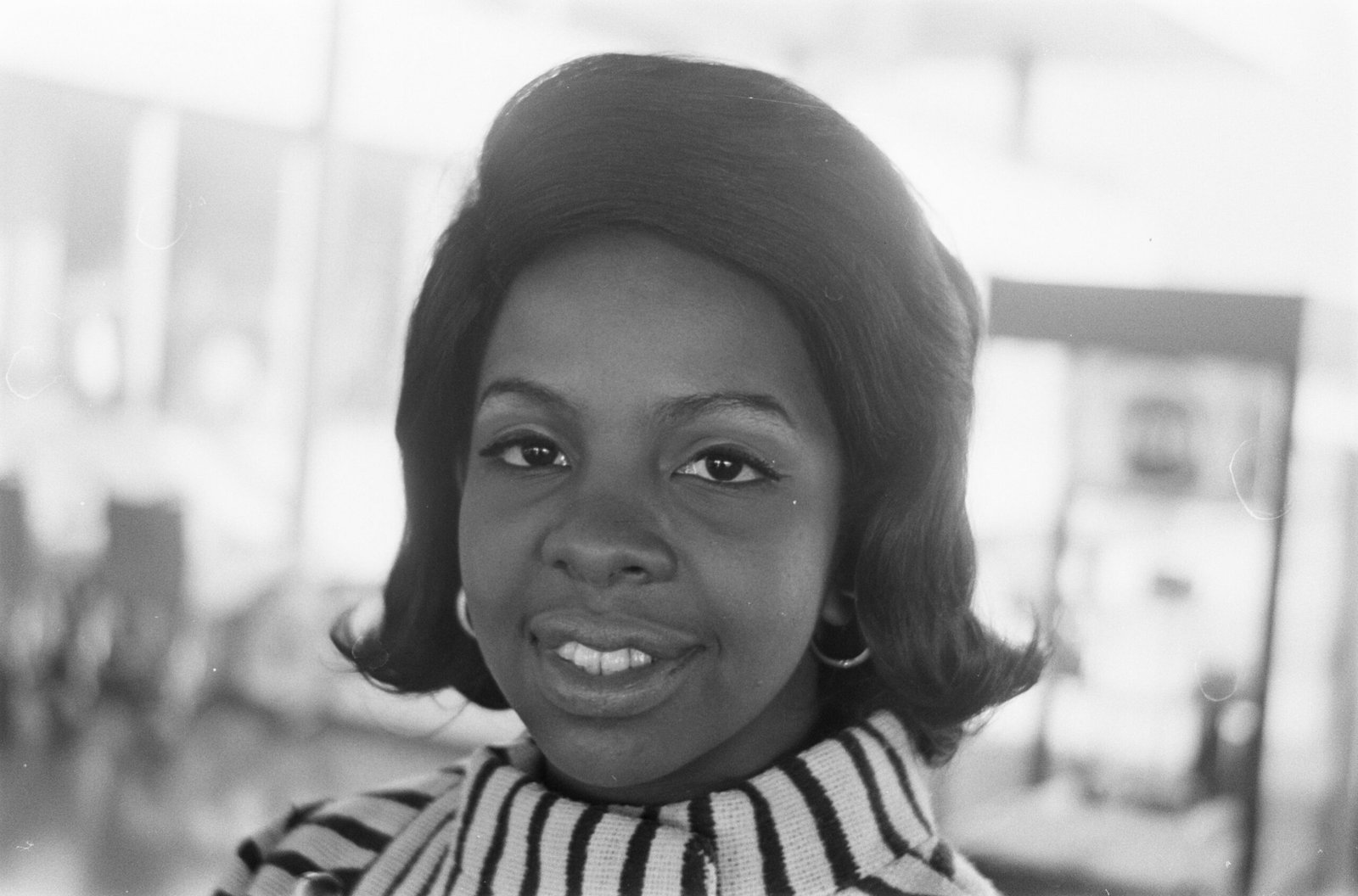
By the spring of 1974, Gladys Knight & the Pips were in the middle of the most glorious second act in soul music. Written off at Motown, reborn at Buddah Records, they had just topped every chart in America with Midnight Train to Georgia. The record that confirmed it was no fluke was not a train song, or even a soul song by birth. Best Thing That Ever Happened to Me was a country ballad, written by a former college quarterback, which had already been a No. 1 country hit for Ray Price before Gladys Knight ever sang a note of it.
That journey — from a songwriter’s notebook to the top of the country chart, and then, within six months, to No. 1 on the soul chart and No. 3 on the pop chart in a completely different voice — is one of the great demonstrations of what Knight and the Pips did better than anyone. They did not cover songs. They re-inhabited them, until the country original sounded like the cover. This is the story of how a plainspoken thank-you note became a soul standard.
A Quarterback’s Song
Jim Weatherly had been the quarterback at the University of Mississippi before he was a songwriter, and he brought an athlete’s plainness to his writing: no decoration, no cleverness for its own sake, just a feeling stated as directly as it could be stated. He wrote Best Thing That Ever Happened to Me in the early 1970s around a title phrase that struck him as a small miracle of omission — somehow, in all the decades of popular song, nobody had built a hit on those exact words of gratitude.
The song passed through several hands before it found its voices. Entertainer Danny Thomas recorded an early version as an ode to his mother. B. J. Thomas cut it in 1973. And then Ray Price, the elder statesman of country music, took it up, built an entire album around it, and carried it to No. 1 on Billboard’s Hot Country Singles chart in October 1973 — the seventh, and as it turned out the final, country No. 1 of his long career. Price’s reading was dignified and restrained, a gentleman’s thank-you. What nobody yet suspected was that the song had a second life waiting for it, in a register Price could not have imagined.
October 1973, in fact, belonged to Jim Weatherly twice over. In the very month Price took Best Thing That Ever Happened to Me to the top of the country chart, Gladys Knight & the Pips took another Weatherly composition, Midnight Train to Georgia, to No. 1 on the pop chart. One songwriter, two number ones, two genres, a single month — and the two songs were about to become permanently entangled, because the producers of the second were listening closely to the first.
Finding Weatherly, Again
Producers Kenny Kerner and Richie Wise heard Price’s record and thought of Gladys Knight. Kerner and Wise were the architects of the group’s Buddah breakthrough: they had produced I’ve Got to Use My Imagination, and they were deep in the sessions for the album Imagination, the record that housed Midnight Train to Georgia. They brought the Weatherly ballad to the group and backed it with the same rhythm section that had played on I’ve Got to Use My Imagination, with Knight and the Pips sharing production credit — an arrangement that itself announced how completely the group had escaped the Motown factory system, where artists recorded what they were handed.
Weatherly, by then, had become the group’s secret weapon. In 1973 and 1974 alone, Gladys Knight & the Pips charted with five of his songs: Midnight Train to Georgia, Neither One of Us (Wants to Be the First to Say Goodbye), Where Peaceful Waters Flow, Between Her Goodbye and My Hello — and this one. A white country songwriter from Mississippi and a Black family group from Atlanta turned out to speak exactly the same emotional language, one of plain words carrying enormous feeling. Best Thing That Ever Happened to Me was the purest example: there is barely a metaphor in it. It simply counts a life’s hard miles and concludes that they were worth it, because of the person standing at the end of them.
What Knight did with that plainness is the record’s miracle. She begins almost conversationally, low and unhurried, taking stock; the Pips — her brother Bubba, William Guest and Edward Patten — answer her lines the way a congregation answers a preacher, affirming rather than decorating. Across four minutes the arrangement gathers strings, momentum and that famous rising surge into the final chorus, and gratitude stops sounding polite and starts sounding overwhelming. Price had sung the song as a statement. Knight sang it as a testimony.

The Hit That Followed the Train
Buddah released the record as a single in February 1974, with Once in a Lifetime Thing on the flip, while Midnight Train to Georgia was still inescapable. It rose through the spring and settled at No. 3 on the Billboard Hot 100; on the Hot Soul Singles chart it spent two weeks at No. 1. The single was certified gold by the RIAA for a million copies sold, and it crossed the Atlantic too, reaching No. 7 in Britain. It was the third consecutive smash drawn from Imagination, an album that itself went gold and re-established the group — more than twenty years after they had begun as a family act in Atlanta — as hit-makers of the first rank.
Television spread it further. The group performed the song on Soul Train in May 1974 and on The Midnight Special that year — the performance preserved in the video above, with the Pips’ choreography of affirmation in full view: three men in matching suits, underlining every line of the testimonial with a gesture, while Gladys sang like a woman itemising her blessings for the record.
A Standard Is Born
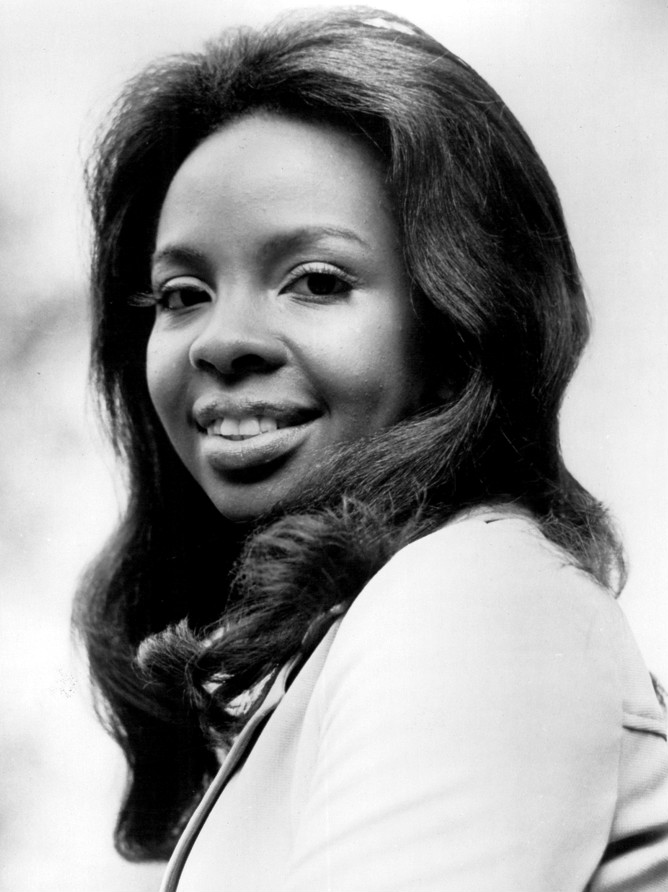
The surest sign that a song has escaped its moment is the company it starts keeping. Gospel great James Cleveland adapted it as Jesus Is the Best Thing That Ever Happened to Me, recognising — as the Pips’ call-and-response had already suggested — that the song was structured like a testimony all along. Dean Martin, Andy Williams and Steve Lawrence recorded it; the Persuaders recorded it; it settled into the repertoire of weddings and anniversaries, the place where pop songs go when people decide they want to live inside them permanently.
Knight herself never put it down. For fifty years it remained a summit of her concerts, the song audiences waited to hear her testify; half a century after its release she was still choosing it for the big occasions, performing it on The View to celebrate Whoopi Goldberg’s birthday, with the host leaving her chair to join the audience and listen. Few hits of 1974 are still being sung by their original voice with undiminished authority. This one is, because it was never really a performance. It was a belief, set to music.
Its double chart life remains the cleanest statistic in the group’s catalogue. Within roughly six months, the same composition was a No. 1 country record for Ray Price and a No. 1 R&B record — and near-No. 1 pop record — for Gladys Knight & the Pips. Two audiences who were presumed to want entirely different things wanted exactly the same thing: a grown-up love song with no games in it, sung by somebody who sounded like they meant it.
Ray Price sang it beautifully. But it is Knight’s version that the world kept, because she understood what the song was really about. It is not a compliment. It is a verdict delivered at the end of a long, difficult journey — the kind Gladys Knight & the Pips had themselves just travelled, from Motown’s second rank to the top of the charts. When she sang that the best thing that ever happened to her had carried her through every hard mile, she was not only singing about a lover. She was singing about survival, and everybody listening knew it.
Leave a Reply