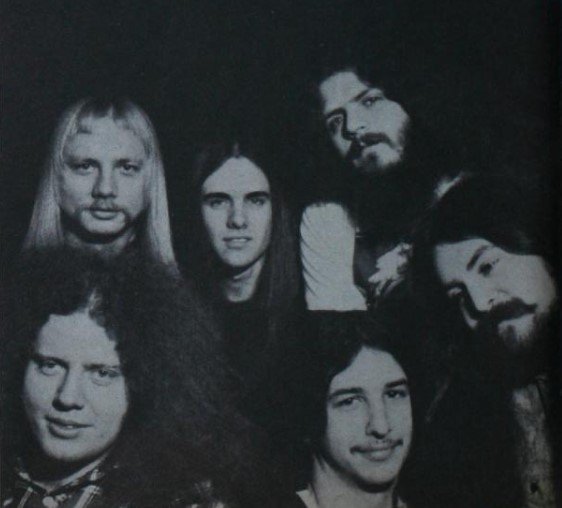
By the spring of 1982, Kansas had every reason to be finished. The band that had filled arenas with Leftoverture and Point of Know Return had lost its lead singer, its commercial momentum and, some nights, its sense of what it was singing about. The song that rescued them did not come from their principal songwriter. It arrived half-written by two outsiders, was sung by a replacement vocalist most rock fans had never heard of, and carried backing vocals borrowed from the drummer of Queen. Play the Game Tonight should have been a footnote. Instead it became the third-biggest hit of Kansas’s entire career.
The Singer Walks Out
The trouble began with a conversion. In 1980, guitarist and chief songwriter Kerry Livgren became a born-again Christian, and bassist Dave Hope followed him into the faith. Livgren’s writing, always philosophical, turned openly evangelistic, and it ran through Monolith and Audio-Visions in ways that made lead singer Steve Walsh increasingly uncomfortable. Walsh was not a sideman. His voice was the band’s signature, and he was a major songwriter in his own right. In 1981 he quit, and went off to form his own band, Streets.
That left Kansas with a hole at the exact centre of its sound. The band needed more than a singer who could reproduce Walsh’s range on stage. Walsh had written or co-written a large share of the catalogue, so his replacement had to be a writer as well — someone who could stand at a keyboard, sing like the records, and bring songs of his own to a band whose main composer was now writing about his faith.
Two Hundred Auditions
The search was long and, by most accounts, exhausting. The band worked through a procession of hopefuls before the choice narrowed to three finalists: Warren Ham, Michael Gleason and a little-known Californian named John Elefante. Elefante won the job. He could sing the old material without imitating Walsh, he played keyboards, and he arrived with songs and a songwriter brother, Dino, in tow.
Only afterwards did Livgren and Hope discover a coincidence nobody had auditioned for: Elefante was a committed Christian himself. At a moment when the band’s internal argument was precisely about faith and lyrics, Kansas had hired the one singer in America who did not need persuading. He was no hired throat, either. Elefante and his brother Dino arrived with songs of their own, and the finished album would carry three of them, including the follow-up single Right Away. The new line-up went to work on an album that would test whether Kansas could survive its own reinvention.
A Song Borrowed From Outside
Kansas had always been a closed shop. Livgren and Walsh wrote nearly everything, and outside material was close to unheard of. Play the Game Tonight broke that rule. By Livgren’s own account in his autobiography, the song began life as Stay with Me Tonight, written by two outside songwriters, Danny Flower and Rob Frazier. Kansas took the song apart and rebuilt it, and the finished writing credit ran to five names: Flower, Frazier, Livgren, drummer Phil Ehart and guitarist Rich Williams.
The rework gave the band something it badly needed — a single that sounded unmistakably like Kansas but built for the radio of 1982. It opens with Elefante alone at the piano, slow and mysterious, before the band shoulders in behind him and the chorus arrives like a marching band. Near the end, Robby Steinhardt’s violin takes a solo, a reminder that this was still the group that had once made progressive rock for football stadiums. Placed at the front of the new album, the song was a statement of intent: new singer, same band, game on.
The band was plainly pleased with the idea, because they returned to it. The single’s B-side, and a track placed near the end of the album, was Play On — a companion piece credited to Elefante and Livgren that picks the game up where the opener left it. Kansas bookended their comeback album with the same thought: whatever had changed, they intended to keep playing.
Next Door, a Queen
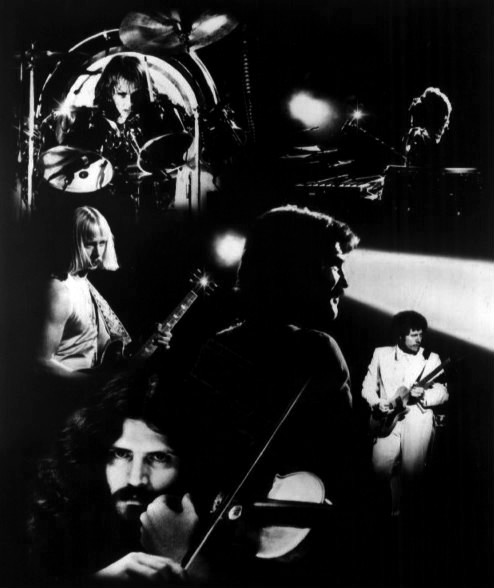
Vinyl Confessions was recorded in late 1981 and early 1982 at Chateau Recorders in North Hollywood, with the band co-producing alongside Ken Scott, an engineer and producer whose résumé ran back to the Beatles and David Bowie. The sessions had an unexpected guest. Queen’s drummer, Roger Taylor, was recording a solo album in the studio next door, and he wandered in and sang backing vocals on a handful of tracks — including the big stacked chorus of Play the Game Tonight, where his voice sits behind Elefante’s alongside Steinhardt, Hope and Livgren.
Critics noticed the single immediately. Cash Box, reviewing it in May 1982, praised the way it moved from a quiet, Dust in the Wind-style opening to a marching chorus. It was a neat summary of the record’s trick: it began like the band’s most famous ballad and ended like an anthem.
Checkmate on MTV
Vinyl Confessions was released on May 20, 1982, and Play the Game Tonight became its calling card. The single climbed to No. 17 on the Billboard Hot 100 and No. 4 on the Mainstream Rock chart. To feel the size of that, consider the drought it ended: the band’s previous two albums had failed to produce a single that climbed higher than No. 23, and plenty of obituaries for the Walsh era had already been drafted. In statistical terms the record was the band’s tenth Top 100 hit and their sixth to reach the Top 40; in the whole Kansas catalogue, only Dust in the Wind and Carry On Wayward Son ever charted higher. The album itself reached No. 16 on the Billboard 200, a genuine comeback for a band that had been written off the year before. Retrospective critics have been harder on the album than on the single — AllMusic, while conceding the record’s comeback success, heard a band drifting toward generic arena rock — but nobody argued with the single itself.
The song’s video caught the young MTV perfectly. Between shots of the band performing, two hooded figures — one in white, one in black, representing life and death — play a chess game with pieces modelled on characters from Tolkien, while clips of the Moon landing and of war flash by. It was grandiose, a little absurd, and entirely Kansas, and it sat in heavy rotation in MTV’s first full year on air, introducing the new singer’s face to an audience that had never bought a Kansas record. There was one more irony waiting in the album’s reception: the fledgling Contemporary Christian music industry embraced the record, and CCM Magazine named Vinyl Confessions its No. 1 CCM album of 1982. A mainstream rock band, fighting for its commercial life, had simultaneously topped a Christian chart it never set out to enter.

The Comeback That Couldn’t Hold
Success bought the new Kansas time, but not peace. Vinyl Confessions was the last album to feature Steinhardt, a founding voice of the band, who left after the tour and did not return until 1997. The arguments about direction that had driven Walsh out continued without him. The Elefante line-up made one more album, Drastic Measures in 1983, and even that produced another rock-radio hit in Fight Fire with Fire — but the centre of gravity had shifted decisively to the Elefante brothers, with Livgren contributing only three songs. After it, Livgren and Hope departed too, effectively ending the band’s classic era.
Elefante, the stand-in, went on to exactly the career the album had pointed him toward, becoming a prominent singer and producer in contemporary Christian music. But his place in rock history rests on those three and a half minutes in 1982. A replacement singer, fronting a divided band, singing a song two strangers had started — and delivering the biggest Kansas hit in four years. Sometimes the game is won by the player nobody expected to be on the board.
Leave a Reply