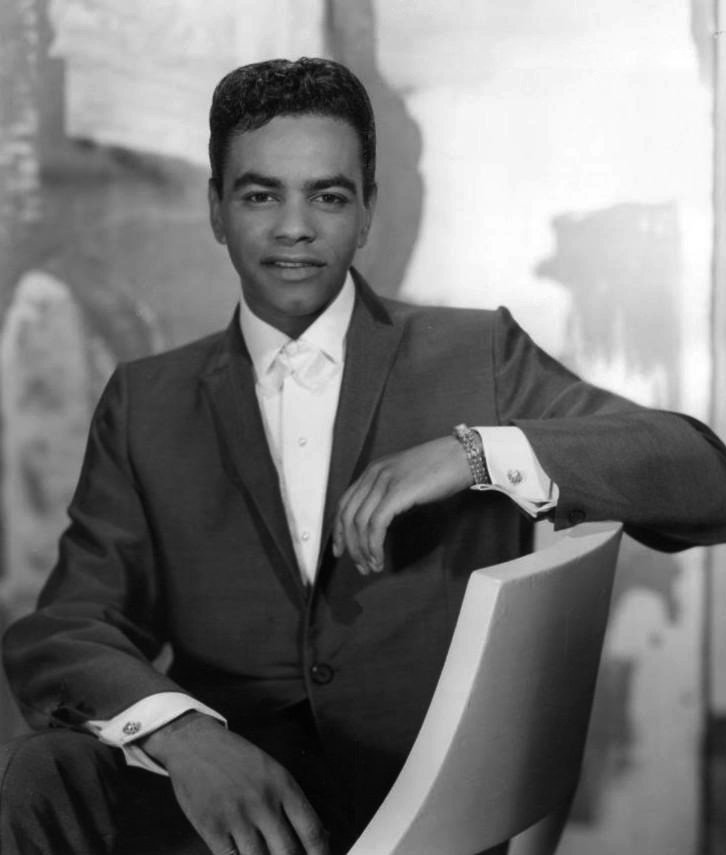
In the spring of 1978, America’s number-one song was a duet between a forty-two-year-old crooner whose last pop top ten had come in 1963, singing the hits of the Eisenhower era, and a twenty-seven-year-old former backing singer with a four-octave soprano. The pairing looked like a gimmick. It was, in fact, a rescue mission — one that Johnny Mathis’s producer had designed to pull the most romantic voice in pop back onto the charts of the disco age, and it worked so completely that the record sat on top of the pop, R&B and adult contemporary charts at the same time.
The official recording, above, still sounds like what it was: two singers from different generations and different genres discovering, in real time, that they were made to sing together.
A Legend in the Easy-Listening Wilderness
To understand the comeback, you have to measure the drought. Mathis had been a phenomenon: 1957 was his annus mirabilis, when Wonderful! Wonderful!, It’s Not for Me to Say and Chances Are made the velvet-voiced former high-jump hopeful from San Francisco the defining romantic singer of his generation, and a 1958 collection, Johnny’s Greatest Hits, essentially invented the greatest-hits album before sitting on Billboard’s album chart for a record-breaking 490 weeks. But tastes move. His last American top-ten single, What Will Mary Say, dated from 1963, and through the late sixties and seventies he recorded steadily for a devoted adult audience that the pop charts no longer measured. There were signs of life — I’m Coming Home topped the Easy Listening chart in 1973 — but in the era of disco and arena rock, Johnny Mathis was widely filed under nostalgia.
Mathis and his producer Jack Gold decided that standing still was the risk. Gold knew the Mathis sound from the inside — he had produced a string of the singer’s seventies albums — and his instinct was that the voice did not need replacing, only reframing: put it in conversation with the sound of 1978. Their diagnosis, as Stereogum’s Tom Breihan tells it, was that Mathis needed to do something he had somehow never done in more than twenty years of hit-making: record a duet — and record it with an R&B singer.

Enter Deniece Williams
The singer they found was Deniece Williams of Gary, Indiana. She had been recording since the late 1960s — first as Deniece Chandler, cutting singles in Chicago — and had served her apprenticeship in Stevie Wonder’s backing group, Wonderlove, before Maurice White and Charles Stepney of Earth, Wind & Fire produced her solo debut, This Is Niecy, in 1976. A year later her single Free went to No. 1 in Britain — the calling card of a singer plainly destined for more than the background. She was sixteen years younger than Mathis, came out of soul rather than supper clubs, and when she heard that Johnny Mathis wanted to sing with her, she was — by her own account — over the moon.
On paper the match raised eyebrows: the velvet baritone-tenor of Misty against a soprano that could float up into whistle register. In the studio, the contrast was the magic. Mathis’s great subject had always been love’s beginnings; Williams gave him a partner with whom he could sing, convincingly, about its end.
Williams’s own story was only beginning. She would collect four Grammy Awards and top the Hot 100 again in 1984 with Let’s Hear It for the Boy, from the film Footloose. But in 1977 she was still the new voice — a solo artist with one album and a British hit — and the Mathis session was her formal introduction to the pop mainstream, an introduction she handled like a veteran.
Two Australians Write the Breakup
The song Gold brought them was written by Nat Kipner and John Vallins, two Australians on the fringes of the Bee Gees’ orbit. Too Much, Too Little, Too Late is not a plea or an accusation; it is two grown people calmly reading the autopsy of their own relationship, trading verses like a closing argument — too much history, too little feeling left, too late to start again, so let’s end it being friends. It was a grown-up lyric for a disco-era market, and it needed grown-up singing.
Gold recorded the pair in 1977 for Mathis’s album You Light Up My Life, with an orchestral arrangement by Gene Page — the arranger behind Barry White’s lushest records — and a rhythm section stacked with Motown veterans, bassist Scott Edwards and drummer Ed Greene among them, who gave the ballad a quiet, soulful pulse underneath the strings. The record’s miracle is its restraint: a breakup sung without a single raised voice, the two singers trading lines like people who have already had the argument a hundred times in private and have nothing left but courtesy. The single was released on 21 February 1978, and radio programmers who had not touched a Johnny Mathis record in fifteen years started playing it on sight.

Number One on Three Charts at Once
Context makes the feat stranger. The Hot 100 of mid-1978 was the Bee Gees’ personal property, the Saturday Night Fever sound in total command of American radio — and into that chart walked a three-minute orchestral breakup ballad, sung by a forty-two-year-old crooner and a twenty-seven-year-old soul singer, and went to number one.
The climb was a rout. On 3 June 1978, Too Much, Too Little, Too Late reached No. 1 on the Billboard Hot 100, where it stayed for a week before Andy Gibb’s Shadow Dancing took over. It spent a full month on top of the R&B chart — an astonishing result for a singer once considered the whitest of pop crooners — and it topped the Adult Contemporary chart too, completing a triple crown across three audiences that were supposed to want nothing to do with each other. It reached No. 1 on the Record World chart and No. 2 on Cash Box, No. 3 in Britain, No. 2 in Ireland and New Zealand, and earned gold certification in the United States and silver in the UK.
For Mathis, the numbers carried a personal weight: this was his first American No. 1 since Chances Are, twenty-one years earlier, and his first top-ten hit in fifteen years. The comeback of the year belonged to the man the industry had quietly written off as a nostalgia act.
What Friends Are For
The success demanded a sequel, and quickly: Mathis and Williams followed with a full album of duets, That’s What Friends Are For, later in 1978, and a cover of You’re All I Need to Get By that returned them to the charts. The duet formula became a second career in itself — Mathis went on to record with Jane Olivor, Dionne Warwick, Natalie Cole, Gladys Knight and others — and he and Williams reunited in 1982 to sing Without Us, the theme to the sitcom Family Ties, putting their blend into American living rooms every week. The song kept travelling: in 1998, British band Silver Sun’s cover reached No. 20 in the UK.
Mathis never chased the charts again on those terms, and he never needed to. The duet format he had stumbled into became part of the furniture of pop: through the eighties, the superstar duet — two voices, two audiences, one record — was everywhere, and Mathis had arrived at it early, out of necessity. He kept performing for decades more, into his late eighties, long after most of his 1957 contemporaries had left the stage. Too Much, Too Little, Too Late had proven the thing his fans had always insisted was true — that the velvet voice was not a period style but a permanent one — and it had done so in the unlikeliest way imaginable: with a breakup song, sung as a duet, by a legend and a newcomer who met exactly in the middle. In 1995, Sony even named a compilation of the duo’s work after it. The drought was twenty-one years long. The record that ended it took three minutes.
Leave a Reply