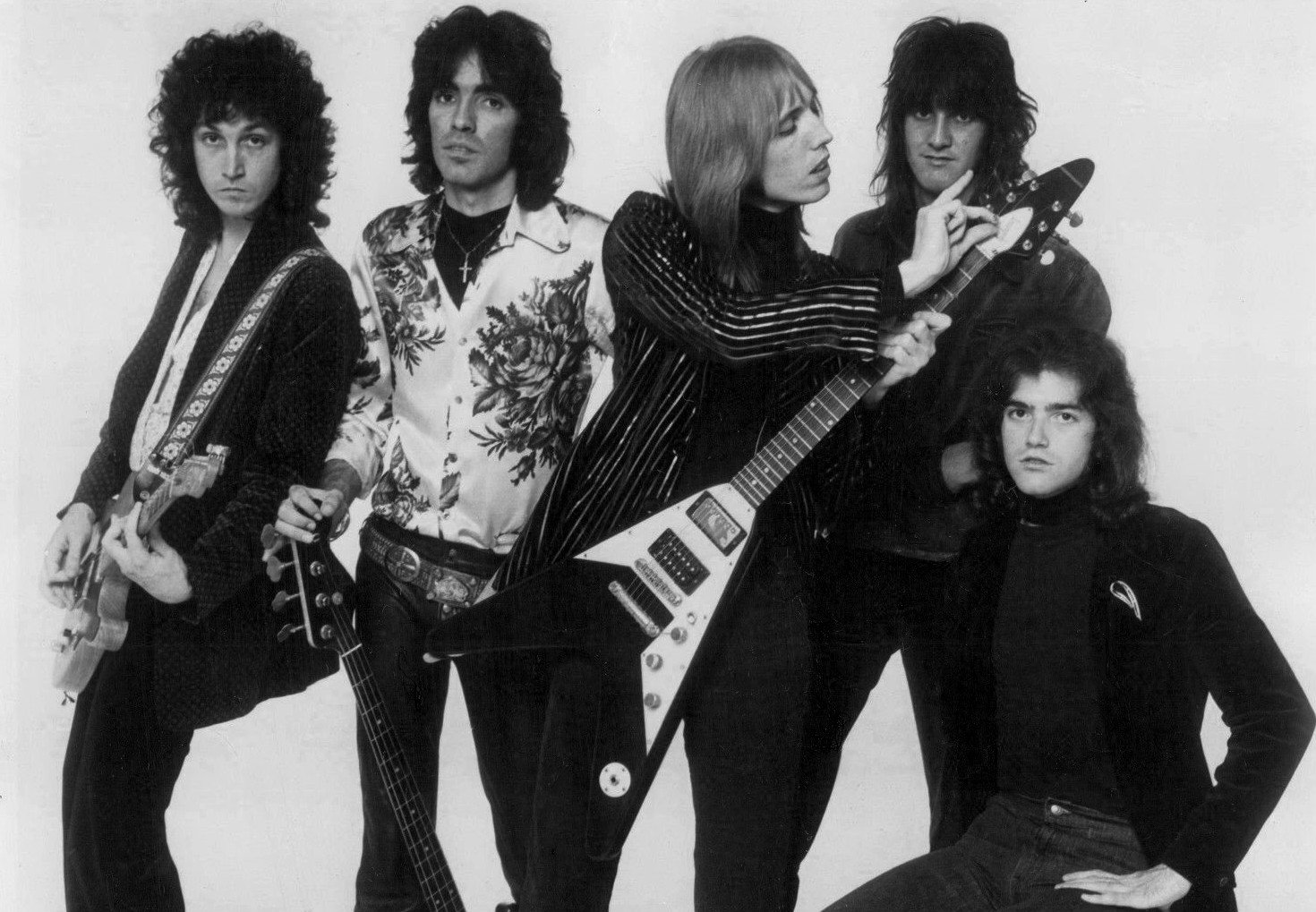
Tom Petty wrote Refugee in about ten minutes. Recording it nearly broke his band. The song began as a home demo by guitarist Mike Campbell, flowered instantly under Petty’s pen, and then consumed take after take at Sound City Studios while the Heartbreakers’ career hung on a lawsuit — their singer bankrupt, their contract fought over in court, their producer refusing to accept any version that merely sounded good. When it finally arrived, opening the 1979 album Damn the Torpedoes, Refugee was three minutes and twenty-five seconds of pure refusal: a love song that sounded like a man telling the whole music business where to go. It became the record that turned a cult band into American rock royalty.
A Cassette From the Guitar Player
The music came first, and it came from the quietest Heartbreaker. Mike Campbell’s wife had recently bought him a TEAC four-track tape recorder, and Campbell — one of the first songs he ever wrote, by his own account — built a practice track at home over a drum-pattern record, layering rhythm and lead guitar and bass on top. He added a bridge, put the result on a cassette with a few other ideas, and handed it to Petty. Petty recognised it immediately. He later recalled putting the tape on, walking around his room, and feeling the song burst out of him in “ten or fifteen minutes” — words and melody written straight over Campbell’s music, with no changes to the arrangement at all. Campbell’s favourite trick in the writing is easy to miss: Petty found a way to make the chorus lift and soar without the chords underneath it ever changing.
The demo turned out to be the key that unlocked the album. When the band hired producer Jimmy Iovine — fresh from engineering Bruce Springsteen’s Born to Run and Darkness on the Edge of Town and producing Patti Smith’s Easter — Iovine listened to Campbell’s cassette and fixed on two songs, Refugee and Here Comes My Girl. As Campbell remembered it, Iovine told them: “I don’t care what else you do. We got those two songs, we got an album.” He was right. But first, the band had to survive making them.

A Band at War With Its Own Label
The sessions for Damn the Torpedoes unfolded inside a legal siege. In 1979, ABC Records — the distributor behind the band’s Shelter label — was sold to MCA, and Petty’s contract was assigned to the new owner along with the furniture. Petty contended that his contract could not be transferred without his consent and was therefore void. MCA sued him for breach of contract; Petty declared bankruptcy as a legal tactic to break the deal, and the fight consumed the year the album was being made. Petty later said plainly that Refugee “was a reaction to the pressures of the music business,” born of the row over ABC selling his contract to MCA without asking him, and that his anger at the whole system coloured the tone of the entire record.
The siege reached into the studio itself. Petty recalled federal marshals coming to try to seize the session tapes, and lawyers demanding to know what had been recorded. The matter was finally settled with a compromise: Petty signed a new contract with Backstreet Records, an MCA subsidiary created as neutral ground, and the album — recorded at Sound City Studios in Van Nuys and Cherokee Studios in Hollywood, and paid for under the shadow of roughly half a million dollars of costs and debt — was allowed to exist. The band even took the fight on the road that summer, on a Californian run remembered as the Lawsuit Tour.
One Hundred Takes at Sound City
If the lawyers made the album embattled, Iovine made it exhausting. Accustomed to the tighter, garage-built sound of the first two Heartbreakers records, the band now faced a producer who worked in a big room, chased a big sound, and would not let Refugee go. The change of method was deliberate. “The most radical change we undertook is that we moved into a large room to record,” Petty explained afterwards. “He taught me that if you want to get that big airy type of sound you’ve got to be in a big room.” Refugee, the album’s opening statement, was where that lesson was tested hardest — the song Iovine had bet the record on was the one that refused to sit still. “That was a hard record to make,” Campbell told Songfacts in 2003. “We just had a hard time getting the feel right. We must have recorded that 100 times.” Petty’s own count agreed: “We kept coming back to it during the recording of the album. I think we did over 100 takes before we finally landed on the one that made it on the album.”
The drums bore the worst of it. Warren Zanes’s biography Petty reports that dozens of takes were spent on the drum track alone and that drummer Stan Lynch was fired mid-sessions — then brought back after attempts to cut the song with Procol Harum’s B. J. Wilson and Phil Seymour of the Dwight Twilley Band went nowhere. Campbell finally reached his own limit: “I remember being so frustrated with it one day that — I think this is the only time I ever did this — I just left the studio and went out of town for two days. I just couldn’t take the pressure anymore, but then I came back, and when we regrouped we were actually able to get it down on tape.” Even the finished master hides a guest in its details: session great Jim Keltner added a samba shaker to the personnel of Petty, Campbell, Ron Blair, Lynch and Benmont Tench, whose organ surges against Campbell’s guitar all through the record.

The Record That Opened the Album
Damn the Torpedoes was released on 19 October 1979, and Refugee opened it — a drum fill like a volley, then Petty spitting the opening lines before the chorus opened up. The album spent seven weeks at No. 2 on the Billboard 200, held off the top only by Pink Floyd’s The Wall, and went on to triple-platinum sales. Issued as a single on 11 January 1980, with It’s Rainin’ Again on the B-side, Refugee peaked at No. 15 on the Billboard Hot 100, No. 2 in Canada and No. 3 in New Zealand. The trade press heard what the struggle had produced: Billboard called it “Petty at his best,” praising the “gutsy rock vocal and searing guitar lines”; Cash Box singled out the “growing interplay between guitar and organ”; Record World called it a “perfect union of power and passion.”
The song even acquired its visual legend by accident. By the oft-told account, the band shot a performance video for Refugee largely to avoid appearing in person on The Merv Griffin Show; the clip aired there, and when MTV launched in 1981 hungry for American rock videos, it went into heavy rotation, beginning the Heartbreakers’ reign as one of the defining acts of the video age.
Listening Back
Time has only raised the song’s standing. In 2020, Rolling Stone ranked Refugee second on its list of the 50 greatest Tom Petty songs; Billboard had already placed it tenth among his twenty best. Melissa Etheridge covered it on her 2005 compilation Greatest Hits: The Road Less Traveled, and Petty himself, in a 2011 question-and-answer session, called her version the best cover of the song he had ever heard. Campbell, asked late in life for his favourite Heartbreakers song, chose this one: “It’s so universal, and it’s one of the first big hits we wrote together.” The band had trusted it from the beginning — they played it on their first Saturday Night Live appearance in 1979, and closed their Live Aid set at Philadelphia’s JFK Stadium with it in 1985.
That is the paradox at the heart of Refugee. The lyric was written in minutes by a singer with nothing left to lose; the record took a hundred takes, a fired-and-rehired drummer, a co-writer fleeing town, and a bankrupt frontman hiding his work from his own record company. Everybody, the chorus insists, has had to fight to be free. For once, the record sounded exactly like the fight it described — because it was one.
Leave a Reply