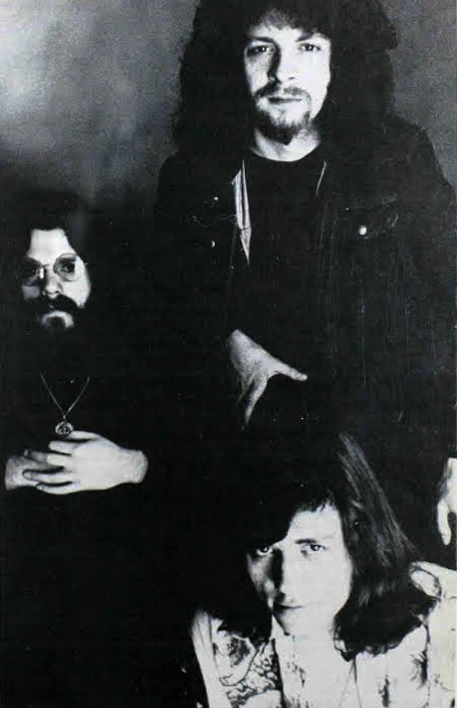
Everyone knows the name on the hull: Jeff Lynne. He wrote the songs, produced the records, and eventually became the spaceship itself. But a spaceship needs a crew, and Electric Light Orchestra had one of the finest — and most overlooked — in rock history. The drummer who never left. The bassist plucked from obscurity. The quiet keyboardist who was Lynne’s right hand for fifty years. The founder who walked away after a week. This is the story of the men inside the machine, and what happened to them when the music stopped.
The Drummer Who Never Left
Beverley Bevan was born on November 25, 1944, in South Yardley, Birmingham, and he was named for a drum kit. His father Charles was a drummer nicknamed Bev, and when the boy showed an interest in rhythm, the name — and the sticks — were waiting. Charles died when Bev was only eleven, leaving his son with a name, a beat, and something to prove.
Young Bev worked as a trainee buyer at a city-centre department store called The Beehive, alongside a school friend named Robert Davis — who would later become famous as the comedian Jasper Carrott. But the drums kept calling. After stints with Denny Laine’s Diplomats and Carl Wayne’s Vikings, Bevan became a founding member of the Move in 1966, and when Roy Wood dreamed up the Electric Light Orchestra, Bevan was there at the creation — one of three founders, and the only one who would play on every ELO record of the classic era, from the first note to the last.
He was the band’s anchor in every sense: the steady backbeat beneath the orchestral swirl, the affable Brummie who held the whole unwieldy ensemble together on stage. When ELO wound down in 1986, Bevan refused to let the name die, founding ELO Part II and touring the world with it through the nineties. Along the way he did a stint drumming for Black Sabbath on their 1983 “Born Again” tour — the man who played “Mr. Blue Sky” also played “Iron Man,” and somehow both made sense.
Today, in his eighties, Bevan is still going. He presents a Sunday afternoon show on BBC Radio West Midlands, reviews records for the Sunday Mercury, was given a star on the Birmingham Walk of Stars in 2011, and was inducted into the Rock and Roll Hall of Fame with ELO in 2017. He lives with his wife Valerie and their son Adrian, follows Wolverhampton Wanderers, and serves as patron of a local music school. The boy named for a drum kit became the heartbeat of the spaceship — and he never missed a beat.
The Bassist Plucked From Obscurity
If Bevan was the foundation, Kelly Groucutt was the secret weapon. Born Michael William Groucutt on September 8, 1945, in Coseley, Staffordshire, he started his musical career at fifteen under the name Rikki Storm, fronting Rikki Storm and the Falcons. He was, by every account, a relative unknown when Jeff Lynne recruited him in 1974 to expand ELO’s lineup for the big years ahead.
What Lynne got was far more than a bass player. Groucutt’s high, soaring backing vocals became one of the most distinctive elements of the classic ELO sound — those celestial harmonies floating above Lynne’s lead on “Livin’ Thing” and “Telephone Line” are Groucutt, and the records would be unthinkable without them. His bass lines, melodic and muscular, gave the orchestra its pulse. For nine years, from “Face the Music” through “Secret Messages,” he was the band’s harmonic angel.
The end was bitter. Unhappy with his royalty payments, Groucutt sued the band’s management in the early eighties; the dispute ended with him out of ELO in 1983, legally barred from profiting off the name he’d helped make famous. He recorded a solo album, “Kelly,” in 1982 with help from his bandmates, and later threw in his lot with Bevan’s ELO Part II, still playing the old songs for the fans who loved them. On February 19, 2009, he died of a heart attack at just sixty-three. Three weeks earlier, he had recorded what would be his final interview with BBC radio in Birmingham, talking about the music with undimmed enthusiasm. The angel with the high harmony was gone, but every time those backing vocals soar, he’s still in the mix.
The Quiet Man at the Keyboards
Richard Tandy never wanted the spotlight, which is why the spotlight never quite found him — and why those who knew called him the most important member of ELO after Lynne himself. Born on March 26, 1948, in Birmingham, Tandy went to Moseley School with Bev Bevan, and his path crossed the band’s early: in 1968 he played harpsichord on the Move’s UK number one “Blackberry Way.” He joined ELO in 1971 as the live bassist, then moved to keyboards after Roy Wood’s departure — and never moved again.
Tandy’s keyboards are the texture of ELO: the Minimoog, the Mellotron, the Yamaha CS-80, the Wurlitzer, the grand piano at the heart of “Mr. Blue Sky.” He was Lynne’s right-hand man in the studio, co-arranging the string parts with Lynne and conductor Louis Clark from “Eldorado” onward, and he played on every ELO album except the debut (recorded before he arrived). When Lynne resurrected the band as Jeff Lynne’s ELO in 2014, Tandy was beside him at Hyde Park, and he toured with the band through 2015 and 2016 — the living link to the seventies glory days.
He was inducted into the Rock and Roll Hall of Fame in 2017, though he missed the ceremony — no explanation was ever given, and fans worried. The worry proved founded: on May 1, 2024, Lynne announced that his “long-time collaborator and dear friend” had died at seventy-six. “He was a remarkable musician,” Lynne wrote, “and I’ll cherish the lifetime of memories we had together.” The quiet man had been the band’s memory all along. Now the memories are all that’s left — and the keyboards, still ringing.
The Founder Who Walked Away
Every spaceship has an origin story, and ELO’s begins with the wildest man in Birmingham. Roy Wood — born November 8, 1946, in Kitts Green — was the flamboyant frontman of the Move who first dreamed of a rock band with cellos. He co-founded ELO with Lynne and Bevan in 1970. And then, within a week of the debut single’s release in the summer of 1972, he quit.
What followed was one of the great second acts in British pop. Wood formed Wizzard, a glorious maximalist ensemble with cellos, brass, and multiple drummers, and in 1973 he scored two UK number ones — “See My Baby Jive” and “Angel Fingers” — pastiching the rock ‘n’ roll of his youth through Phil Spector’s wall of sound. That Christmas, Wizzard released “I Wish It Could Be Christmas Everyday,” which peaked at number four but became something bigger: a perennial, as much a part of the British Christmas as mince pies, still charting every December half a century later.
Wood never chased the spaceship again, and he never needed to. He’d dreamed it, built it, and handed Lynne the keys — and then went off to build his own, stranger vehicles. In 1986 he played a leading role in the Birmingham Heart Beat charity concert alongside ELO and the Moody Blues, a rare reunion of the city’s tribes. The founder who walked away after a week ended up writing the song Britain sings every Christmas. Not a bad trade.
The Man With the Baton
Behind every great ELO string arrangement stood a man most fans never heard of: Louis Clark. From “Eldorado” onward, Clark arranged and conducted the orchestral and choral parts across the classic catalogue — “Face the Music,” “A New World Record,” “Out of the Blue,” “Discovery” — working hand in glove with Lynne and Tandy to translate rock songs into symphonic language. He later joined the touring lineup on keyboards for the “Time” tour, and he carried the flame afterward with ELO Part II and its successor, The Orchestra. Clark died in 2021, another quiet craftsman gone. But put on “Telephone Line” and listen to the strings bloom: that’s his baton, still moving. And spare a thought, too, for violinist Mik Kaminski — the wild-haired showman whose slashing violin opens “Livin’ Thing,” the human exclamation mark in the middle of all that orchestral precision. He carried the ELO flame through the Part II years as well, still sawing away at the songs he helped make immortal.
The Heartbeat Concert
There is a perfect final image for this crew, and it happened in Birmingham. In March 1986, Bev Bevan co-organized the Heart Beat charity concert at the NEC — a star-studded night featuring ELO, the Moody Blues, and Roy Wood’s band, among others. It was the last live performance of ELO’s classic era, and it raised a million pounds for Birmingham Children’s Hospital.
Think about that: the spaceship’s final voyage wasn’t a stadium in America or a TV spectacular. It was a charity gig in the band’s hometown, for sick children, organized by the drummer. Bevan would go on organizing — his “Barnardo’s Band Wagon” charity concert at the NEC followed, again raising money for children. The men inside the spaceship, it turned out, had never forgotten where they came from or who they were playing for. The cellos and the lasers were wonderful, but the heart of ELO was always Birmingham — and Birmingham’s heart, as that night proved, was always in the right place.
The Crew Disperses
Today the roll call reads like a memorial and a celebration intertwined. Bevan, in his eighties, still broadcasting, still drumming, still the keeper of the flame. Wood, the eternal eccentric, still touring his Christmas song into its sixth decade. Groucutt, Tandy, and Clark gone — three craftsmen whose work plays on every day in shops and cars and films around the world, most listeners never knowing their names.
That’s the quiet tragedy and the quiet triumph of being in someone else’s band. Jeff Lynne’s name is on the hull, and deservedly so — he wrote the songs, and what songs. But the spaceship never flew on one man’s genius. It flew on Bevan’s backbeat and Groucutt’s harmonies and Tandy’s keyboards and Clark’s strings and Wood’s mad original dream. The next time “Mr. Blue Sky” comes on and the sun seems to come out with it, spare a thought for the crew. They built the weather. They just let Lynne take the credit — and judging by the way they kept playing those songs until the very end, they wouldn’t have had it any other way.
Leave a Reply