In the fall of 1977, four kids from Pasadena walked into Sunset Sound Recorders in Hollywood with a handful of songs they’d been playing in bars for years, a producer who believed in them, and about three weeks of studio time. They were young, hungry, and utterly fearless — a club band with a guitar player from another planet. They walked out with one of the most explosive debut albums in rock history — a record that rewrote the rules of guitar playing, turned a twenty-two-year-old named Eddie Van Halen into a legend overnight, and announced that hard rock would never be the same.
This is the story of “Van Halen” — the album cut in a flash, on a shoestring, by a band that played like their lives depended on it. Because, in a way, after years of being ignored, they did.
The Pasadena Party Band
By 1977, Van Halen was the worst-kept secret on the Sunset Strip. Eddie and Alex Van Halen — brothers from the Netherlands who had grown up in Pasadena — had been playing backyard parties and clubs for years, first as Mammoth, then under their own name, with the irrepressible David Lee Roth on vocals and Michael Anthony on bass. Roth had started out as the guy they rented their PA system from; Eddie, tired of singing lead himself, had the inspired idea of inviting the flamboyant showman to front the band instead. Their show was a phenomenon: Eddie’s otherworldly guitar, Roth’s acrobatic showmanship, a rhythm section that hit like a freight train. They were the band every other band went to see, the Pasadena party band that turned every gig into an event.
The music industry, incredibly, almost missed them. Gene Simmons of KISS flew them to New York in 1976, recorded a demo with them at Electric Lady Studios, and shopped it around — but label after label passed. It took Warner Bros. producer Ted Templeman, who caught their set at the Starwood in Hollywood, to finally make the call. Templeman saw what the labels had missed: the greatest unsigned band in America. Within a week, Van Halen had a record deal. Within months, they were in the studio.
Twenty-Eight Songs in Two Hours
The first thing Templeman and his engineer, Donn Landee, discovered was that Van Halen didn’t need a studio to sound like Van Halen. At the demo sessions arranged right after Templeman signed the band, they tore through an astonishing twenty-eight songs in about two hours. Landee’s verdict: “That’s when we knew we had a band that could play.”
This changed everything about how the album would be made. Instead of building tracks layer by layer, Templeman and Landee decided to record the band essentially live — all four musicians in the room together, playing the songs the way they’d played them a thousand times in clubs, feeding off each other’s energy. Minimal overdubs. No studio trickery. The goal was to capture the raw, dangerous energy of a Van Halen club gig and press it onto vinyl — the sweat, the volume, the feeling that anything could happen. As Landee later put it, they treated the entire first album almost like a demo. It was the smartest decision they ever made.
Three Weeks, Forty Thousand Dollars
The actual album sessions ran from late August to early October 1977 at Sunset Sound’s Studio 1 in Hollywood — the room where Templeman had made hit records with the Doobie Brothers, a room with its own magic. The whole thing took about three weeks and cost somewhere around $40,000 to $54,000 — pocket change by the standards of seventies rock, when major albums routinely cost $150,000 to $200,000 and took months or years. Templeman wanted to make a big, powerful guitar record, and as Michael Anthony later said, he had all he needed in what Eddie was doing. The producer’s job wasn’t to manufacture something — it was to stay out of the way of something extraordinary.
The band blazed through twenty-five candidate songs and narrowed them to eleven. Almost everything was cut live, with the band playing together in real time. “Runnin’ with the Devil” and “Jamie’s Cryin’” were each nailed in a single take. The album’s total running time was barely thirty-five minutes — lean, mean, and without an ounce of fat. When it was done, the band went back to playing small clubs in Southern California, waiting for the record to come out, with no idea they had just changed music history.
The Solo That Wasn’t Supposed to Be There
The album’s opening moment — and the most famous ninety seconds in hard rock guitar — was an accident. Before one session, Eddie was noodling around on his guitar, warming up with a cascade of hammer-ons, whammy-bar dives, and two-handed tapping that no one had ever heard before. Templeman happened to be listening. “Stop everything,” he said. “Ed, we’re rolling tape on that.”
What became “Eruption” was captured in a single take — Eddie improvising, exploring, grinning through one of the most technically astonishing performances ever recorded. It wasn’t written out. It wasn’t planned. It was just Eddie playing, the way he’d played in his bedroom for ten thousand hours, the product of a kid who had practiced until the impossible became casual. When the album came out, guitarists across the world had the same reaction: disbelief, followed by the urgent need to figure out how he’d done it. Legends grew up instantly — that he was classically trained (he’d studied piano, not guitar), that he used some secret device (just his hands, a Frankenstrat, and a Marshall). “Eruption” didn’t just open the album; it opened a new era. Every shredder, every tapping virtuoso, every kid who ever picked up a superstrat and dreamed of flying, owes something to those ninety seconds.
Eleven Songs, No Filler
What makes “Van Halen” immortal isn’t just “Eruption” — it’s the ten songs around it, every one a classic. “Runnin’ with the Devil” opens the record with those parking-lot car horns and one of the most menacing grooves in rock, Roth snarling over Eddie’s simmering riff. “Ain’t Talkin’ ‘Bout Love” delivers a riff so elemental it sounds carved from stone, with Michael Anthony’s thundering bass and those famous gang backing vocals. “Jamie’s Cryin’” is a perfect pop-rock miniature, bittersweet and irresistible. “Ice Cream Man,” the old John Brim blues, becomes a Roth showcase — half croon, half leer, all charm. And “Little Dreamer” closes the album on a note of surprising tenderness, proof that the band had more colors than anyone expected.
The sequencing is flawless: eruption, then eleven songs that never let up. There’s not a wasted moment on the record — no filler, no indulgence, no studio bloat. Every song had been honed in front of live audiences for years, road-tested in bars and clubs until only the strongest survived. The band knew exactly which moments made crowds erupt, which riffs made the floor shake, which choruses people shouted back. That’s why the album feels so inevitable: it wasn’t written in a studio, it was forged on stage, in front of real people, night after night.
The Cover They Didn’t Want
Not everything about the sessions was smooth. Templeman insisted the album needed a proven hit — a cover song that radio would recognize — and he chose the Kinks’ “You Really Got Me.” The band wasn’t thrilled; they saw themselves as originals, not a cover act, and Eddie in particular bridled at the idea. But Templeman knew the business, and he knew a killer single when he heard one. He’d been right about everything else, so the band trusted him one more time. Van Halen’s version — faster, heavier, with Eddie’s guitar turned up to eleven — became one of the album’s signature tracks and helped power it up the charts. Sometimes the producer really does know best.
The album’s other details were pure Van Halen ingenuity. The car horns that open “Runnin’ with the Devil” were recorded in the Sunset Sound parking lot in the middle of the night, using the band members’ own cars. The long, growling descent at the end of “Eruption” came from a Univox echo unit Eddie had housed in an old World War II practice bomb he’d picked up at a junkyard. Nothing was wasted; everything was invention.
February 10, 1978
“Van Halen” was released on February 10, 1978, on Warner Bros. Records — and it detonated. The album roared to Number 19 on the Billboard albums chart, an extraordinary debut for an unknown band. It was certified platinum within seven months, a pace that stunned the industry. Over the decades, it has sold more than ten million copies in the United States alone, earning diamond certification and a permanent place among the greatest debut albums ever made — mentioned in the same breath as “Are You Experienced,” “Led Zeppelin I,” and “Appetite for Destruction.”
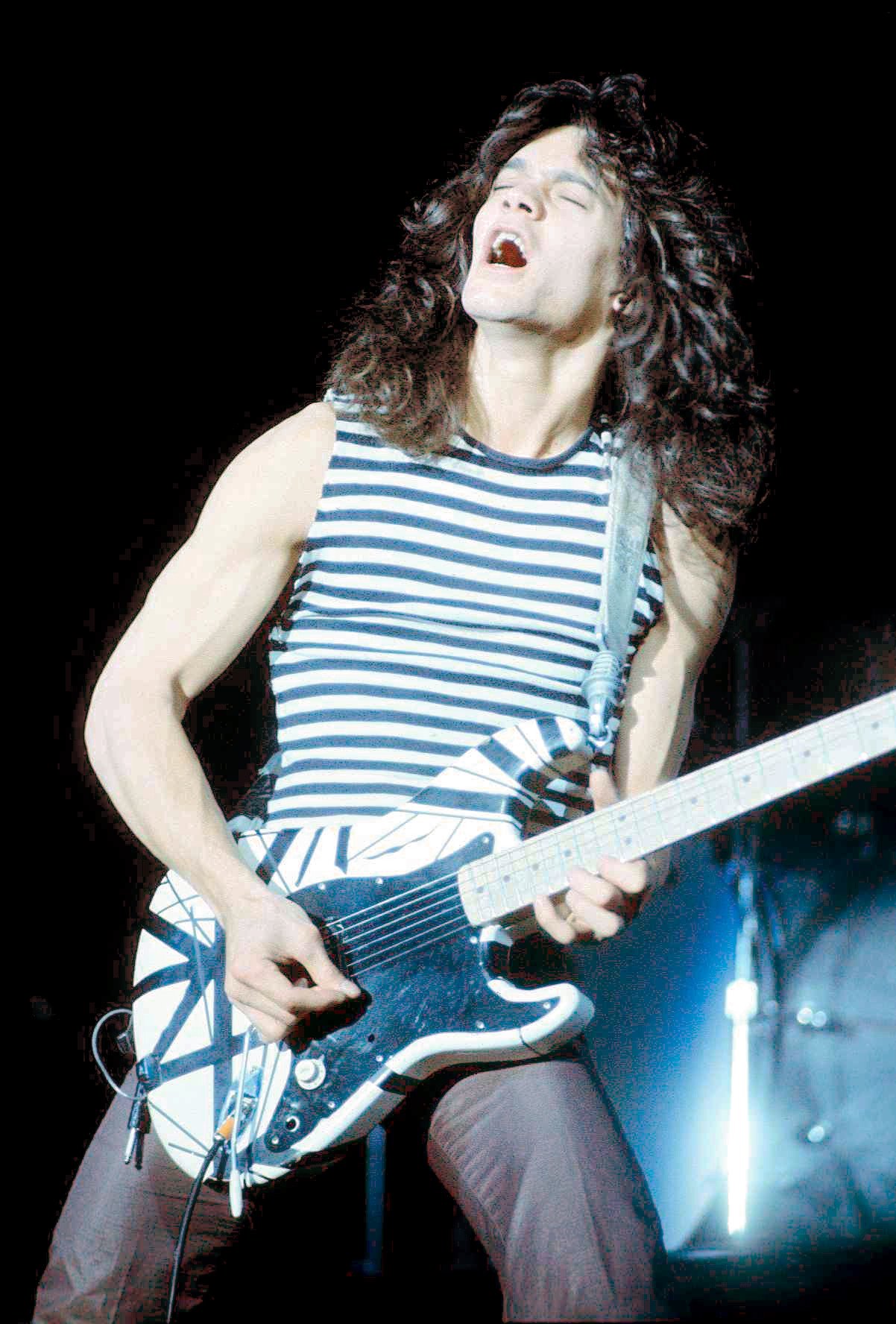
The cover photos, shot at the Whisky a Go Go on the Sunset Strip — the same club where the band had cut its teeth and where Templeman’s journey with them had effectively begun — showed four young men on the verge of everything: confident, hungry, and completely unaware of how completely they were about to change the world. And there on the cover was Eddie’s guitar: a $200 parts-caster he had assembled himself from spare components, painted in red, white, and black stripes, the instrument the world would come to know as Frankenstrat.
The Big Bang of Hard Rock
Listen to “Van Halen” today and it still sounds like the future arriving early. In thirty-five minutes, four kids from Pasadena rewrote what the electric guitar could do, what a rock band could sound like, and what a debut album could achieve. Eddie Van Halen didn’t just play the guitar; he reinvented it — the tapping, the harmonics, the brown sound, the sheer joy of it. David Lee Roth didn’t just sing; he conducted a carnival, the greatest frontman of his generation at the very start of his reign. Alex Van Halen and Michael Anthony didn’t just keep time; they detonated it, a rhythm section with swing and thunder in equal measure.
It was cut in three weeks for the price of a nice house, by a band the industry had almost ignored, in a studio that smelled of the Doobie Brothers’ success. And it became the big bang of eighties hard rock — the record every guitarist had to reckon with, the album that launched a thousand bands and inspired a generation, the sound of four young men playing like tomorrow might never come. Three weeks. Forty thousand dollars. Eleven timeless songs. Forever.
Leave a Reply