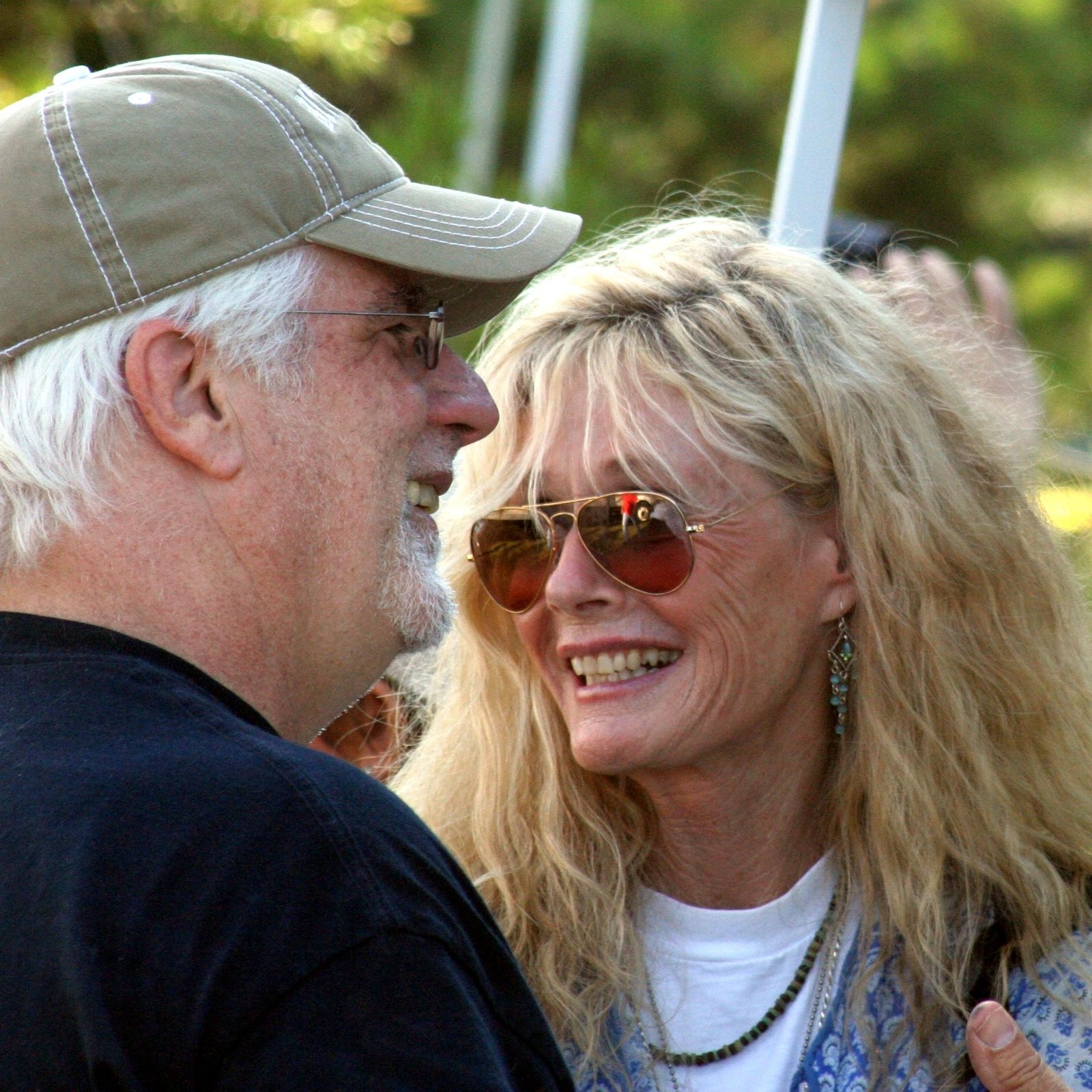
In the spring of 1981, a strange, smoky voice started pouring out of every radio in America, riding a pulsing synthesizer riff and singing about a long-dead Hollywood star’s eyes. Disc jockeys did double-takes. Callers swore it was Rod Stewart. It wasn’t. It was Kim Carnes — a 35-year-old Los Angeles songwriter who had been grinding in the music business for fifteen years, who had sung jingles by day and smoky clubs by night, who had watched her own songs become hits for other people. “Bette Davis Eyes” spent nine weeks at number one and became the biggest single of the year. But the real story isn’t the hit. It’s everything she survived to get there — and everything she did after.
Jingles by Day, Smoke by Night
Kim Carnes was born on July 20, 1945, in Los Angeles — not into a musical family, despite what you’d assume. Her father was an attorney, her mother a hospital administrator, and neither of them thought singing and writing was even a job. Kim knew otherwise from the age of three. By eighteen she was a working professional: singing advertising jingles in studios by day, playing clubs around Los Angeles by night, breathing in decades of secondhand smoke.
That smoke, she has always said, is the secret of her voice. Not damage, exactly — seasoning. Years of singing over barroom chatter in hazy rooms gave her that famous rasp, the throaty growl that would later make strangers mistake her for Rod Stewart. She tried acting, too, landing a spot on “The Patty Duke Show” and a role in the 1967 folk-musical film “C’mon, Let’s Live a Little” alongside Bobby Vee — and, in a twist of fate, a young folk-rocker named Jackie DeShannon, who would one day hand her the song that changed everything.
The Minstrels, the Gambler, and the Husband
In 1966, Carnes joined the New Christy Minstrels, the hugely popular folk troupe that toured the country with its clean-cut harmonies. It was there she met the two men who would shape her life: a lanky Texan singer named Kenny Rogers, and a fellow musician named Dave Ellingson. She married Ellingson in 1967, and the two became a songwriting team — and, briefly, a folk duo called Kim & Dave.
The duo years were lean but not wasted. Their song “Nobody Knows” was featured prominently in the 1971 cult film “Vanishing Point,” and Carnes’s “Sing Out for Jesus” was recorded by none other than Big Mama Thornton for the same soundtrack. The couple signed a publishing deal with producer Jimmy Bowen and shared demo-recording time with Bowen’s other young writers — a circle that included Don Henley, Glenn Frey, and JD Souther. Carnes was in the room where the Southern California sound was being invented. She just wasn’t the one getting famous yet.
The Songwriter Nobody Saw
Through the seventies, Carnes released a string of solo albums — “Rest on Me” in 1972, a self-titled A&M record in 1975, “Sailin’” in 1976 — that went precisely nowhere commercially. She was frustrated, particularly by the parade of outside writers her labels forced on her records. But as a songwriter, she was on fire. Her “Love Comes from Unexpected Places” won the Grand Prize at the 1976 American Song Festival and Best Composition at the Tokyo Song Festival. Barbra Streisand recorded it for “Superman” and cut another Carnes tune, “Stay Away,” for “Songbird.” Frank Sinatra, Anne Murray, Rita Coolidge — they all sang Kim Carnes songs.
She co-wrote with a teen idol at his peak, David Cassidy, toured the world opening for him, and sang backing vocals on his records. She sang behind Dionne Warwick. She even recorded a novelty song under the pseudonym “Connie con Carne” — a 1979 track called “She Dances with Meat” that remains one of the strangest footnotes in any major artist’s catalog. And her first real chart hit as a singer? A duet version of her own “You’re a Part of Me” with Gene Cotton in 1978 — a song she’d written years earlier. The pattern was becoming clear: Kim Carnes was always close to the spotlight, never quite in it.
“Don’t Fall in Love with a Dreamer”
The door finally cracked open in 1980, thanks to the old Minstrel. Kenny Rogers, by then a superstar, commissioned Carnes and Ellingson to write all the songs for his concept album “Gideon.” Then he invited Carnes to duet with him on “Don’t Fall in Love with a Dreamer.” The record went to number four on the pop chart, number three country, and earned a Grammy nomination. Overnight, the industry remembered the raspy-voiced woman’s name.
Carnes capitalized fast. Her 1980 album “Romance Dance” gave her a first solo top-ten hit with a cover of the Miracles’ “More Love” — and Smokey Robinson himself was so impressed that he wrote a follow-up for her, a song called “Being with You.” Here’s the kicker: Robinson’s producer insisted Smokey keep it for himself. It went to number one — for Smokey. Carnes had written other people’s hits, lost a custom-written smash to its own author, and was still waiting for her own moment. She was 35 years old, a veteran of fifteen years in the business. Her moment was one album away.
The Polka That Became a Smash
“Bette Davis Eyes” had been floating around since 1974, when Jackie DeShannon and Donna Weiss wrote it. DeShannon recorded it herself — as a bouncy, barrelhouse, almost polka-like number that went nowhere. The song then sat in a drawer. Songwriter Donna Weiss eventually mentioned it to Carnes’s producer Val Garay, almost as an afterthought: she had this old song she’d given to a previous producer and nothing had come of it. Garay heard the demo — all oompah piano, sounding for all the world like a Leon Russell outtake — and heard something else underneath: a killer melody and a great lyric.
Carnes was skeptical. She’d heard the song before and passed. But Garay and keyboardist Bill Cuomo went to work, stripping the tune to its bones and rebuilding it around Cuomo’s slinky synthesizer riff — dark, slithery, modern. Carnes and her band rehearsed it for three days, chasing a darker, more haunting sound, then cut the final arrangement in a single day with no overdubs. What had been a beer-hall stomp became a midnight noir seduction. When Carnes’s raw, smoky vocal hit the chorus, the song didn’t just work — it detonated.
Released in March 1981 as the lead single from “Mistaken Identity,” “Bette Davis Eyes” hit number one within weeks and stayed there for nine — the longest run at the top that year, and, except for Olivia Newton-John’s ten-week “Physical,” the biggest hit of the entire eighties. It was the best-selling single of 1981 in America, won the Grammys for both Record of the Year and Song of the Year, and carried its parent album to four weeks at number one and a nomination for Album of the Year.
The song’s success had its comic side. So many listeners assumed the gravelly vocal belonged to Rod Stewart that Carnes spent months correcting the record. And the video — all billowing curtains, dramatic shadows, and interpretive dancers — became an early MTV staple, directed by Russell Mulcahy, the man who would go on to define the channel’s visual language. The overnight sensation, a decade and a half in the making, was complete. Almost.
The Letter From Bette Davis
The song’s most famous fan was its namesake. Bette Davis — then in her seventies, a living Hollywood legend — heard the record and loved it. She wrote letters to Carnes and the songwriters, thanking them for making her, as she put it, “a part of modern history.” In her memoir “This ‘N That,” Davis recalled that her young grandson Ashley told her she had “finally made it.” The two women struck up a genuine friendship; Carnes visited Davis at her home several times. And in what Carnes still calls a career highlight, she performed the song live for Davis at a tribute to the actress held shortly before Davis’s death in 1989. Imagine it: the raspy-voiced songwriter from Los Angeles, singing her nine-week number one to the woman whose eyes inspired it, in the last months of a legend’s life. Some hits are just hits. This one became a relationship.
The Solo-Duo-Trio Trifecta
Here’s a piece of chart trivia most fans have never heard: on the week ending January 19, 1985, Kim Carnes became the first artist in history to appear on the Billboard Hot 100 simultaneously as a solo artist, as half of a duo, and as a member of a trio. The solo record was “Invitation to Dance” — a disco track produced, in a lovely full-circle moment, by Nile Rodgers. The duet was “Make No Mistake, He’s Mine” with Barbra Streisand, a song Carnes wrote and co-produced. The trio was “What About Me?” with Kenny Rogers and James Ingram. One singer, three configurations, one chart, one week. Nobody had ever done it before.
Two weeks later she was standing between Paul Simon and Michael Jackson in the “We Are the World” video, singing her line of the bridge with Huey Lewis and Cyndi Lauper. The mid-eighties also brought Grammy nominations for Best Rock Vocal Performance for “Voyeur” and “Invisible Hands,” and her “I’ll Be Here Where the Heart Is” landed on the blockbuster “Flashdance” soundtrack. And her songwriting kept minting money for others: her “Make No Mistake, He’s Mine” was reworked as “Make No Mistake, She’s Mine” for Ronnie Milsap and Kenny Rogers and went to number one on the country chart in 1987; her “The Heart Won’t Lie,” co-written with Donna Weiss, became a number-one country duet for Reba McEntire and Vince Gill. The woman who once couldn’t buy a hit was now writing them in her sleep.
The Songwriter’s Second Life
Carnes’s last top-twenty pop hit, “Crazy in the Night,” came in 1985. Rather than chase a fading spotlight, she did what she’d always done: she went back to writing. In 1994 she moved to Nashville at her manager’s urging, settling into the songwriter’s life she’d never really left. Country stars lined up for her material — Tim McGraw, Collin Raye, and others cut her songs through the late nineties and 2000s. Her 2004 album “Chasin’ Wild Trains” was a rootsy, Americana-leaning gem. In 2024, she re-recorded “Bette Davis Eyes” as “Kim’s Version,” with some of the same musicians from the original session — a love letter to the song that made her, four decades on.
The Untold Story of Kim Carnes is the story of every almost-famous lifer who refused to quit. Fifteen years of jingles, clubs, Minstrels, and other people’s hits — and then, at 35, an age when the industry usually stops calling, she recorded a discarded polka in one day and owned the world for nine weeks. The rasp wasn’t a gimmick. It was the sound of every smoky bar she’d ever sung in, finally getting its due.
Leave a Reply