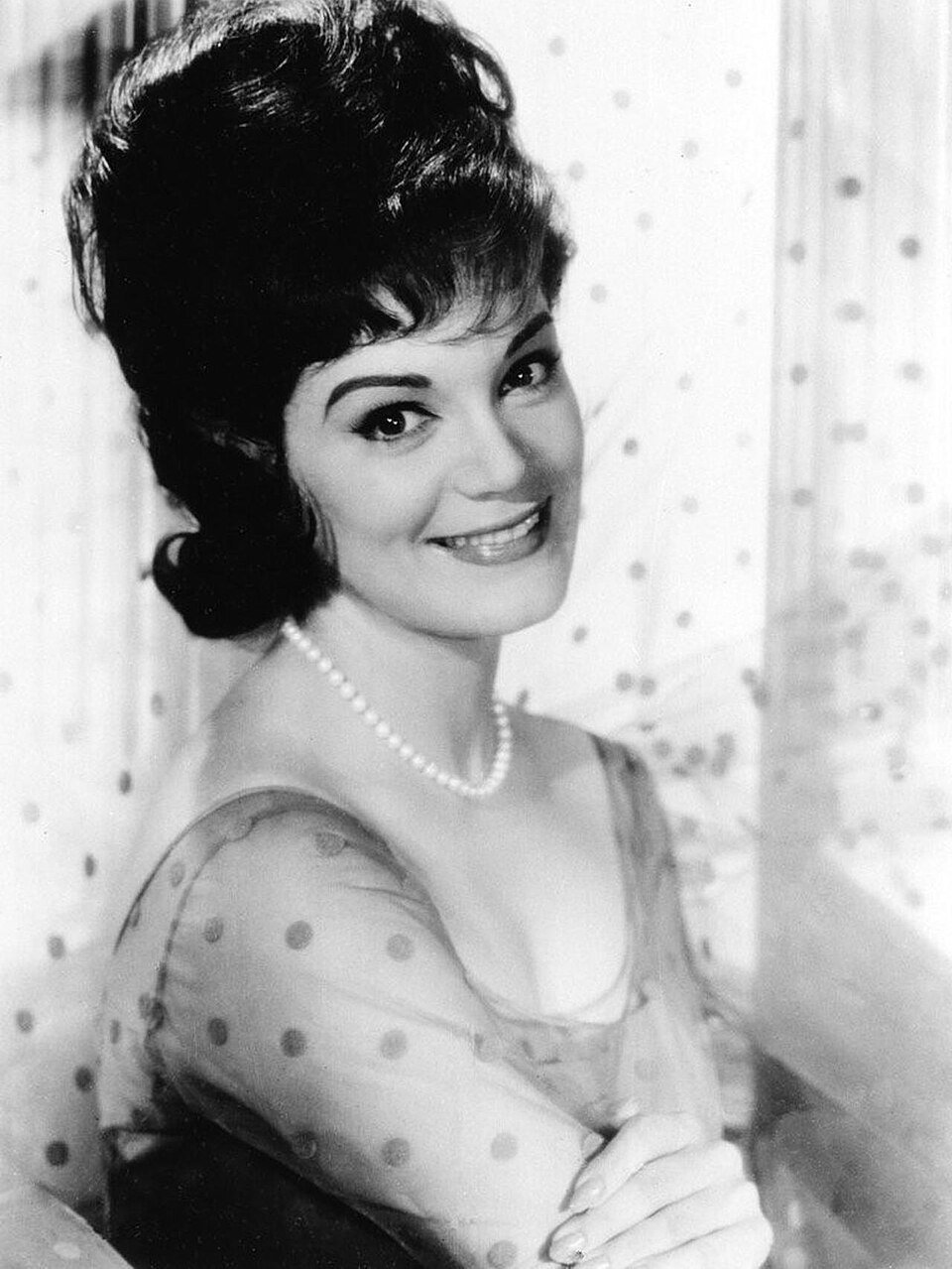
Behind Connie Francis’s bright, confident voice was a woman who knew both great joy and great pain, and who sang about both with a honesty that made listeners feel less alone. Her hits sound effortless, but they were shaped by a close, sometimes complicated family, by early fame, by love and loss, and by a determination to keep going when life gave her every reason to stop. To understand Connie Francis is to understand a woman who gave her heart to her audiences, and who, time after time, found the strength to give it again.
A Father’s Dream, a Daughter’s Talent
Connie’s father, George Franconero, was the driving force behind her early career. A construction worker who loved music, he recognised his daughter’s talent when she was a toddler, bought her an accordion, and devoted himself to her success. He drove her to auditions, coached her, and made decisions about her career, sometimes with a firmness that later caused tension between them. Connie loved her father deeply, and she also struggled, as many child stars do, with the weight of his expectations. Their relationship was complex: he gave her the opportunity to become a star, and he also, at times, made it hard for her to make her own choices. That mixture of gratitude and struggle is audible in her singing, which is both confident and vulnerable, as if she is always trying to please someone she loves, while also finding her own voice.
Growing Up in the Spotlight
Connie grew up in public, from talent contests as a small child to television appearances as a teenager to international stardom in her early twenties. She did not have a normal adolescence; she had rehearsals, recordings, and tours, and she learned to be professional before she learned to drive. She also learned to hide her feelings, to smile for the camera even when she was tired or sad, and to sing about love even when her own love life was complicated. That discipline made her a great performer, but it also took a toll. Later in life, she spoke honestly about the pressure of early fame, about feeling that she had to be perfect, and about the loneliness that can come with being adored by millions and known by very few.
Love, Marriage, and Her Son Joseph
Connie was married four times, and her personal life was often in the press, but the most important relationship in her life was with her son, Joseph, born in 1962 during her marriage to Joseph Garzilli. Joseph, who later became her manager, was her pride and her anchor. She has spoken about motherhood as the greatest joy of her life, and about how becoming a mother changed the way she sang, giving her songs a deeper tenderness and a greater sense of responsibility. She wanted to be present for her son, even while touring, and she tried to balance career and family in a way that was difficult in an era when female stars were expected to choose one or the other. Her love for Joseph is a thread that runs through her later life and her later music.
A Tragedy She Refused to Hide
In 1974, Connie was attacked in a hotel room in Westbury, New York, after a concert, an event that left her traumatised and that she later described as the worst experience of her life. She sued the hotel, won a landmark case, and became an advocate for hotel safety and for victims’ rights. She also spoke publicly about the attack, at a time when many victims were silenced by shame, and she helped other women find the courage to speak. That advocacy is a central part of her personal story: she turned a private trauma into a public cause, and she used her fame to protect others. Her singing after that event carried a new depth, a knowledge of pain that made her ballads even more moving.
Losing Her Brother, Facing Depression
In 1981, Connie’s brother, George Franconero Jr., was murdered, a loss that devastated her and deepened her struggles with depression. She was hospitalised several times in the 1980s for mental health treatment, and she has been remarkably open about those hospitalisations, about the stigma she faced, and about the help she received. She has said that talking about mental illness, and seeking treatment, saved her life, and she has encouraged others to do the same. Her openness was brave, especially for a star of her generation, and it has helped countless fans who saw in her story a reflection of their own struggles. She did not pretend that fame protected her from pain; she showed that pain could be faced, treated, and survived.
Faith, Family, and Italian Roots
Throughout her life, Connie has remained close to her Italian-American roots and to her family. She grew up speaking Italian at home, she recorded Italian songs that became hits in Italy, and she has always credited her parents with instilling values of hard work, loyalty, and faith. Her faith, though private, has been a source of strength, particularly during her hardest years. She has also remained close to her extended family, and to friends from Newark, who knew her before she was famous and who treated her as Concetta, not as a star. Those roots gave her a sense of identity that fame could not erase, and they are part of why her singing feels so grounded, so human, and so warm.
The Comebacks That Defined Her
Connie’s career is defined not by a single peak, but by a series of comebacks. After early failure, she came back with “Who’s Sorry Now?” After personal tragedy, she came back to the stage. After hospitalisation, she came back to recording and touring. Each comeback was harder than the last, and each one showed a woman who refused to be defined by her worst moments. Her fans, who had grown up with her, understood that resilience, because they had lived their own versions of it. When she returned to the stage, audiences did not just applaud a singer; they applauded a survivor, a woman who had faced the worst and was still standing, still singing, still smiling.
Friendships and Generosity
Those who know Connie describe her as generous, funny, and fiercely loyal to friends. She has maintained friendships with fellow singers, with songwriters, and with fans, many of whom she has known for decades. She remembers birthdays, she sends notes, and she takes time after concerts to talk to people, even when she is tired. She has also been generous with her time for charitable causes, particularly those supporting victims of violence and people with mental illness. Her generosity is not a performance; it is the same generosity you hear in her voice, where every song feels offered as a gift, not as a display.
What Her Heart Still Sings
When we listen to Connie Francis today, we hear more than a pop star. We hear a daughter who loved her father and struggled with his expectations, a mother who adored her son, a woman who survived attack and loss and depression, and an artist who turned all of that into songs that comforted millions. Her hits endure because they are not just pretty tunes; they are pieces of a life, sung with a heart that has known both joy and sorrow, and that has chosen, again and again, to keep singing.
A Closing Note
Next time you hear Connie Francis sing “Where the Boys Are” or “Who’s Sorry Now?,” listen for the woman behind the voice: the little girl with the accordion in Newark, the teenager who refused to quit, the mother, the survivor, and the friend who still, after all these years, wants to sing for you. That is the heart behind the hits, and it is still beating, warm and brave, in every note she left us.
Connie Francis did not just carry a generation’s heart; she carried her own, openly and courageously, and she shared it with the world.
Leave a Reply