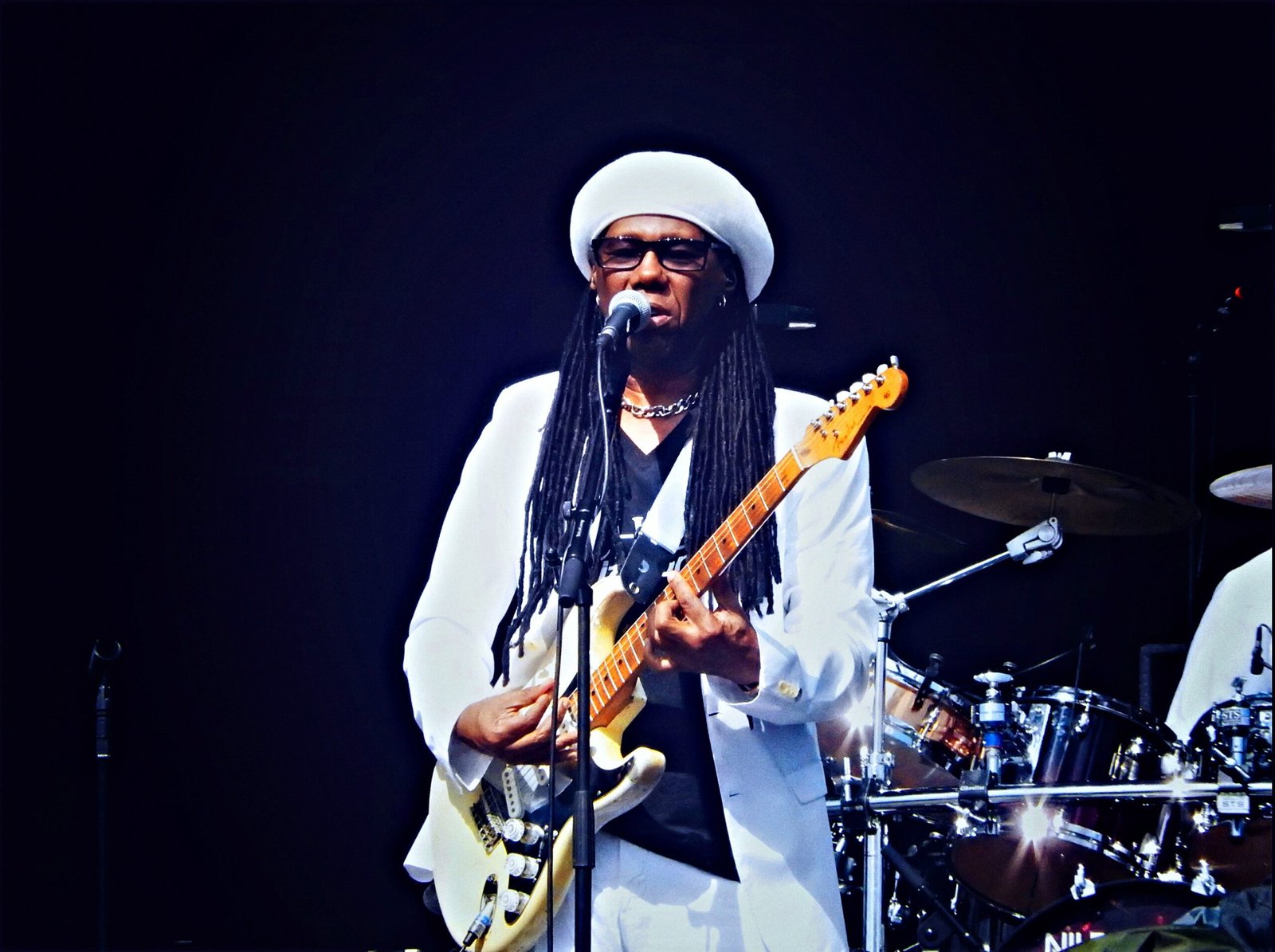
It was the winter of 1979, and the two skinniest men in music could do no wrong. Nile Rodgers and Bernard Edwards had given the world “Dance, Dance, Dance (Yowsah, Yowsah, Yowsah),” “Everybody Dance,” and “Le Freak” — a song so ubiquitous that Atlantic Records executives once claimed it was the best-selling single in the label’s history. They had taken Sister Sledge, three sisters from Philadelphia, and turned them into global stars with “We Are Family” and “He’s the Greatest Dancer.” Diana Ross would come calling soon enough. David Bowie, Madonna, Duran Duran, and Daft Punk would follow in the years ahead. But in January 1979, none of that had happened yet. There were just two songwriters from New York, a tight little band, and a deadline for the third Chic album. They had eight weeks at the Power Station. What they made there would outlive disco itself.
The Hottest Producers on the Planet
To understand Risqué, you have to understand the position Chic was in. They were no longer just a band; they were an industry. Rodgers and Edwards had built the Chic Organization into a songwriting and production machine modeled on Motown’s assembly line, except the assembly line wore bespoke suits and played with a swing that made studio musicians weep. When they walked into the Power Station on 53rd Street in early 1979, they were coming off a year in which they had essentially defined the sound of popular music.
That kind of success buys you confidence, and Risqué sounds like confidence. It is a lush, daring, deliberately provocative record — the title alone was a raised eyebrow. Rodgers later said they wanted to make an album that was sexier, funkier, and more sophisticated than anything they had done. They had the clout to take their time, and for once, they had a world-class room to work in. The Power Station, with its high ceilings and enormous live room, was becoming the place where New York made its most expensive-sounding records. Chic would help make its reputation.
Eight Weeks at the Power Station
The sessions ran through the winter and spring of 1979 and lasted about eight weeks. Rodgers and Edwards produced, as always, and the brilliant young engineer Bob Clearmountain sat behind the board. Additional recording took place at Kendun Recorders in Burbank and Electric Lady Studios in Manhattan, but the heart of the album was cut at the Power Station, live and loud.
The band was the classic Chic lineup: Tony Thompson on drums, the powerhouse whose kick drum sounded like a detonation; Rodgers on guitar, chopping out those impossibly clean rhythm figures; Edwards on bass, the melodic anchor of the entire operation; Robert Sabino on keyboards; Sammy Figueroa on percussion; and the string and horn sections that gave Chic records their champagne fizz. The Chic Strings, arranged by Rodgers, were as essential to the sound as any guitar.
One familiar voice was missing. Luther Vandross, who had sung backing vocals on the earlier Chic albums, had launched his own solo career and was gone. In his place came a constellation of superb singers, including Alfa Anderson and Luci Martin. And for one crucial session, Rodgers and Edwards called an old friend who had moved to California: David Lasley flew back to New York specifically to sing on “Good Times.” It tells you everything about how seriously they took background vocals.
The “Good Times” Session
“Good Times” was the first song recorded for the album, and it may be the most perfect thing Chic ever made. Rodgers has said the groove was inspired by Kool & the Gang’s “Hollywood Swinging” — that rolling, joyful bounce — but what the band played went somewhere else entirely. Edwards’ bass line is one of the most famous ever recorded: a rolling, melodic figure that seems to dance around Thompson’s drums without ever stepping on them. Rodgers’ guitar scratches and chimes in the gaps. It runs 8 minutes and 13 seconds on the album, and it never wastes a second.
The single was released on June 4, 1979, and on August 18 it hit number one on the Billboard Hot 100. It was Chic’s second chart-topper after “Le Freak,” and it would be their last. That fact gives the song a strange poignancy now: the happiest record of 1979 was also a farewell to the top of the charts.
Disco Demolition Night
Eighteen days before Risqué hit stores on July 30, 1979, something ugly happened in Chicago. On July 12, a local rock DJ named Steve Dahl staged “Disco Demolition Night” between games of a White Sox doubleheader at Comiskey Park. Fans were invited to bring disco records to be blown up on the field. A crowd of 47,495 showed up, far beyond capacity. The explosion in center field was followed by a full-scale riot — thousands stormed the field, fires were set, and the second game had to be forfeited. It was framed as a joke, a rock-versus-disco stunt. But the subtext was impossible to miss: disco was Black, Latin, and gay music, and a lot of the people gleefully smashing those records were expressing something darker than musical preference.
The backlash was swift and commercial. Radio stations flipped formats. Labels dropped disco acts overnight. Chic, the classiest act in the genre, was suddenly swimming against a cultural riptide. Risqué — the title, the cover, the slinky confidence of it — landed in a country that had decided, almost overnight, to be embarrassed by the music it had been dancing to for five years. The album still went to number five and went platinum, driven by “Good Times.” But the era was over, and everyone knew it.
The Night Rap Was Born
Here is where the story takes its strangest and most wonderful turn. In late 1978, Debbie Harry — yes, that Debbie Harry, of Blondie — took Nile Rodgers to a hip-hop event in the South Bronx. Rodgers watched DJs and MCs rocking a crowd with nothing but turntables, microphones, and attitude, and something clicked. Then, on September 20 and 21, 1979, Chic played the Palladium in New York on a bill with Blondie and the Clash. The hip-hop pioneer Fab Five Freddy and members of the Sugarhill Gang came down and freestyled on stage during Chic’s set. Rodgers was fascinated.
Not long after, Rodgers heard a record at a club called Leviticus that stopped him cold. The DJ told him he’d bought it in Harlem that very day. It was “Rapper’s Delight” by the Sugarhill Gang — and its backing track was, unmistakably, the bass line and groove of “Good Times,” replayed by studio musicians. A 17-year-old bassist named Chip Shearin had been paid $70 to play the “Good Times” groove for fifteen minutes straight. The whole track was recorded in a single take. Sylvia Robinson, the R&B veteran who ran Sugar Hill Records, had the vision to put it out. It sold more than two million copies in the United States and became the first rap record to reach the Top 40.
Rodgers and Edwards initially threatened to sue. But Rodgers, to his eternal credit, recognized what had happened: their music had become the foundation of something entirely new. They settled for a co-writing credit, and “Rapper’s Delight” became the Big Bang of hip-hop — built on a Chic groove. Every time you hear a sample-based record, you are hearing the echo of that decision.
Rodgers has often said the episode taught him something about the life of a song once it leaves the studio. He could have buried “Rapper’s Delight” in litigation; instead he let it live, and in doing so became a godfather of hip-hop. Decades later he would ride his own guitar figure to global ubiquity again on Daft Punk’s “Get Lucky” and collaborate with Beyoncé on Renaissance, completing a circle that began the day a DJ in Harlem bought a 12-inch hot off the press.
The Bass Line That Conquered Rock
There is one more ghost in the Power Station walls. During the Risqué sessions, Queen were also working at the studio. Bassist John Deacon spent time around the Chic camp, listening to Bernard Edwards play. Edwards’ melodic, locked-in bass style got into Deacon’s head. Back in Munich, at Musicland Studios, Deacon wrote a song built around a similarly slinky, strutting bass figure. That song was “Another One Bites the Dust” — which became Queen’s biggest-selling single ever.
Think about that: the funkiest white rock band of the seventies made their biggest hit by channeling Chic. Rodgers has spoken about it with pride rather than resentment. Influence, in his view, is the sincerest compliment the universe pays.
The Album the World Overlooked
Risqué is more than “Good Times.” “My Forbidden Lover” is a slinky, minor-key gem. “My Feet Keep Dancing” is pure Chic euphoria. “A Warm Summer Night” is one of the most beautiful slow jams of the era. The album is sequenced like a night out: the rush, the romance, the sweat, the 4 a.m. tenderness. Critics at the time sensed it was special — AllMusic would later call it arguably Chic’s finest moment and the last album to feature their classic sound.
Commercially, though, it marked the end of something. Chic would never again reach the American Top 40. The disco backlash, combined with changing tastes, pushed Rodgers and Edwards fully into production work — where they would go on to make some of the biggest records of the eighties, from Diana Ross’s Diana to David Bowie’s Let’s Dance to Madonna’s Like a Virgin. But Risqué remains the sound of a band at the absolute peak of its powers, making music for a party that was about to be broken up by the neighbors.
The reappraisal came, as it always does, a generation later. Hip-hop producers spent the eighties and nineties mining Risqué for breaks and bass lines, and a young Nile Rodgers watched his old grooves become the DNA of a new art form. When Bernard Edwards died suddenly in 1996, Rodgers carried the Chic name forward alone, and in 2018 he released It’s About Time, the first Chic album in 26 years — proof that the Risqué spirit never really left him. He has since become chairman of the Songwriters Hall of Fame and a beloved elder statesman of pop, but everything he built started in rooms like the Power Station in the winter of 1979.
Put the record on today and the strangest thing happens: it doesn’t sound dated at all. The drums still detonate. The bass still rolls. The strings still shimmer. “Good Times” has been sampled, covered, and quoted hundreds of times, and it still sounds like the future. Nile Rodgers likes to say that he writes music to make people happy. In the winter and spring of 1979, in a big room on 53rd Street, he and Bernard Edwards made eight weeks of happiness — and accidentally laid the foundation for hip-hop, gave Queen their biggest hit, and closed out the disco era with its crowning achievement. Those were good times, indeed.
Leave a Reply