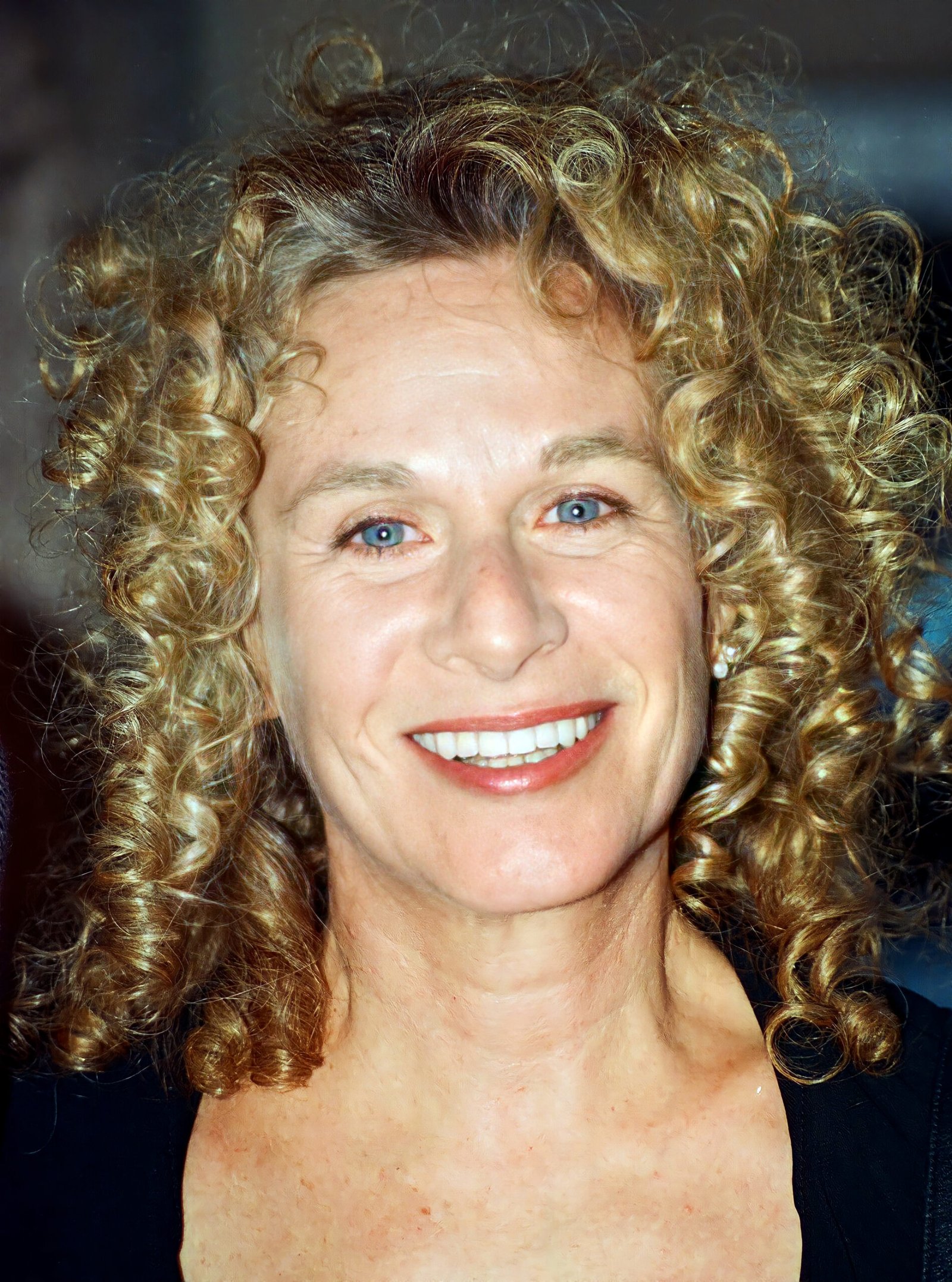
Some breakup songs are screams. It’s Too Late is a door closing quietly — and that is precisely why it devastated a generation. Released in the spring of 1971, Carole King’s gentle, clear-eyed farewell to a dying love spent five weeks at No. 1, carried the album Tapestry into history, and won the Grammy Award for Record of the Year. Yet the most famous song on one of the best-selling albums ever made was assembled in less time than it takes to eat lunch: the lyric written in about twenty minutes on a legal pad, the music composed by King at the piano in the same creative burst, the record cut live in a Hollywood studio by a band sitting close enough to touch.
This is the story of how two women in the middle of their own endings wrote the most grown-up breakup song in pop — and how the songwriter who had spent a decade in the background finally sang it herself.
The Hitmaker Steps Out of the Background
To understand what It’s Too Late meant, you have to remember where Carole King had been. Through the 1960s she and her husband Gerry Goffin were the Brill Building’s golden partnership, writing classics for other voices: the Shirelles’ Will You Love Me Tomorrow, Aretha Franklin’s (You Make Me Feel Like) A Natural Woman, the Monkees’ Pleasant Valley Sunday. King was a hit factory who rarely sang her own material in public.
By 1970 the marriage was over, and King had relocated to Los Angeles — to Laurel Canyon, then the epicenter of the new singer-songwriter world — where friends like James Taylor encouraged the shy writer to perform her own songs. She had already tested the water as a performer in the City, a trio with guitarist Danny Kortchmar and bassist Charles Larkey, two musicians who would follow her into the Tapestry sessions; the group’s lone album sank, but the experience put her performing band in place. Her first solo album under her own name, Writer, had been a modest affair. For the second, her publisher-turned-producer Lou Adler, founder of Ode Records, proposed something disarmingly simple: make the record sound like her demos. Just Carole, her piano, her plain and honest voice, and a small band. No varnish. The album would be Tapestry.
Twenty Minutes on a Legal Pad
The lyric of It’s Too Late is not King’s — and she has never once let an interviewer forget it. Its author was Toni Stern, a painter and songwriter in King’s Laurel Canyon circle and one of the two collaborators King worked with repeatedly in those years; Stern also supplied the words to Where You Lead. As Stern told it in a 2021 interview, she wrote the lyric in about twenty minutes, in longhand on a legal pad, in the raw aftermath of a breakup of her own. She carried the pages to King’s house, and King sat down at the piano and found the music — by most accounts within the same day, the melody arriving almost fully formed, with much of the arrangement that would appear on the finished record already in it.
What Stern had written was revolutionary in its restraint. There is no villain in It’s Too Late, no betrayal, no slammed door. Something inside has simply died, and both people know it; the singer stayed in bed all morning just to pass the time, and now the only honest thing left is to say so kindly. In 1971, when popular music treated the end of love as melodrama, this read like literature. King, divorced herself and raising two daughters, understood every syllable of it, and she has often said that Stern’s words speak for everyone going through a divorce — one reason listeners have spent fifty years writing to her about the song, and why she always redirects the credit to its lyricist.
Cut Live in Studio B
Tapestry was recorded in January 1971 at Studio B of A&M Studios in Hollywood, engineered by Hank Cicalo, in sessions that famously overlapped with James Taylor’s Mud Slide Slim and the Blue Horizon in the same building — Taylor, King’s great champion, would soon carry another Tapestry song, You’ve Got a Friend, to No. 1 himself. The pace was brisk: with Adler determined to capture the intimacy of King’s demos, the band cut as many as three tracks a day, playing live and close together, working from chord sheets and feel.
For It’s Too Late the lineup was the heart of King’s Los Angeles band: Danny “Kootch” Kortchmar, her comrade from the Brill Building days and the band the City, on electric guitar and congas; her husband Charles Larkey on bass; Joel O’Brien on drums; Ralph Schuckett on electric piano; and, floating above it all, veteran jazzman Curtis Amy on soprano saxophone. Kortchmar has recalled learning the song by ear as King played it at the piano, and being asked for something melancholy on the solo — a Telecaster through a small Princeton amplifier, done in two or three passes, a sigh of a solo that still stops listeners mid-breath. Amy’s soprano sax answers it with the record’s other great instrumental voice, in the interpretation of scholar James Perone part of what gives the track its feel of exhausted, tender resignation.
And at the center is King herself: piano first, voice second, ego nowhere. She sings the song the way you deliver news you have already finished crying about — steady, conversational, a little tired, utterly believable.
Five Weeks at the Top
Tapestry was released on February 10, 1971, and Ode issued It’s Too Late as a double A-side single with the effervescent I Feel the Earth Move on April 16. Radio embraced both faces of the record, but it was the quiet one that became a phenomenon. The single entered the Hot 100 in May and on June 19 reached No. 1, holding for five consecutive weeks and topping the Adult Contemporary chart for five weeks as well; Billboard ranked it the third-biggest song of 1971, and the single was certified gold. On the very day the single hit No. 1, Tapestry began its own fifteen-week reign atop the Billboard 200 — an album so durable it would remain on the chart for more than 300 weeks and sell over 25 million copies worldwide.
At the 1972 Grammy Awards, King’s coronation was total. It’s Too Late won Record of the Year; Tapestry won Album of the Year and Best Female Pop Vocal Performance; and You’ve Got a Friend won Song of the Year — making King the first solo female artist to win Record of the Year and the first woman ever to win Song of the Year as a songwriter. One album, four Grammys, and the back-room writer of the Brill Building era had become the defining voice of the new one.
The Door That Never Really Closed
The song’s influence runs through every confessional record that followed. Along with the rest of Tapestry, it proved that an album of unadorned, piano-led adult songs — written and sung by a woman in her own unglamorous voice — could outsell everything else in the world, and it opened the commercial road for the singer-songwriter decade. The RIAA later named it among its Songs of the Century, and it has been covered across genres ever since, though no version has displaced King’s, because no version can: the record’s power is inseparable from the woman at the piano and the friend with the legal pad.
Fifty years on, It’s Too Late endures because it tells the truth about how most love actually ends — not with an explosion but with a quiet recognition, two people in a room where the feeling used to be. It took twenty minutes to write and an afternoon to perfect. It has been consoling the divorced, the separated, and the simply honest ever since — proof that in the right hands, even goodbye can be a masterpiece of kindness.
Leave a Reply