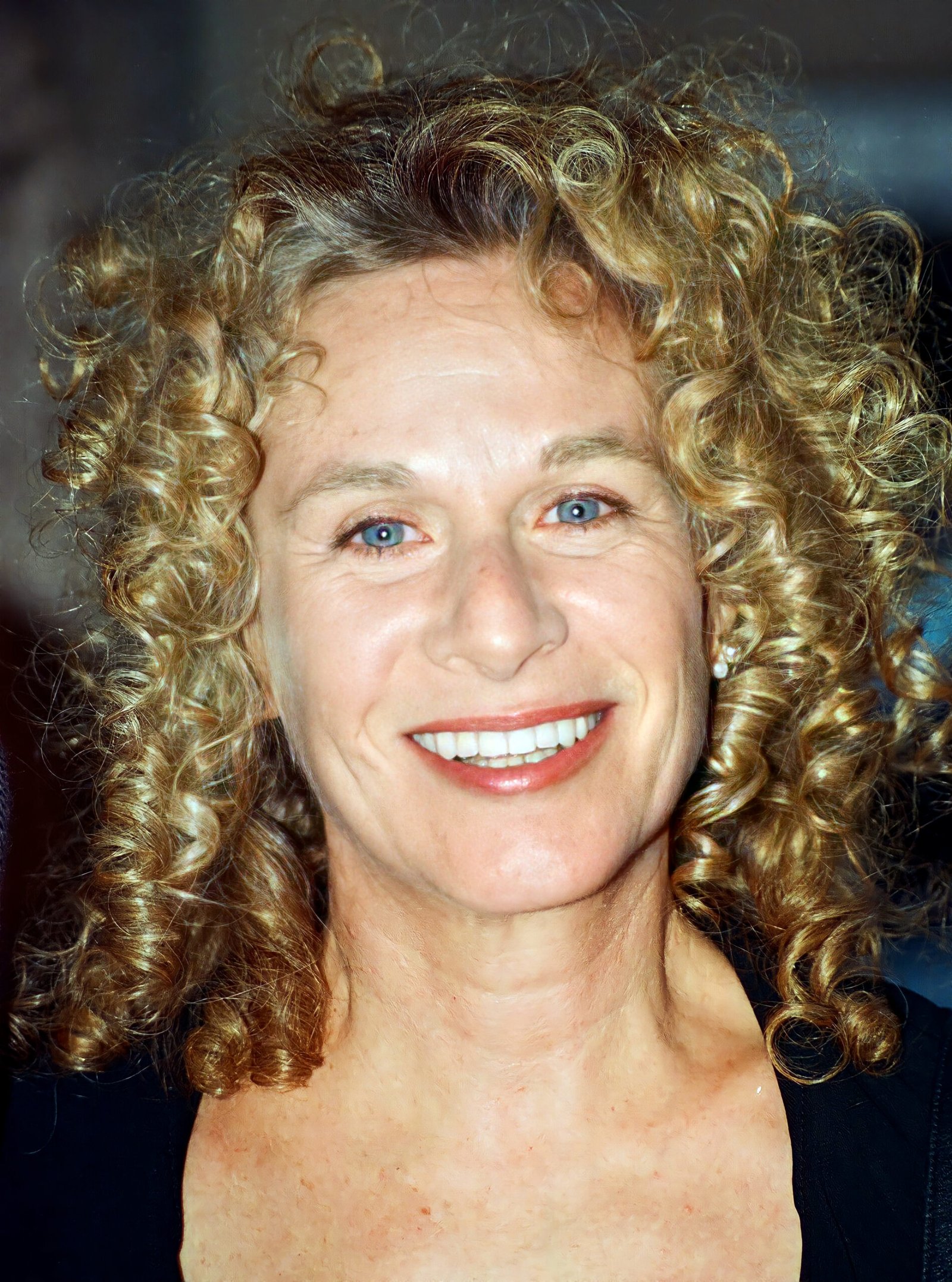
Most Carole King songs begin with her voice or her piano. Jazzman begins with a saxophone — and that is the whole point. Released as a single on August 22, 1974, ahead of her sixth album, Wrap Around Joy, the record is built as a duet between King and a horn: she sings a plea to a musician who can lift her above the old routine, and Tom Scott’s saxophone answers her, phrase after phrase, like the prayer being granted in real time. It became her biggest hit since the Tapestry era, carried its album to No. 1, and earned her a Grammy nomination. Yet almost nothing about it was planned as a commercial masterstroke. Its lyricist did not even think it should be the first single.
A Lyricist from Her Past
The words came from David Palmer, and his connection to King ran far deeper than a hired pen. In the late 1960s Palmer had sung in The Myddle Class, a band managed and produced by King and her then-husband Gerry Goffin; her future husband, bassist Charles Larkey, played in the group too. Palmer and King first wrote together on Paradise Alley for her late-sixties band The City. By 1974, Palmer was best known as a former member of Steely Dan: recruited as a singer for the band’s debut, he sang lead on Dirty Work and Brooklyn on Can’t Buy a Thrill before stepping away from the group.
For Wrap Around Joy, King composed the music for the whole album and Palmer wrote all the lyrics — every one of its twelve tracks carries the same King–Palmer credit, a complete reversal of her famous sixties partnership, in which she had so often supplied melodies to Goffin’s words. Palmer’s road to that credit line was unlikely: in his own telling, he was working in a plastics factory in New Jersey when guitarist Jeff “Skunk” Baxter called to say a new band forming in Los Angeles needed a singer, and he was in the studio the next night after arriving. In a 1997 interview, Palmer recalled that Jazzman was either the first or second lyric he handed King for the album, and that he had no idea it carried hit potential. “Your songs are like your kids,” he said. “You raise and nurture them and hope for the best.” He admitted he probably would not have chosen it as the lead single at all.

The Jazzman Himself
Palmer’s lyric is an ode to a single, unnamed player — but the song has a real-life inspiration. Curtis Amy was a tenor saxophonist and composer who had served as musical director of the Ray Charles band, and who had also played on King’s Tapestry sessions. The “jazzman” of the title is Amy: the gifted musician whose playing, in the song’s words, can lift the singer above the old routine and set her spirit free.
On the record, though, the role of the jazzman is performed by Tom Scott. Scott, then leading his jazz-fusion group the L.A. Express, plays the lengthy solos that frame King’s vocal — answering her lines, soaring over the choruses, and taking the record out. It is one of the great guest performances of the decade: the saxophone is not decoration but a second lead voice, and Record World singled out Scott’s “fine sax solos” alongside King’s own strong overdubbed vocals, calling the record her “most animated single” since her Tapestry-era chart-topper of 1971. Reviewers heard the difference immediately. Billboard called Jazzman one of King’s most commercial songs and praised both the saxophone playing and the backing vocals, while Cash Box praised its strong horns and pop arrangement. The single also reached No. 1 on Canada’s Adult Contemporary chart, a quiet sign of how completely the record crossed over from pop radio to easy listening.

Cut at A&M with Lou Adler
Wrap Around Joy was recorded in 1974 at A&M Studios in Hollywood and produced by Lou Adler, King’s longtime producer and the head of her label, Ode Records. Adler had guided the intimate sound of Tapestry; here he framed King with a fuller, brassier band. The album’s core group included Larkey on bass, Andy Newmark on drums, and guitarists Danny Kortchmar and Dean Parks, with a horn section that featured players such as Ernie Watts and Chuck Findley alongside Scott. King’s daughters Sherry and Louise Goffin added backing vocals on the follow-up single, Nightingale.
The album, released in September 1974, moved fast. It was certified Gold by the RIAA on October 16, 1974, entered the Top 10 at No. 7 on October 19, and two weeks later reached No. 1 on the Billboard 200, holding the top spot for a week. Jazzman, its third track, had been sent ahead as the advance single, with another album song, You Go Your Way, I’ll Go Mine, on the B-side.
One Week at No. 2 — and No. 1 Everywhere Else
The single’s chart run was a study in near-miss glory. In the week of November 9, 1974, Jazzman peaked at No. 2 on the Billboard Hot 100, held off the summit by Bachman-Turner Overdrive’s You Ain’t Seen Nothing Yet. It was the second-highest-charting single of King’s solo career, behind only her No. 1 hit of the Tapestry era — and, as later writers have noted, her biggest hit since that era, full stop.
Yet the No. 2 placing undersells how completely the record won its week. That same week, Jazzman stood at No. 1 on the Cash Box Top 100. In King’s hometown of New York, it topped the influential WABC Musicradio 77 survey for the week of November 12. It reached No. 2 in Canada and No. 4 on Billboard‘s Adult Contemporary chart. The industry ratified the performance, too: at the 17th Grammy Awards in 1975, Jazzman was nominated for Best Pop Vocal Performance, Female, losing to Olivia Newton-John’s I Honestly Love You. The album’s second single, Nightingale, followed it into the Top 10, peaking at No. 9 — proof that Wrap Around Joy was no one-song revival.
Lisa Simpson Keeps the Jazzman Alive
Twenty years later, Jazzman found its strangest and most loving second life. In ‘Round Springfield, the twenty-second episode of the sixth season of The Simpsons, first aired on April 30, 1995, Lisa Simpson discovers her mentor, saxophonist Bleeding Gums Murphy, in the hospital, and after his death resolves to keep his memory alive. The episode, a sequel to the first-season Moaning Lisa, in which Murphy had first appeared, was the first in the series in which a recurring character died. It closes with Lisa performing Jazzman as a duet with Murphy’s ghost — Murphy voiced by guest star Ron Taylor, Lisa’s vocal sung by Yeardley Smith, and the saxophone parts played by Dan Higgins. Lisa and Murphy also play the song together earlier in the episode, in the hospital, so the tune bookends their friendship. For a generation of viewers, King’s ode to a beloved horn player became inseparable from television’s most famous farewell to one.
King herself kept returning to the song. Closing her MusiCares Person of the Year gala in January 2014, she took the stage herself and performed Home Again and Jazzman among the final songs of the night, alongside James Taylor — proof, as the Kennedy Center’s account of the evening put it, that she could still captivate an entire audience. Two years later, at Hyde Park in London on July 3, 2016, it earned a place in the encore-era set of her historic Tapestry Live concert — the only post-Tapestry original, reviewers noted, to stand beside that album’s songs in the main set, with saxophonist Jamie Talbot stepping into Tom Scott’s lines.
That endurance makes sense. Jazzman is not really a song about Carole King at all. It is a hit singer, at the height of her fame, stopping to pay tribute to the kind of musician who never tops a chart — the sideman whose playing lifts everyone else. Palmer did not hear a single in it, and King, characteristically, seems to have heard something better: a thank-you note, set to a groove, that happened to stop one place short of No. 1.
Leave a Reply