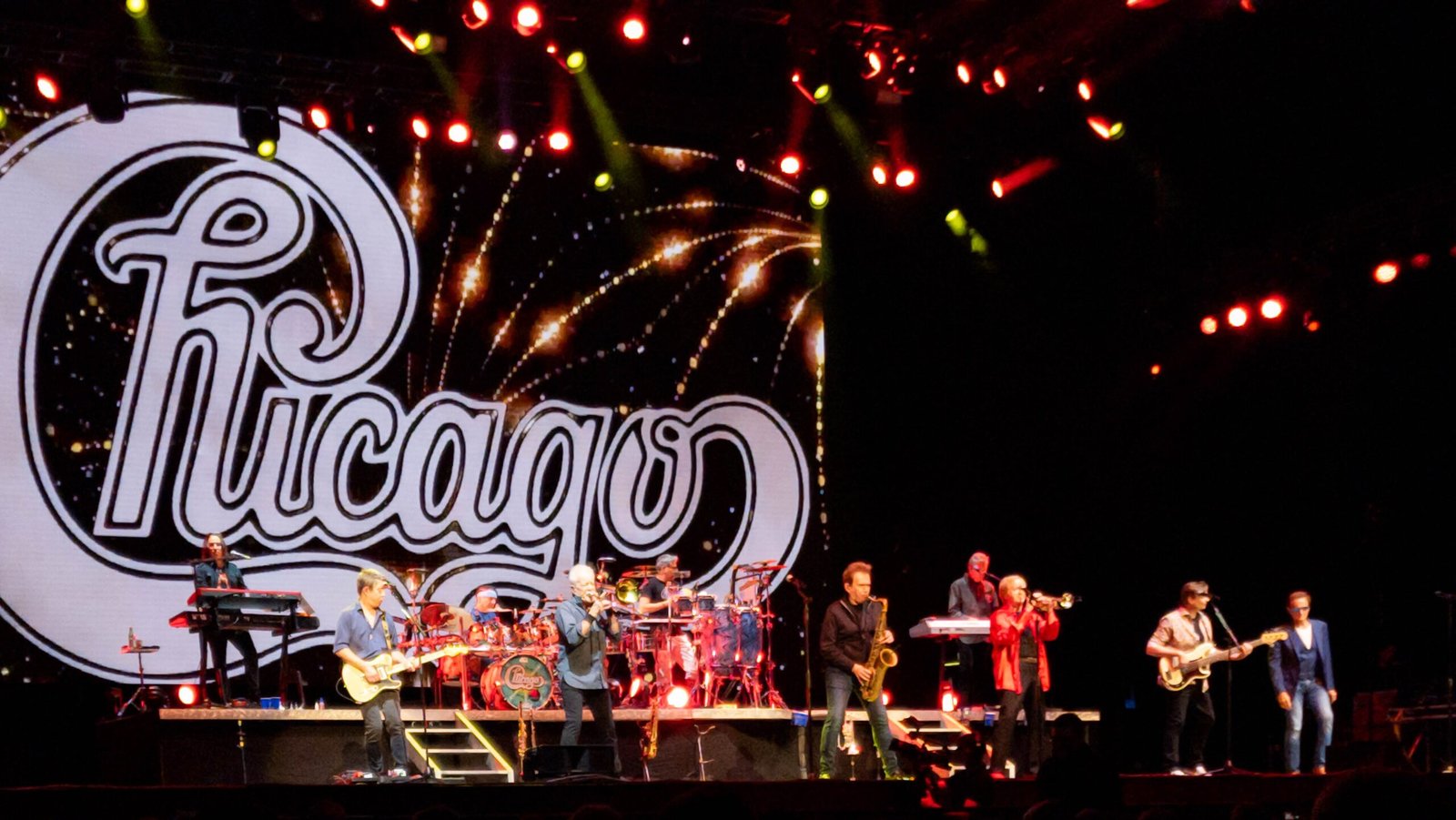
In late January 1969, seven unknown musicians from Chicago walked into CBS’s 30th Street Studio in New York City — the church-like former chapel where Miles Davis and Leonard Bernstein had recorded — and cut their entire debut album in ten days. They worked the graveyard shift, midnight to eight in the morning, because Simon & Garfunkel had the studio during the day. They had never made a professional record before. And when they were done, they demanded it be released as a double album — a format virtually unheard of for a debut — and agreed to take a cut in their royalties to get it. The label thought they were crazy. The record stayed on the charts for 171 weeks. This is the story of “The Chicago Transit Authority”: the most audacious debut in rock history.
The Big Thing Meets Guercio
The band had started in 1967 as the Big Thing — six young Chicago players, later seven with the addition of bassist Peter Cetera — with a concept nobody in rock had tried: a full-time, three-piece horn section used not as sweetening but as a lead instrument. Trumpeter Lee Loughnane, saxophonist Walter Parazaider, and trombonist James Pankow were all music students at DePaul University. Guitarist Terry Kath sang like Ray Charles and played like a force of nature. Keyboardist Robert Lamm wrote songs about clocks. Drummer Danny Seraphine hit like a thunderclap.
They were a ferocious Top 40 cover band grinding around the Midwest when James William Guercio heard them play one night in a bar. Guercio was an in-house producer at Columbia Records with an arranger’s ear and a svengali’s ambition. He took them on, moved them to Los Angeles in the summer of 1968, set their practice schedule, arranged their living quarters, and renamed them the Chicago Transit Authority — a grand, civic-minded name for a grand, ambitious band.
Getting them signed was its own saga. Guercio’s deal with Columbia allowed him only a few chances to bring in new bands, and the group stumbled on its first attempts. So Guercio did something shrewd: he went off and produced the second album by Blood, Sweat & Tears — a horn-rock band already on the roster — which became a massive smash, won him the Grammy for Album of the Year, and gave him the capital and clout to cut a demo with his own band. That demo finally impressed Columbia president Clive Davis enough to offer a deal. The label was reluctant — it already had one jazz-rock horn band; did it need two? — but Guercio had the leverage now. Chicago Transit Authority was signed late in 1968.
Five Days, Midnight to 8 A.M.
The band flew to New York in January 1969 with more than enough original material — which was, paradoxically, part of the problem. They had never been in a professional recording studio before. Neither, in a sense, had their moment: the label, burned by the slow start of the Guercio-produced Blood, Sweat & Tears record, put strict limits on their studio time. They were allowed five days of basic tracking and five days of overdubbing. That was it. Ten days to make a double album.
So they worked the graveyard shift — midnight to eight in the morning — while Simon & Garfunkel occupied the studio for the daylight hours. On an eight-track console, under engineer Fred Catero, they first tried recording everything live at once, the way they’d played it in clubs. It didn’t work. They regrouped: rhythm section first — Seraphine’s drums, Cetera’s bass, Lamm’s keyboards, Kath’s guitar — then horns, then vocals, layer by layer through the night.
What emerged from those bleary sessions was raw, sprawling, political, and utterly confident — the sound of seven young men who had been told they had ten days and decided to act like they had all the time in the world.
“Introduction”: Seven Men, One Statement
The album opens with its mission statement, and the mission statement is a roll call. “Introduction,” written by Terry Kath, literally introduces each band member in turn — a brassy, swaggering fanfare that says: here we are, all seven of us, get used to it. It was a bold way to open a debut, and a revealing one. This was a band with no frontman and three lead vocalists, no single star and seven stakeholders. The introduction wasn’t marketing. It was democracy.
From there the record ranges wildly: the Latin-tinged groove of “Beginnings,” the anxious clock-watching of “Does Anybody Really Know What Time It Is?,” the cryptic “Questions 67 and 68.” Side four turns openly political with “Prologue, August 29, 1968” and “Someday (August 29, 1968)” — a direct response to the police riots at the 1968 Democratic convention in the band’s hometown, the sound of young men watching their city tear itself apart on television. And then there’s “Liberation,” a fourteen-minute jam, and “Free Form Guitar,” Kath’s six-plus-minute feedback experiment — the sound of a guitarist seeing how far the instrument could bend before it broke.
The Singles That Wouldn’t Die
For all its sprawl, the album spun off singles with remarkable legs. “Does Anybody Really Know What Time It Is?” — Lamm’s piano-driven meditation, opened by that famous unaccompanied piano flourish — became a hit. “Questions 67 and 68” followed it up the charts.
And then there was “Beginnings.” Released as a single in 1969, it flopped — failed to chart entirely. Most bands would have moved on. But the song wouldn’t die: album rock radio kept playing the muscular seven-minute-and-fifty-four-second album version, with Kath’s 12-string acoustic guitar up front, Loughnane and Pankow’s trumpet-trombone battle in the middle, and Seraphine’s extended percussion coda bringing it home like a “Hey Jude” for the jazz-rock set. In June 1971, more than two years after the album’s release, the label re-released “Beginnings” as a single with “Colour My World” on the B-side. This time it soared into the Top 10. A debut album, still spinning off hit singles in its third year — that almost never happens. It happened because the record was that deep.
The Royalty Cut Gamble
Here’s the part that still astonishes: by the end of those ten days in New York, the band had decided the album had to be a double. For an unknown group with no track record, this was commercial madness — double albums cost twice as much to manufacture and carried a premium price that could scare off buyers. Columbia was skeptical, and the label agreed only on one condition: the band would take a cut in its royalties.
They signed the deal. They bet on themselves.
The bet paid off beyond anyone’s imagining. Released on April 28, 1969, “The Chicago Transit Authority” was a sleeper hit in the truest sense — it didn’t even crack the Top 20 until 1971, climbing as the singles kept coming. It stayed on the Billboard chart for 171 weeks, beating the previous longevity record for a rock album. It was certified double platinum. It earned the band a Grammy nomination for Best New Artist. And in 2014, it was inducted into the Grammy Hall of Fame — the institution’s way of admitting, four and a half decades late, that the kids on the graveyard shift had known exactly what they were doing.
Guercio’s Gamble
James William Guercio doesn’t get enough credit in the Chicago story. He met saxophonist Walter Parazaider at DePaul University, heard the band in a bar, and essentially willed them into existence as a recording act — moving them to Los Angeles, drilling them like a coach, renaming them, and then engineering their record deal through sheer strategic cunning. Producing Blood, Sweat & Tears’ smash second album wasn’t a detour; it was the war chest. He needed capital to cut his own band’s demo and clout to force Columbia’s hand, and he got both.
Guercio would produce the band’s first eleven albums and build them Caribou Ranch, the Colorado studio compound where they’d cut their biggest records. But it started here, in January 1969, with a producer betting his own money and reputation on seven kids nobody had heard of. The royalty-cut deal for the double album was his idea as much as theirs. He believed — correctly — that the music would outlast the math.
The Album’s Political Heart
It’s easy to remember the debut for its hits, but the record’s soul is its anger. “Prologue, August 29, 1968” and “Someday (August 29, 1968)” are direct responses to the police riots at the Democratic National Convention in the band’s hometown — young Chicagoans watching their city explode on television and answering with music. The fourteen-minute “Liberation” is a jam, yes, but it’s also a statement: this band would not be contained by the three-minute single.
And then there’s “Free Form Guitar” — six-plus minutes of Terry Kath seeing how much noise one guitar could make, a feedback experiment that still sounds radical. It was the sound of a band that had been a Top 40 cover act eighteen months earlier, suddenly given ten days in a Manhattan studio and deciding to use every single minute. The debut’s sprawl wasn’t indulgence. It was a manifesto: we contain multitudes, and we’re not editing ourselves for you.
The Grammy Hall of Fame, 45 Years Late
In 2014 — forty-five years after its release — “The Chicago Transit Authority” was inducted into the Grammy Hall of Fame, joining the canon of recordings deemed to have lasting qualitative and historical significance. It was a vindication decades in the making, and a quiet rebuke to everyone who’d called the double-album demand crazy.
The numbers, by then, were beyond argument: number seventeen on the Billboard 200, 171 weeks on the chart, double platinum, a Grammy nomination for Best New Artist of 1969. But the real legacy isn’t statistical. It’s every horn-driven rock band that followed, every kid who heard “Beginnings” on album radio in 1971 and realized a rock band could sound like that. The kids on the graveyard shift built something that outlived the studio, the label politics, and eventually even the band’s own first era. The church on 30th Street is long gone. The record isn’t.
The Name They Had to Give Back
One footnote became legend: the band couldn’t keep its name. The real Chicago Transit Authority — the city’s public transportation agency — threatened legal action over the rock band’s use of its name, and the musicians sensibly shortened it to simply Chicago. It was, as it turned out, a blessing. “Chicago” was cleaner, tougher, more memorable — and it became one of the most durable brand names in music history, gracing nearly every album they ever made, each with its Roman numeral.
But the debut remains the only record ever released under the full original name, and there’s something fitting about that. “The Chicago Transit Authority” is a young band’s record in the best sense: hungry, sprawling, political, experimental, unwilling to leave anything in the rehearsal room. Ten days. Midnight to eight. A royalty cut and a prayer.
Seven kids from the Windy City walked into a church in Manhattan and walked out with a double album that stayed on the charts for more than three years. They were told they were crazy to demand it. They were right to demand it. And every horn-driven bar band that followed — every kid who ever thought a rock band could have a brass section — owes them a debt. The gamble wasn’t just the double album. The gamble was the whole idea. And like so many of Chicago’s gambles in those early years, it paid.
Leave a Reply