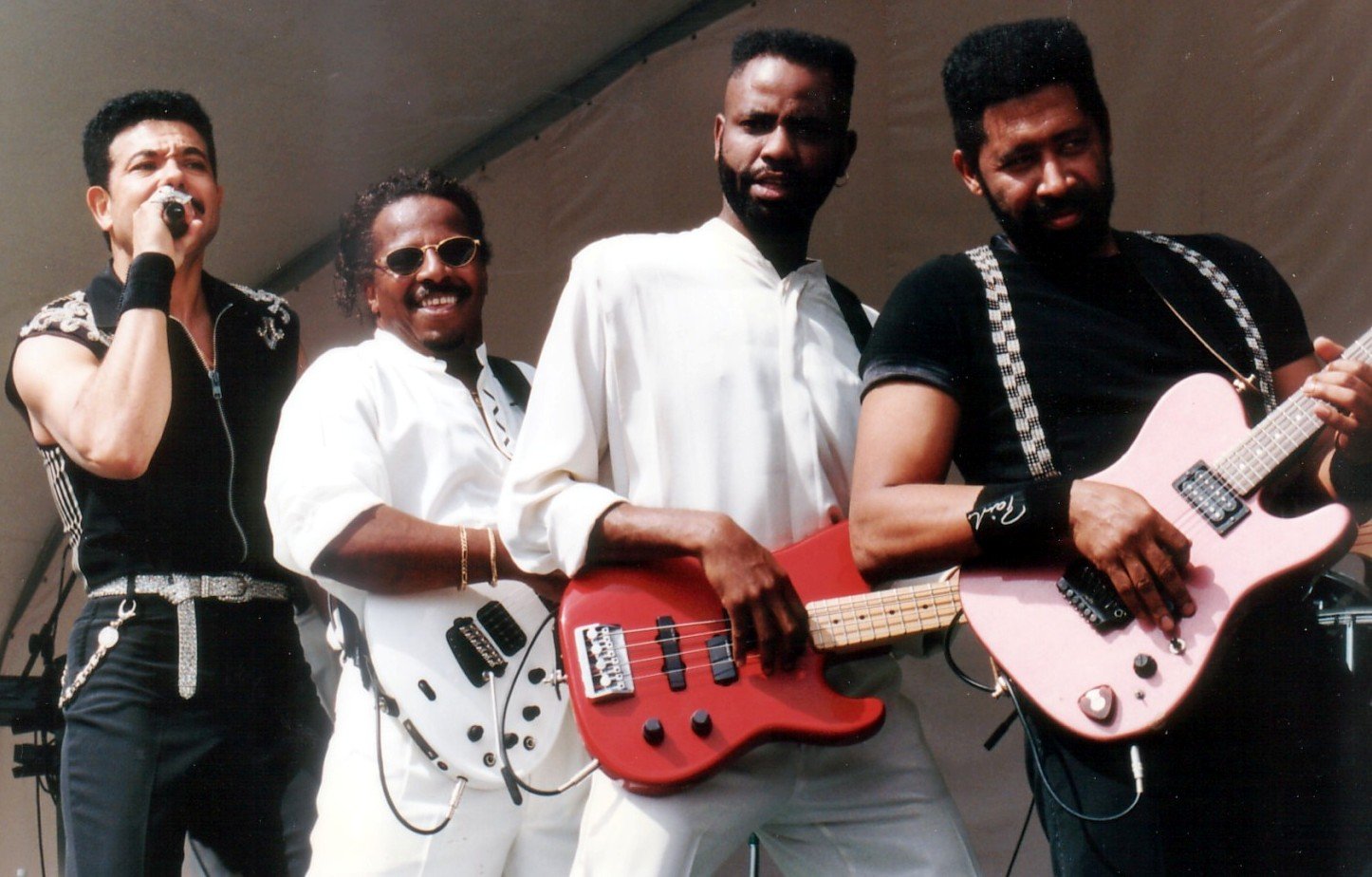
In the summer of 1979, the Commodores were the surest thing on Motown: a funk band from Alabama that could fill a dance floor with “Brick House” and then empty a room’s defenses with “Three Times a Lady.” So the first single from their seventh album, Midnight Magic, should have been a statement of intent. It was — just not the kind anyone expected. “Sail On” was a slow, unhurried farewell to a marriage that had run out of road, dressed in acoustic guitar and sung in what Billboard, sounding faintly startled, called “a surprising country flavored ballad.” The magazine noted the “subdued backing featuring prominent guitar and keyboards” and “the slick country intonations to Lionel Richie’s vocal.” Then the record went out and did what Commodores records did: it climbed to No. 4 on the Billboard Hot 100 and all the way to No. 1 on the Cash Box Top 100, a Nashville-sounding goodbye from the funkiest band in Tuskegee.
The man singing the farewell, meanwhile, had nothing to say goodbye to. Richie was happily married at the time, and the aching marital autopsies he was writing in those years — “Easy,” “Still,” and now “Sail On” — were not diary entries. They were other people’s heartbreaks, observed up close and set to some of the most durable melodies of the decade. And the country tinge was no studio costume either. It was the sound of Richie’s childhood leaking into his songwriting, and a preview of how thoroughly he would reshape country music itself in the years ahead.
Two Bands in One
By 1979, the six freshmen who had met at Tuskegee Institute a decade earlier were really two bands sharing one name. The first was a funk machine: “Machine Gun,” “Slippery When Wet,” and “Brick House” had made them one of the heaviest live acts in soul music. The second was a ballad group fronted by their keyboard player and saxophonist, Lionel Richie, whose “Sweet Love” and “Easy” kept ending up on the radio next to the funk singles. In 1978 the balance tipped: “Three Times a Lady,” Richie’s waltz of gratitude, became the Commodores’ first No. 1 in America and topped the charts in Britain too. The balladeer was becoming the band’s center of gravity.
Holding both halves together was producer James Anthony Carmichael, who co-produced Midnight Magic with the group and built the arrangements that let a song breathe. For the album’s first single, the band and Carmichael did not reach for the funk. They led with the quietest, plainest song Richie had — the one that sounded least like a Commodores record and most like a front porch in Alabama.
A Song for a Friend’s Goodbye
The account that has followed “Sail On” ever since is that Richie wrote it for somebody else’s ending. Home in Tuskegee, he is said to have sat up through the night with a childhood friend whose marriage had just come apart, listening to the whole story — the effort, the giving, the moment a man understands that trying harder will not fix anything. A few weeks later, the story goes, Richie sent his friend the words to a new song, written with him in mind.
Whether or not every detail of that night survives scrutiny, the lyric itself reads like advice from the friend who stayed up listening. Its narrator is not raging and not begging. He has done the arithmetic of a failed marriage — the heart given, the money and time given, nothing returned — and reached the calmest possible verdict: what is left is to leave well. “Sail on down the line,” he tells her, and the hook turns the leaving into something close to relief. Where “Still,” its companion piece on the same album, would grieve over a love both partners had lost, “Sail On” is the sound of the door closing gently — a breakup song with its chin up, wishing the other person fair weather on the way out.
Country in the Bones
The country flavor that surprised Billboard would not have surprised anyone who grew up where Richie did. “Back in Tuskegee in the late ’50s and early ’60s, all you heard were popular country artists of the day,” he recalled. “It’s what I grew up on.” In Tuskegee, the radio did not respect the walls that the record business built between country and R&B; both were story songs, plainspoken and unsparing, and Richie absorbed them as one language.
You can hear that upbringing all through the recording. The album version unspools past five and a half minutes — edited down to 3:57 for the single — and it never hurries. Richie’s piano and the guitars carry the melody over a backing that stays subdued, letting the vocal sit where a country singer’s would: out front, conversational, with the little bends and sighs of a man telling you something true rather than performing at you. It was a Motown record, made by a funk band, that a Nashville singer could have cut without changing a line.
A Farewell at the Top of the Charts
Released on 27 July 1979 as the first of three singles from Midnight Magic, “Sail On” climbed through the autumn until, in the chart week of 20 October 1979, it stood at No. 4 on the Hot 100 and No. 1 in Cash Box. Abroad it reached No. 8 in Britain, No. 3 in Canada, and No. 6 in New Zealand, and at home it sat in the Top 10 of the R&B and adult contemporary charts at the same time — one record speaking fluently to pop, soul, and easy-listening audiences, with a country accent none of them seemed to mind.
The album around it reached the US Top 10 and earned the Commodores a Grammy nomination for Best R&B Performance by a Duo or Group, and the follow-up single, “Still,” gave the band its second American No. 1. The two songs made a matched pair on Midnight Magic: the grief and the goodbye, the staying and the sailing on. Between them, they marked the peak of the Commodores as a group — and the unmistakable emergence of Richie as something more than a member of one.
The Road That Led to Nashville
The country thread running through “Sail On” did not stay a thread for long. A year later, Richie wrote and produced “Lady” for Kenny Rogers, and it became a chart-topping smash — still one of the biggest hits of Rogers’ career. Richie had not even left the Commodores yet, and he was already writing No. 1 records for Nashville royalty. His solo career kept returning to the well: “Stuck on You” and “Deep River Woman,” recorded with Alabama, both became country-chart hits in the eighties. Looking back, Richie has been candid about what changed everything. “I wasn’t excited about going solo,” he told the Recording Academy. “Then something amazing happened. I started writing songs like ‘Three Times a Lady’ and ‘Sail On.’”
The circle closed in 2012, when Richie finally made the album his childhood radio had been promising: Tuskegee, a set of his classics re-recorded as duets with country stars. “Sail On” was on it, sung again with Tim McGraw — thirty-three years after the Commodores’ version, the song was quite literally a country record at last, and nobody found it surprising at all.
That is the quiet achievement of “Sail On.” In 1979 it looked like an oddity: a farewell ballad with a country lilt, slipped out ahead of a funk band’s album. In truth it was a map of where its writer was going — out of the group he had outgrown, into a solo career, and toward the Nashville he had carried inside him since he was a boy listening to the radio in Alabama. The song tells its departing lover to sail on down the line, and to not worry about where she is going. Richie, it turned out, knew exactly where he was going.
Leave a Reply