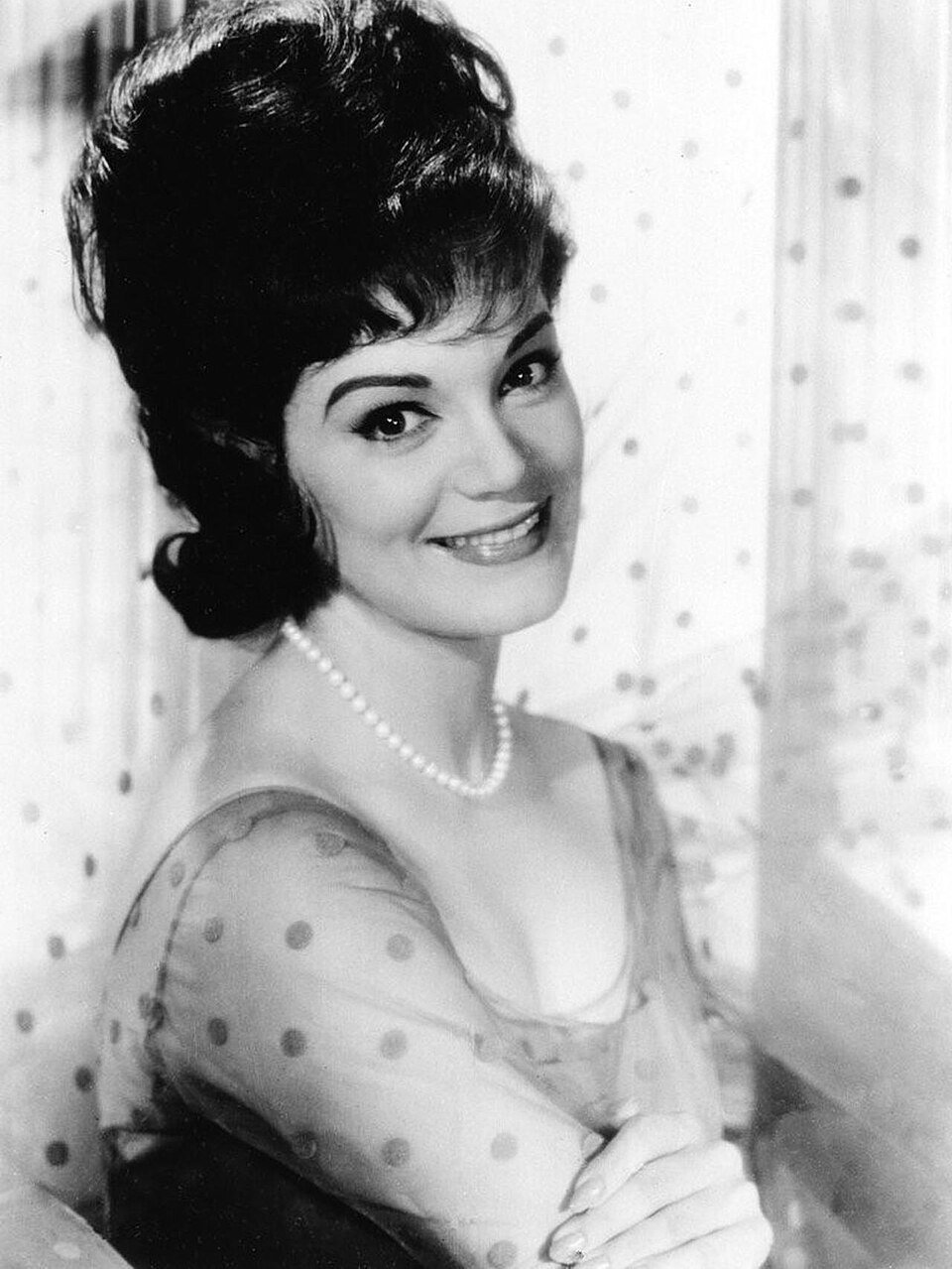
In the spring of 1958, Connie Francis — born Concetta Franconero in Newark, New Jersey — had finally done the impossible, and it had bought her almost no safety at all. After nearly three years of failed singles for MGM — a run so discouraging that the label had nearly let her go — her rock-ballad revival of the 1917 standard Who’s Sorry Now?, a song she had recorded only at her father’s insistence, had become an enormous hit. And her follow-ups had promptly sagged. I’m Sorry I Made You Cry stalled at No. 36. Heartaches failed to chart at all. Francis was twenty years old, supposedly a star, and one flop away from being a footnote. She understood the arithmetic of the business with total clarity: “I knew I had to come up with a hit on the third record. It was crucial. I listened to every publisher’s song in New York, but nothing was hitting me.”
What she needed arrived in the form of two young staff writers from Aldon Music, the publishing company Don Kirshner and Al Nevins had founded that very year, 1958, with offices at 1650 Broadway. Aldon would shortly become the engine room of a new kind of American pop — a factory of teenage songwriters that included Carole King, Gerry Goffin, Barry Mann and Cynthia Weil — and Sedaka and Greenfield were among its first recruits, working to the classic division of labour: Sedaka wrote the music, Greenfield wrote the words. Kirshner sent them to Francis’s home to pitch their songs in person — and the song that would save all three of their careers was the one Sedaka flatly refused to play.
The Audition at Her House
The scene deserves to be savoured. In the Francis living room sat the singer and her close friend Bobby Darin, himself on the verge of stardom. In front of them, two nervous songwriters worked through their catalogue: Sedaka was nineteen, Greenfield twenty-two. And their catalogue, that day, was the problem. Sedaka and Greenfield played ballad after ballad: slow, dense, adult material, carefully written and completely wrong for the moment.
Francis and Darin pushed back hard, arguing that songs like these had no appeal for the teenage market that now decided everything. Francis asked the obvious question: did they have anything faster? Anything bouncier? Sedaka and Greenfield exchanged a look. They did have something faster and bouncier. Sedaka just didn’t want to be in the room when she heard it.
The Song They Were Afraid to Play
Stupid Cupid had been written in a hurry — by Greenfield’s later account, dashed off that very morning before the audition. It was a piece of cheerful teenage nonsense about a girl furious at Cupid for making her fall in love, and it was not, in the writers’ minds, a Connie Francis song at all. It had originally been intended for Sal Mineo, and had more recently been promised to the girl group the Shepherd Sisters. Sedaka’s objection was one of pure social terror: Francis was, as he put it, a “classy lady,” and she would surely be insulted to be offered something so puerile by two nobodies in her own living room.
Greenfield, who had less to lose and knew it, overruled him: “What have we got to lose, she hates everything we wrote, doesn’t she? Play it already!” Sedaka played it. He got through a few lines. Francis’s reaction settled the matter instantly: “I started jumping up and down and I said, ‘That’s it! You guys got my next record!’”

June 18, 1958
Francis recorded Stupid Cupid on 18 June 1958 at Metropolitan Studio in New York, in a session produced by Morty Kraft with the orchestra conducted by LeRoy Holmes — and with a small, perfect detail at the piano: Neil Sedaka himself, the terrified teenager who hadn’t wanted to play it for her, sat in and played on the track. MGM issued it as single K12683. The record that resulted was a bright, skipping piece of rock and roll, driven by a staccato saxophone figure and a rhythm that sounds like a skipping rope, with Francis — the classy lady — leaning into every silly line as if her career depended on it. In a sense, it did: it became her first successful non-ballad rocker.
The B-side told its own story. For the flip, Francis reached back to her father’s counsel and recorded Carolina Moon, a standard from 1928, in an earlier session on 9 June conducted by Joe Lipman. One side was the future of teenage pop; the other was a thirty-year-old parlour song. In Britain, incredibly, the public would buy both at once.

Number One in Britain
In America, Stupid Cupid did its job solidly: No. 14 on the Billboard Hot 100 and No. 16 on the Cash Box chart — a genuine hit, the crucial third record Francis had needed, delivered by the song its writer had been afraid to play. It was also the first major national success for Sedaka and Greenfield, the foundation stone of the Brill Building era they would help define.
In Britain it went much further. Issued as a double A-side with Carolina Moon — British charts of the time credited both sides of a disc — the single reached No. 1 and stayed there for six weeks from late September 1958, repeating the six-week reign Who’s Sorry Now? had just enjoyed. Francis now had two British No. 1s in a single year, one with a weeping standard and one with a two-minute novelty about an incompetent cherub.
There is something fitting in the pairing that topped the British chart, because the double A-side was really a portrait of the whole artist in a single package: one side the father’s daughter, singing the 1928 parlour song he had pressed on her; the other side the teenager the Aldon writers had been afraid to offend, bouncing through a rock and roll trifle in two minutes flat. Britain, in the autumn of 1958, bought both Connie Francises at once — and in doing so made her, for that season, a bigger star there than she was at home.
The Diary in the Corner
The audition left one more gift behind. All through that afternoon, while the young writers sweated over her piano, Francis had been making notes in her diary — and when Sedaka, curious, asked what she was writing, she refused to show him. Sedaka went home and turned the snub into a song called The Diary, which became his own first hit as a singer, reaching No. 14 on the Billboard chart in early 1959. One living room, one afternoon, two careers launched — his and hers — plus a third, Greenfield’s, riding along. Sedaka and Greenfield would go on to become central figures of the Aldon Music songwriting stable at 1650 Broadway, but it all started with the song the senior partner of the team had been too embarrassed to perform.
The follow-up single Sedaka and Greenfield wrote for Francis, Fallin’, stalled just outside the Top 30, but nobody’s career was in danger any more. The partnership itself had years left in it: two years later the same two writers would give Francis her signature song, Where the Boys Are. And the lesson of Stupid Cupid — that the classy balladeer could also be a rock and roll singer — became a permanent part of her act; in 1959 she proved it again with the uptempo Lipstick on Your Collar, a Top 5 hit built on exactly the bounce she had demanded in her living room. The classy lady had jumped up and down for the silliest song in the briefcase, and in doing so she taught a generation of Brill Building writers the only lesson that mattered: never decide, on the artist’s behalf, which song is beneath her.
Leave a Reply