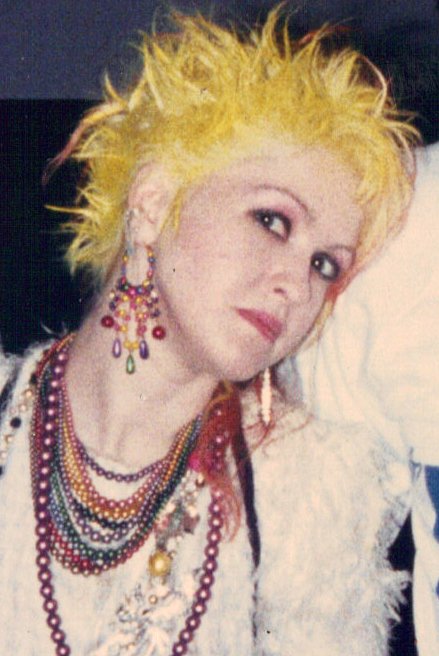
In the winter of 1982, a 29-year-old singer walked into New York’s Record Plant with a voice that had twice been declared dead, a bankruptcy still fresh on her record, and a head full of thrift-store fashion. She was, by every industry metric, a terrible bet: too old at twenty-nine, too weird, too broke, too scarred by a band that had gone nowhere. The industry had already chewed her up once. What happened over the next six months would produce the most successful debut album by a female artist of the entire decade — a record that sold sixteen million copies, earned six Grammy nominations, spent sixty-five weeks in the American top forty, and put a punk from Queens on the cover of Time magazine. This is how “She’s So Unusual” got made.
The Singer Nobody Would Bet On
To understand the miracle of the album, you have to understand the wreckage that preceded it. Cyndi Lauper had fronted the band Blue Angel, watched its 1980 album stiff, been sued by a former manager, and filed for bankruptcy. She had lost her singing voice twice — once in 1977, when doctors told her she would never sing again, and again after Blue Angel collapsed. She rebuilt it with vocal coach Katie Agresta, waitressed at an IHOP, and sang for tips in small clubs. Friends from those years remember a performer who gave everything to rooms of twenty people, as if each one were Madison Square Garden. She had nothing left to lose, which turned out to be the perfect position from which to make a masterpiece.
What saved her was a chance meeting in a bar in 1981 with David Wolff, who became her manager. Wolff got her a deal with Portrait Records, a subsidiary of Epic. The label paired her with producer Rick Chertoff, a young Philadelphia producer who had worked with the Hooters. Chertoff saw what the suits had missed: beneath the kewpie-doll yelp was a serious singer with a four-octave range and ferocious instincts. He gave her something almost no new artist gets — time and a real budget. Recording stretched from December 1982 to June 1983 at the Record Plant in New York City, with Chertoff and co-producer William Wittman at the board.
The Band of Misfits Behind the Glass
Chertoff built the record around musicians he trusted: Rob Hyman and Eric Bazilian of the Hooters, the Philadelphia band he had been developing. Hyman played keyboards and melodica, Bazilian played guitars, bass, and saxophone, and both sang. The great Brill Building songwriter Ellie Greenwich — co-writer of “Be My Baby” and “Leader of the Pack” — sang background vocals. It was an odd, inspired crew: a punk singer, a heartland rock band, and a girl-group legend, making a new wave pop record in Manhattan.
Lauper co-wrote four of the album’s songs, but the record’s genius was in how she took other people’s material and made it unmistakably hers. She was not a songwriter for hire singing demos straight. She attacked every song like a character actress, finding the ache or the mischief inside it and dragging it to the surface.
The Songs She Stole, Borrowed, and Bent
The track list reads like a scavenger hunt through the record bins. The opener, “Money Changes Everything,” was a cover of a 1978 song by the Georgia cult band the Brains. “Girls Just Want to Have Fun” had been written and recorded by Philadelphia songwriter Robert Hazard from a male point of view; Lauper rewrote it as a young woman’s declaration of independence. She covered Prince’s “When You Were Mine,” giving his synth-funk a wounded, yearning edge. “All Through the Night” came from new wave songwriter Jules Shear, with Lauper adding a co-write credit on “I’ll Kiss You.” Even the brief, vaudevillian title track had a pedigree: “He’s So Unusual” was written in the 1920s by Al Sherman, the father of Disney’s legendary Sherman brothers.
And then there was “Time After Time.” Lauper co-wrote it with Rob Hyman during the album sessions, and it became the record’s beating heart — a ballad so tender and plainspoken that it proved the neon punk could break your heart in a whisper. Released as the second single, it went to number one. “Girls Just Want to Have Fun” had peaked at number two. “She Bop” and “All Through the Night” both reached the top five. No debut album by a female artist had ever produced four top-five singles before. A fifth single, “Money Changes Everything,” reached the top thirty.
The Ballad That Almost Didn’t Make the Record
“Time After Time” nearly didn’t exist. Late in the sessions, Chertoff told Lauper the album needed one more song — a ballad, something to show the voice behind the persona. Lauper and Rob Hyman sat down together and wrote it in the studio, building it around Hyman’s gentle keyboard figures and Lauper’s gift for plainspoken heartbreak. It was the last song written for the album, and it became its soul.
The recording is a study in restraint. Where “Girls Just Want to Have Fun” yelps and bounces, “Time After Time” barely rises above a whisper, Lauper’s voice catching on lines about suitcases and second chances. It was the song that proved she wasn’t a novelty act — and radio agreed. Released in January 1984, it became her first number-one single, and it has since become one of the most covered ballads of its era, recorded by everyone from Miles Davis to Eva Cassidy. The bankrupt bar singer who had been told she would never sing again had just sung her way to the top of the world.
Six Months of Alchemy at the Record Plant
What made those December-to-June sessions extraordinary was the freedom. Portrait gave Chertoff and Lauper a real budget and, rarer still, time — six full months at one of New York’s great studios. Engineer John Agnello got his first big break on the record and would go on to become one of indie rock’s most in-demand engineers. Lauper, who had spent years screaming over bar bands, was learning to trust the microphone instead of fighting it.
Chertoff’s production walked a tightrope: glossy enough for 1983 radio, strange enough to stay interesting. Synthesizers shimmered next to Bazilian’s bar-band guitar; Hyman’s melodica wheezed through “She Bop” like a carnival ride. The album sequenced covers and originals so seamlessly that most listeners never noticed half the songs weren’t hers — which was exactly the point. Lauper treated every song, borrowed or written, as raw material for the character she was building: the girl from Queens who felt everything too much and said so out loud.
The Cover That Won a Grammy
The album’s look was as radical as its sound. Art director Janet Perr proposed shooting the cover at Coney Island, and the photographer was Annie Leibovitz — already the most famous rock photographer in America. They shot in front of the shuttered World in Wax Musee on Henderson Walk. Lauper appears barefoot in explosively colorful thrift-store clothes, a bouquet of flowers in her hair, looking like she just stepped out of a dream Brooklyn never had.
Fans who studied the back sleeve found a hidden joke: the soles of Lauper’s high heels were printed with Vincent van Gogh’s “The Starry Night.” The package was so striking that Janet Perr won the Grammy for Best Recording Package in 1985 — one of the album’s two Grammy wins, alongside Lauper’s Best New Artist trophy, out of six nominations. The cover has since been named one of the greatest album covers of all time.
Four Top Fives and a Revolution
When “She’s So Unusual” was released on October 14, 1983, nobody at the label quite knew what they had. Then the singles started landing, one after another, and the album climbed to number four on the Billboard 200, where it stayed in the top forty for an astonishing sixty-five weeks. It sold more than six million copies in the United States — certified six times platinum — and sixteen million worldwide, making it Lauper’s best-selling album and one of the best-selling records of the entire 1980s.
The numbers tell only half the story. The album’s real achievement was smuggling subversion into the mainstream. “She Bop,” a bouncy ode to female self-pleasure, sailed up the charts past radio programmers who apparently never listened to the words — until Tipper Gore’s Parents Music Resource Center put it on the “Filthy Fifteen” list and helped invent the Parental Advisory sticker. “Girls Just Want to Have Fun” became a feminist anthem disguised as a party song. And “Time After Time” quietly taught a generation of teenagers that vulnerability could be a kind of strength. A thrift-store punk from Queens had outsmarted the whole machine, and she had done it by being exactly who she was.
The videos amplified everything. The “Girls Just Want to Have Fun” clip — directed by Edd Griles, starring Lauper’s real mother and wrestling manager Captain Lou Albano as her parents — won Best Female Video at the very first MTV Video Music Awards in 1984 and made Lauper one of the channel’s defining stars. In an era when female pop singers were expected to be polished and compliant, here was a woman with orange hair and a Brooklyn accent, dancing with her mom in her bedroom. It looked like joy. It was also a manifesto.
The Album That Refused to Age
“She’s So Unusual” never really left. In 2014, Legacy Recordings reissued it as a thirtieth-anniversary edition with demos, rehearsals, and remixes. In 2019, the Library of Congress selected it for preservation in the National Recording Registry, calling it culturally, historically, and aesthetically significant. Rolling Stone has twice placed it on its list of the 500 greatest albums of all time.
Listen to it now and what strikes you is not the eighties production but the voice at the center of it — that yelp, that ache, that absolute refusal to be anyone but herself. Before “She’s So Unusual,” the industry’s idea of a female pop star was a product: styled, scripted, safe. Lauper blew that template apart by insisting that weirdness was a selling point and that a woman could be funny, loud, vulnerable, and furious all on the same record. Madonna would conquer the decade with polish and calculation; Lauper conquered it with heart and chaos, and she got there first.
Cyndi Lauper walked into the Record Plant as a bankrupt ex-bandleader the industry had written off, and walked out with a masterpiece that still sounds like freedom. She was so unusual, indeed. Pop music has been trying to catch up ever since.
Leave a Reply