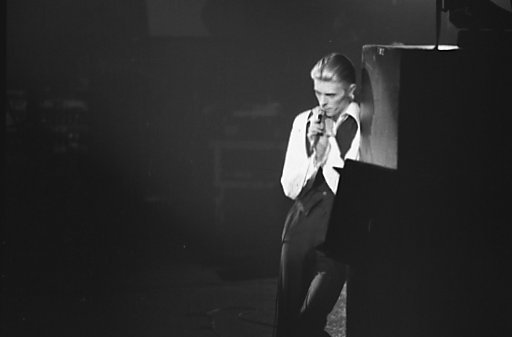
In the winter of 1971, David Bowie was a cult figure with one hit to his name and a new album, “Hunky Dory,” that almost nobody bought. Fourteen months later, he was the most famous alien on earth. The bridge between those two facts was “The Rise and Fall of Ziggy Stardust and the Spiders from Mars,” recorded between November 1971 and February 1972 at Trident Studios in London, released on June 16, 1972, and now universally regarded as one of the greatest albums ever made.
What makes the Ziggy story remarkable is how unremarkable the recording was. No drugs, no drama, no genius tantrums. Just a singer, his band, and a brilliant engineer-producer, working fast in a Soho studio, inventing the future of rock between tea breaks. This is the story of how it happened, including the single that saved the whole project and was written at the very last minute.
“More Rock ‘n’ Roll”
Bowie had recorded “Hunky Dory” at Trident in the summer of 1971 with in-house producer Ken Scott, a man who had engineered for the Beatles and mixed “The Man Who Sold the World.” For the follow-up, Bowie gave Scott the briefest of briefs. The difference between the two albums, he said, was that this one was going to be “more rock ‘n’ roll.” That was it. That was the whole plan.
Scott assembled the same team: Bowie on vocals, guitar, piano, and saxophone; Mick Ronson on guitar; Trevor Bolder on bass; and Mick Woodmansey on drums. Ronson, Bolder, and Woodmansey would soon be rechristened the Spiders from Mars, but in the studio they were just a tight, hungry young band. Woodmansey later recalled having to learn twelve songs in a single Sunday afternoon before sessions began on Monday, which he described as nerve-wracking. The band stepped up anyway.
Sessions ran from November 8, 1971, to February 4, 1972, with a break for the holidays. And by every account, they were a joy. Scott later said there were no drugs whatsoever in the studio. The only booze was a couple of beers. Bowie, who would later become famous for recording in states of extreme chemical alteration, made his masterpiece essentially sober, arriving with songs, working them up with the band, and moving on. It was professionalism as an art form.
Inventing Ziggy
The character at the album’s center was a collage. Bowie drew on the tragic rocker Vince Taylor, who had believed himself to be an alien, on the gloriously unhinged Texan performer known as the Stardust Cowboy, and on the flamboyant fashions of Japanese designer Kansai Yamamoto. The story Bowie sketched was simple and apocalyptic: Ziggy Stardust is a bisexual alien rock star who comes to an Earth with only five years left, becomes a messiah, and is destroyed by his own fans.
Bowie had originally imagined the project as something even bigger, a stage show or a television production to accompany the album. Neither fully materialized, which turned out to be a blessing. Confined to vinyl, the story became tighter, stranger, and more mythic. Songs like “Five Years,” unveiled to television audiences on the BBC’s “Old Grey Whistle Test” in February 1972, “Moonage Daydream,” and the title track built the world piece by piece, while Ronson’s string arrangements and guitar work gave it grandeur.
Ronson deserves special mention. His arrangements, particularly the sweeping strings on “Life on Mars?” from the previous album and the punchy charts throughout Ziggy, were as crucial to the sound as Bowie’s songs. He was Bowie’s musical other half in these years, the craftsman who turned the singer’s visions into records.
The Spiders
It is easy to forget, given what Bowie became, that “Ziggy Stardust” was a band record. Mick Ronson, Trevor Bolder, and Mick Woodmansey were not session players. They were a unit, a tough little rock band from Hull who gave Bowie’s art songs their muscle. Ronson’s guitar, raw and lyrical by turns, is all over the album, from the crunch of “Suffragette City” to the elegiac solo that closes “Moonage Daydream.” Bolder and Woodmansey were the engine room, swinging hard behind the theatrics.
The three of them had come up together, and they played like it. When Bowie presented them with a new song, they arranged it on the spot, fast and instinctive. That is why the album sounds so alive: it is four musicians in a room, not a singer with hired hands. The Spiders would tour the Ziggy show to exhaustion over the next eighteen months, becoming stars in their own right, and when Bowie killed the character in 1973, he killed the band too. Ronson went on to a respected solo and production career, but he never again had a partnership like the one he had with Bowie in that Trident winter.
The Single That Almost Never Was
Here is the twist that makes the whole story: when the album was finished, RCA’s head, Dennis Katz, listened to it and told Bowie there was no single on it. In the history of great executive notes, this one is right up there. Instead of arguing, Bowie went home and wrote one.
“Starman” was composed at the last minute as a direct response to Katz’s complaint, and it replaced a planned Chuck Berry cover, “Round and Round,” on the track listing. On February 4, 1972, the final day of the sessions, the band recorded “Starman” along with “Suffragette City” and “Rock ‘n’ Roll Suicide,” closing out the album in a single extraordinary session. “Starman” was released as the lead single on April 28, 1972.
It is worth pausing on what a gamble this was. The album Bowie had labored over for three months was now, at the insistence of a record executive, carrying a song written in days. But Bowie understood something about pop music that the executive didn’t: the single wasn’t a compromise. It was the key. “Starman” gave listeners a way into Ziggy’s world, a message of hope beamed from an alien to Earth’s youth, and it turned a cult art project into a popular phenomenon.
Seventeen Shots in Heddon Street
The album’s cover is as famous as its music, and it was almost an afterthought. In January 1972, Bowie and photographer Brian Ward, whose studio was at 29 Heddon Street just off Regent Street in London, stepped outside into the drizzly street and shot the cover in a matter of minutes. Only seventeen photographs were taken on Heddon Street itself. They were shot in black and white and then colorized by Terry Pastor, who had done the same for the “Hunky Dory” cover.
The image is perfect: Bowie as Ziggy, in a quilted jumpsuit designed by his friend Freddie Burretti, holding a Gibson Les Paul borrowed from a former bandmate, standing under a streetlamp on a rainy London night, with a sign for the furriers K. West visible behind him. It looks like an alien who has just landed and is trying to look casual about it. The location was chosen simply because Ward’s studio was there. Genius, as ever, disguised as convenience.
Eight Thousand Copies
“The Rise and Fall of Ziggy Stardust and the Spiders from Mars” was released on June 16, 1972. In its first week, it sold eight thousand copies. Not nothing, but hardly the arrival of a messiah.
Then came July 1972, and the “Top of the Pops” performance of “Starman.” Bowie appeared as the flame-haired Ziggy in a multicolored jumpsuit, strumming a blue guitar, draping his arm around Mick Ronson’s shoulder with a casual intimacy that scandalized and thrilled Britain in equal measure. He pointed down the barrel of the camera and sang to every odd, lonely kid watching at home. The effect was seismic. Viewers who saw it still talk about it the way people talk about the moon landing: where they were, who they were with, how everything changed.
The album climbed into the UK top five. “Hunky Dory,” ignored on release, was resurrected and went to number three on the wave of Ziggy-mania. Bowie, who eighteen months earlier had been a folk singer with a novelty hit about an astronaut, was now the defining pop star of his generation.
What followed was one of the most extraordinary years in rock history. The Ziggy Stardust tour crisscrossed Britain and America, with Bowie refining the character nightly, the costumes growing more outrageous, the audiences more devoted. Fans did not just buy the records; they became Ziggy, dyeing their hair, painting lightning bolts on their faces. Bowie had created not just an album but a movement, and “Starman,” the last-minute single, was its anthem. The song that almost did not exist became the song that made everything possible.
The Masterpiece in the Room
What is astonishing, looking back, is how little of the Ziggy legend was planned. The album was made quickly, cheaply, and soberly, by a band that barely knew it was making history. The single that defined it was written in days at a record executive’s request. The cover was shot in minutes on a rainy street. The character was a collage of other people’s lives. And yet the result cohered into something immortal, because Bowie’s real genius was not planning but recognition: he knew a great song when he heard one, a great image when he saw one, and a great moment when it arrived.
“Ziggy Stardust” endures because it is that rare thing, a concept album with a beating heart. Beneath the alien makeup and the apocalyptic storyline are songs about longing, fame, love, and self-destruction that have nothing to do with science fiction and everything to do with being young. Bowie would kill Ziggy on stage a year later, at the Hammersmith Odeon in July 1973, because he understood that the mask had served its purpose and that the artist had to keep moving. But the album remains, frozen in that winter of 1971 to 1972, when a singer, three musicians, and a producer walked into a Soho studio and walked out with the future.
Put it on today and listen for the joy in it. Beneath the doom there is delight: a band playing their hearts out in a Soho studio, a singer discovering he can be anyone, a record executive’s complaint turned into a three-minute miracle, a cover shot in minutes on a rainy street. That is how masterpieces are really made. Not by plan, but by nerve, and by the courage to follow a strange and beautiful idea all the way to the stars.
Leave a Reply