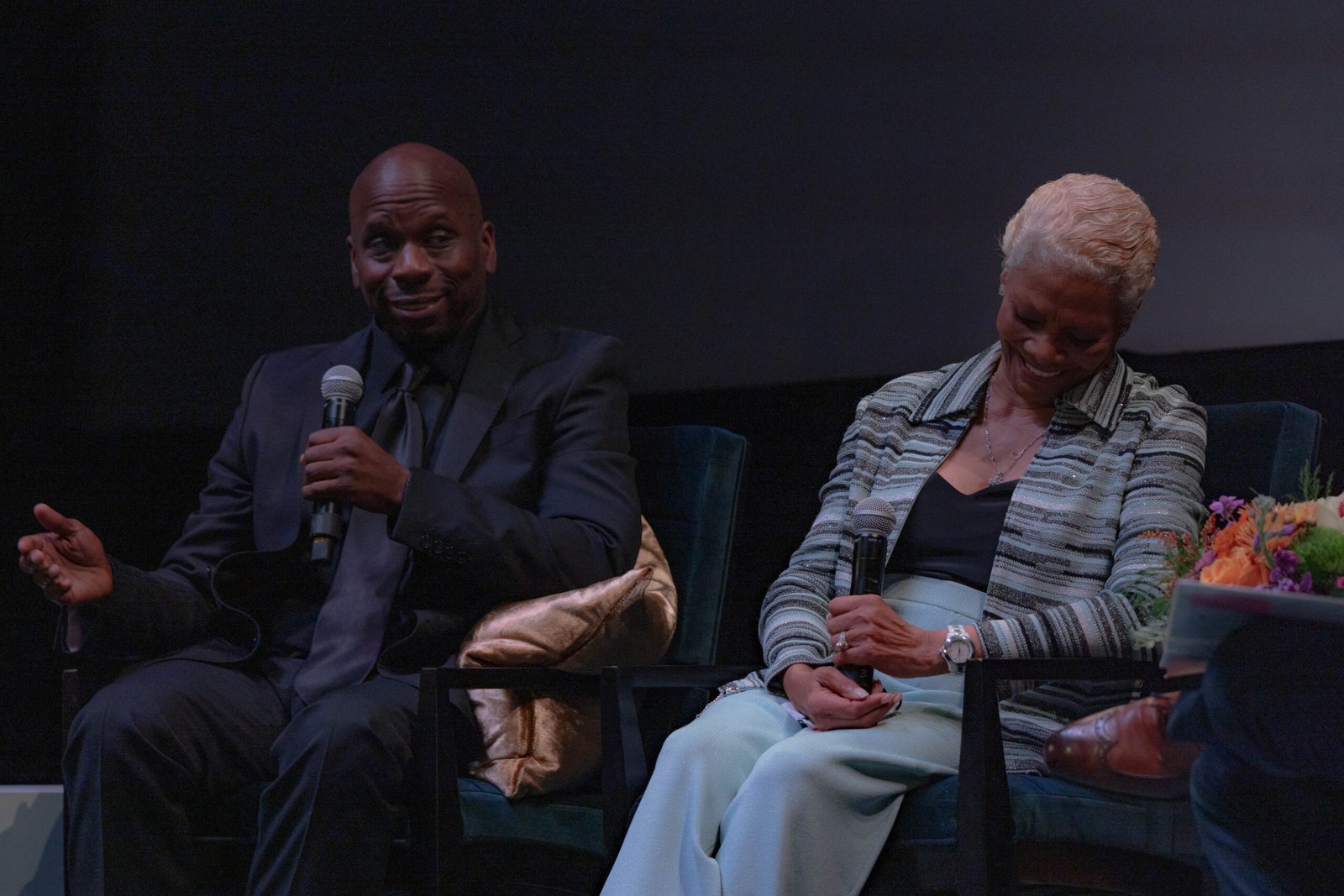
The partnership began with a job interview of sorts. Clive Davis had spent three years rebuilding Warwick at Arista: he had signed her in 1979, paired her with Barry Manilow as producer, and watched the resulting album Dionne go platinum and its signature ballad, “I’ll Never Love This Way Again”, carry her to the Grammy for Best Female Pop Vocal Performance. It was Davis who now asked Barry Gibb — fresh from writing and co-producing Barbra Streisand’s Guilty in 1980, one of the biggest albums of her career — which artist he would like to build an album around next. Gibb named Dionne Warwick without hesitation. Davis put them together, and the fit seemed obvious: Warwick had returned to the top five in 1979 with “I’ll Never Love This Way Again” and the Grammy-winning Dionne album, but her two follow-up records had stalled, and she needed a new approach. Barry, Robin and Maurice Gibb began writing an album shaped, after careful study of her old records, to her voice. That preparation is a matter of record: Barry sat with Warwick’s Bacharach and David catalogue and wrote towards the grain of her instrument, and the discography of the sessions shows the care involved — demos of every song cut first by the brothers in Miami in February 1982, so that Warwick could walk into a finished world and simply inhabit it.
There was only one problem. The song Barry intended as the title track and lead single — the song the whole project would be named after — was a song Warwick simply did not like.
“I’ll Record It — But I Don’t Like It”
Warwick has never hidden her first reaction to “Heartbreaker”. As she admitted in Wesley Hyatt’s The Billboard Book of Number One Adult Contemporary Hits, she was not fond of the song at all. What carried her into the studio was trust: she believed in Barry Gibb’s judgment, and Gibb was adamant that the song would be a hit. So she recorded it anyway — a professional singing, beautifully, a song she privately thought was wrong for her.
The brothers, meanwhile, were having the opposite problem: they liked the song too much to let it go. Maurice Gibb’s verdict has become one of the great rueful quotes in the Gibb catalogue: “I cried my eyes out after we wrote it. I drove home and thought, ‘We should be doing this one.’ And when she did it, it was brilliant.” The demo the brothers cut at their Middle Ear studio in Miami Beach in February 1982, with Barry singing lead, stayed unreleased until 2006, when it finally surfaced on The Heartbreaker Demos.
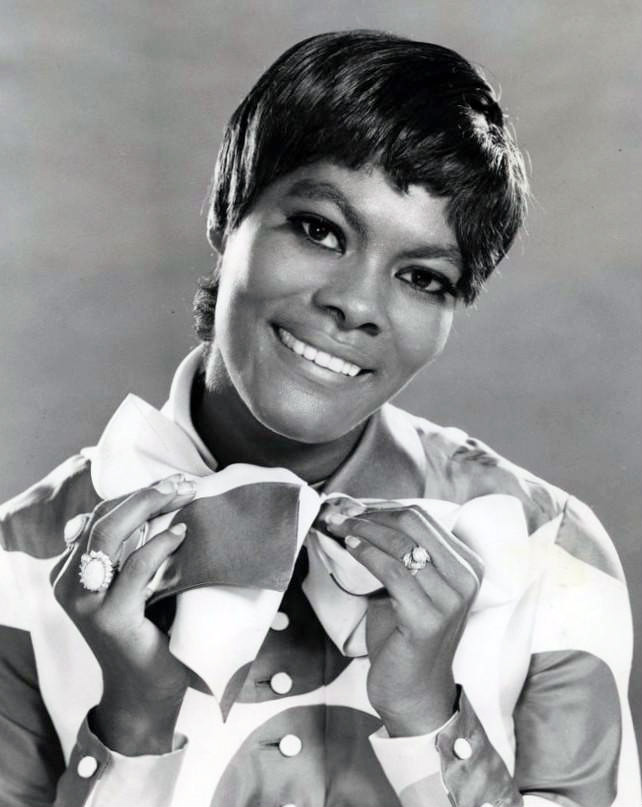
Miami, Spring 1982
Warwick’s album was recorded in April and May 1982 at Middle Ear in Miami Beach, with further work at Mediasound in New York, under the production credit that had become a brand in itself: Gibb-Galuten-Richardson — Barry Gibb with Albhy Galuten and Karl Richardson. The method was the one perfected on Guilty: meticulous, layered, every backing vocal polished like glass. And on “Heartbreaker” Barry did something that blurs the record’s authorship in the loveliest way — he sang on it. His voice threads through the chorus behind Warwick’s lead, so prominent that Maurice described the finished record as having become, in effect, a duet between the Bee Gees and Dionne Warwick.
The sessions followed the Gibb team’s standard division of labour: Barry played guitar and sang, Albhy Galuten covered piano and synthesisers, Karl Richardson engineered, and nearly every song on the album came from one or more of the brothers’ pens. When the single appeared, its B-side, “I Can’t See Anything (But You)”, was another Gibb composition — even the flip side of the record was theirs. Listen to what Warwick does with a song she didn’t believe in. There is no sulking in the performance, no distance. She leans into the lyric’s reproach — the lover who is never quite present, never quite kind — with the cool precision that had defined her Bacharach and David records, and lets the choruses swell around her. If anything, her reserve is the record’s secret weapon: while the production glitters, her voice stays human and slightly wounded, and the contrast is what makes the song ache instead of merely shine. It is, quite simply, the sound of a great singer learning to trust great writers in real time.

The World Disagreed With Her
Arista released “Heartbreaker” as a single in September 1982, and the world delivered its verdict on the Barry-versus-Dionne argument with some emphasis. The record reached No. 2 in Britain that November. In America it climbed to No. 10 on the Billboard Hot 100 in January 1983, topped the Adult Contemporary chart — her eighth No. 1 on that listing — and reached No. 14 on the R&B chart. It went to No. 1 in Sweden and Portugal, No. 2 in Australia, Ireland, Denmark and Norway, and into the top ten in more than a dozen countries altogether, selling an estimated four million copies worldwide. It remains her most successful solo hit of the 1980s, and by most measures the biggest international single of her career.
Warwick’s own review of this avalanche of success is the punchline she has been delivering ever since. Surveying the song’s popularity around the world, she concluded that she had “cried all the way to the bank”. It also added a chapter to one of pop’s most remarkable ledgers: across her career Warwick placed 56 singles on the Billboard Hot 100, a total bettered among female vocalists of the rock era only by Aretha Franklin. “Heartbreaker” was the biggest and glossiest of them all internationally — proof that even a singer with five decades-defining hits behind her could still be handed the largest record of her life by three brothers from Manchester by way of Miami. Barry Gibb, for his part, had the satisfaction of being right — and the brothers eventually reclaimed the song anyway, recording their own version in 1994 and releasing it on the 2001 collection Their Greatest Hits: The Record, with a live performance preserved on One Night Only.
The album Heartbreaker, released on 28 September 1982, became one of the best-selling records of Warwick’s career — an estimated three million copies worldwide. It reached No. 3 in Britain, where it was certified platinum, No. 1 in Norway, and No. 25 on the Billboard 200 in America, where it earned her a gold album, her first since the sixties. The title song kept working the charts for months, and the follow-up singles extended the run: “Take the Short Way Home” reached the American top 50, and the yearning “All the Love in the World” gave her another UK top ten hit at the end of 1982. For an artist the industry had twice written off — once when the Bacharach era ended, once when her seventies labels let her drift — it was a comprehensive vindication, delivered by a song she had to be talked into singing. But its title song carries a lesson that outlasts the chart positions. A singer does not have to love a song to honour it. Warwick trusted the judgment of the men in the control room, sang their song as if it were her own, and made it hers so completely that “Heartbreaker” now belongs to her story first — the hit she didn’t like, and sang all the way to the bank. Three years later she would be back at No. 1 in America with “That’s What Friends Are For”, and it is impossible to imagine that comeback without this one: Heartbreaker was the record that proved, to the industry and perhaps to Warwick herself, that her voice could still carry a new decade. The Bee Gees had asked her to trust them. She did — reluctantly, professionally, and gloriously.
Leave a Reply