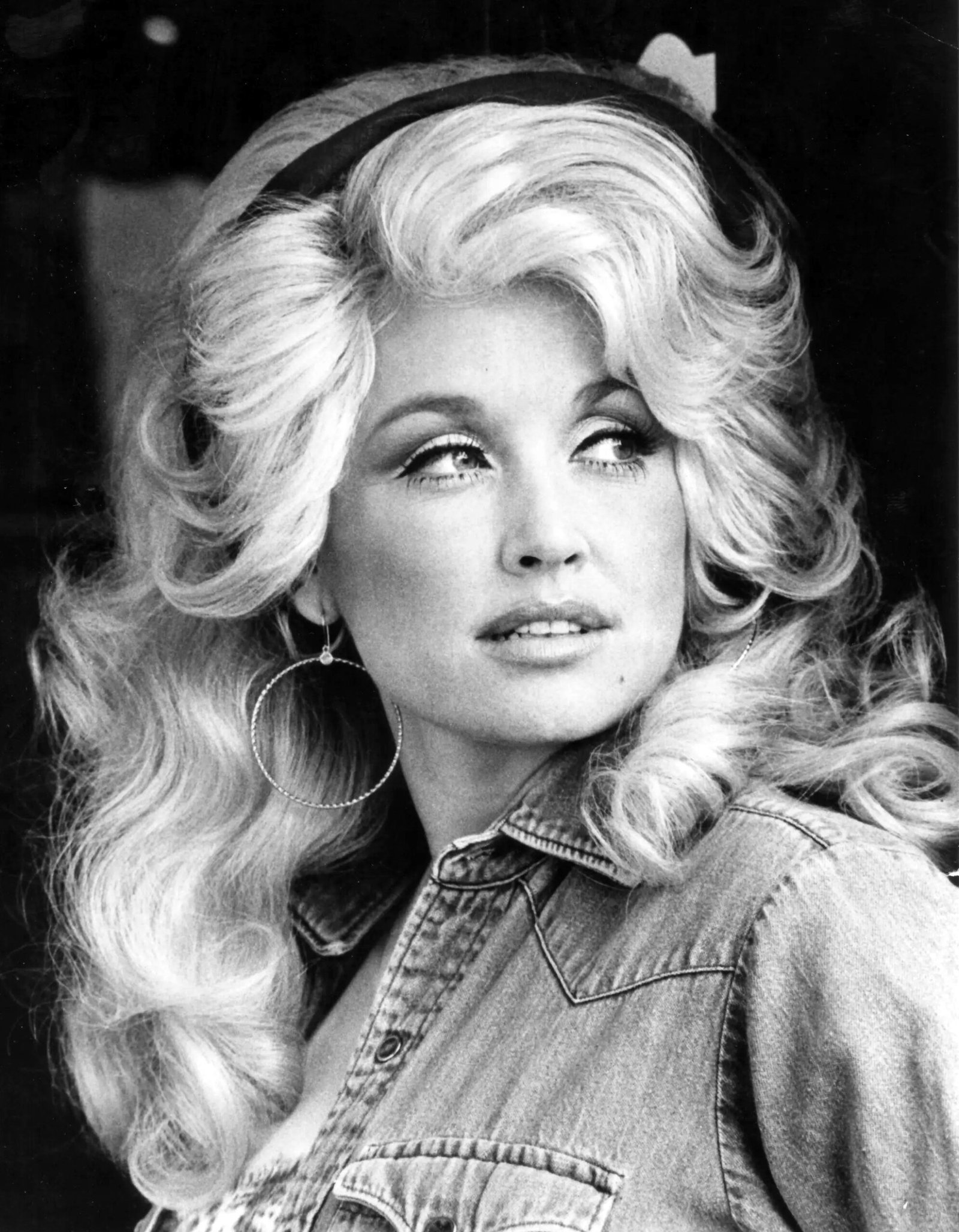
On January 19, 1986 — her fortieth birthday — Dolly Parton walked into a Los Angeles recording studio with Emmylou Harris and Linda Ronstadt and started singing, and American music has been harmonizing ever since. It had taken more than a decade to get there. Record labels had blocked them, managers had scoffed, schedules had collapsed, and an entire album’s worth of music had been shelved and scattered to the winds of three solo careers. But on that winter day, three of the greatest voices in American music finally did what they had been dreaming about since the seventies: they made a record together, on their own terms, with nobody’s permission but their own. The result, “Trio,” sold four million copies, won a Grammy, and became one of the most beloved vocal albums ever made — a landmark of American harmony singing. This is how it happened.
The Dream That Started on a TV Stage
The story begins on April 27, 1976, on Dolly Parton’s short-lived television variety show, “Dolly!” That night, Parton welcomed two friends — Emmylou Harris and Linda Ronstadt — and the three women sang together in public for the very first time, blending their voices on the old gospel number “The Sweetest Gift.” The harmonies were so natural, so instantly right, that everyone in the room knew something special had just happened.
They had been circling each other for years. Parton, the mountain songwriter from Tennessee, was conquering country music one self-penned hit at a time. Harris, the ethereal folk-country stylist, was making records of heartbreaking beauty with her Hot Band. Ronstadt, the biggest female rock star in America, was selling out arenas and topping the pop charts. They were friends and mutual admirers, each in awe of the others’ voices — three women at the top of three different mountains, all looking at the same valley. Backstage that night, the idea took hold: why not make an album together? Three of the finest singers alive, singing the songs they loved, with nobody telling them what to do. It sounded simple. It would take eleven years.
The Album the Labels Killed
The music business had other plans. In the mid-seventies, Parton recorded for RCA Victor, Harris for Reprise, and Ronstadt for Asylum — three different labels, three sets of lawyers, three rosters of executives who all had opinions. The managers, as Parton later told Cashbox magazine, “got bent out of shape.” Everybody had a different idea of what the trio should sound like, and nobody wanted to share their star.
“At the time, it was such an exciting idea that everybody got bent out of shape over it,” Parton said. “All the managers and all the record labels, and everybody had a different opinion on what we should do. At the time, Linda was real hot with her rock and roll stuff and everybody thought, ‘Well, it’d be crazy to have Linda Ronstadt on a record not cash in on doing some rock things.’”
The women went into the studio anyway and recorded several songs together in the seventies, stealing hours between tours and label obligations. But the business end of the business won: the album was shelved, the tapes were filed away, and the dream went into cold storage for more than a decade.
The Songs That Escaped
The shelved sessions didn’t disappear entirely — they leaked out, song by song, onto the women’s solo records. Harris put “Mr. Sandman” and the title track “Evangeline” on her album “Evangeline.” Parton’s “My Blue Tears” turned up on Ronstadt’s 1982 album “Get Closer,” with Dolly and Emmylou singing harmonies. The three kept recording each other’s songs: Harris covered Parton’s “Coat of Many Colors” and “To Daddy,” Ronstadt recorded Parton’s “I Will Always Love You,” and Parton returned the favor by covering Harris’s “Boulder to Birmingham” on her 1976 album “All I Can Do.”
It was as if the trio album was trying to happen by itself, assembling in fragments across a dozen records. The voices kept finding each other even when the contracts wouldn’t allow it. Fans who paid attention could hear the sisterhood forming in the margins — three catalogs braiding together, waiting for the day the lawyers would get out of the way. Every one of those borrowed songs was a promise: someday, we’ll do this properly.
Dolly’s Fortieth Birthday Sessions
That day finally came in 1986. With the seventies behind them and their careers secure, the three women simply decided to do it — no managers’ committees, no label strategies. As Ronstadt put it: “Honest to god, we don’t care if the radio never plays this record. We are happier if it does, because if the record sells, we can go and make another record, and we’d like to do that. But we didn’t take any of that into consideration. In fact, we deliberately did not take any of those things into consideration. We deliberately did not invite anyone else to make suggestions. We wanted to do what we wanted to do.”
They recorded from January to November 1986 at three Los Angeles studios — The Complex, Woodland, and Ocean Way — with producer George Massenburg, Ronstadt’s longtime collaborator, at the helm. The musicians they assembled were the cream of the session world: guitarists Albert Lee and Ry Cooder, mandolin master David Lindley, Herb Pedersen, bassist Leland Sklar, drummer Russ Kunkel, fiddler Mark O’Connor. Of the three singers, only Harris played an instrument on the record, adding her acoustic guitar to three tracks. Only Parton wrote for it, contributing “Wildflowers” and the opening track, “The Pain of Loving You,” which she had co-written years earlier with Porter Wagoner. Everything else was chosen for love: mountain ballads, folk songs, and pop gems the three had always wanted to sing together. Parton’s own “Wildflowers” was the album’s quiet centerpiece — a song about her Appalachian roots, about growing where you’re planted, that could have been the autobiography of all three women. They sang the old songs the old way, gathered around microphones, voices blending in real time rather than assembled track by track. You can hear the joy in it — three friends, finally, doing the thing they’d talked about for a decade.
The Song From a Tombstone
The album’s first single was its most unexpected: “To Know Him Is to Love Him,” a song written in 1958 by a then-unknown Phil Spector and recorded by his group the Teddy Bears. Spector had taken the title from the inscription on his father’s tombstone: “To Know Him Was to Love Him.” It had been a number-one pop hit in 1958. Nearly thirty years later, three country queens sang it like a lullaby, with Lindley’s mandolin floating underneath and their three voices braiding into something ancient and new.
The single was released in January 1987 and shot to number one on the country chart that May, holding the summit and announcing that the trio was not a vanity project but a commercial force. Its music video was directed by none other than George Lucas — the “Star Wars” creator, who was Ronstadt’s boyfriend at the time — lending Hollywood’s biggest name to country music’s most unlikely supergroup. A Beatle-era pop song, reborn as an Appalachian lullaby, directed by the biggest filmmaker in Hollywood, sung by three women the industry had once told couldn’t work together. Only in American music.
The Album Nobody Could Categorize
“Trio” was released on March 2, 1987, on Warner Bros. Records, and it defied every trend of its moment. While country radio was drowning in synthesizers and gated drums, here was an album of close harmonies, acoustic instruments, and songs older than the singers — Kate McGarrigle’s heartbroken “I’ve Had Enough,” the traditional “My Dear Companion,” the betrayal ballad “Telling Me Lies.” It sounded like it had been recorded on a porch in 1937 and mixed in heaven.
Audiences didn’t care that it wasn’t fashionable. The album reached number six on the Billboard 200, spent five weeks at number one on the country albums chart, and was certified platinum in America on its way to four million copies sold worldwide. It spun off four top-ten country singles and won the Grammy for Best Country Performance by a Duo or Group with Vocals. The critics, who had spent a decade calling the project impossible, called it a masterpiece. It was that rarest of things: a commercial triumph that felt like an artistic statement, proof that audiences were hungrier for authenticity than the industry ever gave them credit for.
The Reunions and the Farewell
Success demanded a sequel, but the old obstacles hadn’t vanished. The women recorded the bulk of “Trio II” in 1994 — and then watched it sit on a shelf for five years while labels dithered again. Ronstadt eventually grew tired of waiting and reclaimed five of the tracks, minus Parton’s vocals, for her own album. The full “Trio II” finally emerged in 1999 and went gold. In 2016, Harris spearheaded “The Complete Trio Collection,” a three-disc set combining both albums with a disc of alternate takes and unreleased gems.
There would be no “Trio III.” In 2013, Ronstadt revealed that illness — later clarified as progressive supranuclear palsy — had robbed her of her singing voice. But the sisterhood endured. In 2019, when Parton was honored as MusiCares Person of the Year, Harris and Ronstadt took the stage together to pay tribute to their old friend — no singing from Linda, just love, and a room full of people who understood what those harmonies had meant. And in 2023, Parton found one more way to honor the trio: on her rock album “Rockstar,” she covered Ronstadt’s signature “You’re No Good” with Harris and Sheryl Crow, telling reporters she wanted the track to have “that Trio sound” — a love letter to the sisterhood, recorded with the two voices she had left.
“Trio” took eleven years, three record labels, two shelved attempts, and the stubbornness of three women who refused to let the business tell them no. What they made in those 1986 sessions wasn’t just an album — it was proof that the best music happens when artists follow their hearts instead of the market, when friendship matters more than strategy. Dolly Parton, Linda Ronstadt, and Emmylou Harris didn’t need permission. They just needed each other, three voices, and the songs they loved. The sisterhood of song, at last, on record — and it sounds as timeless now as the day three friends first harmonized on a TV stage in 1976. Some records are products. This one was a promise kept, eleven years in the making, and worth every day of the wait.
Leave a Reply