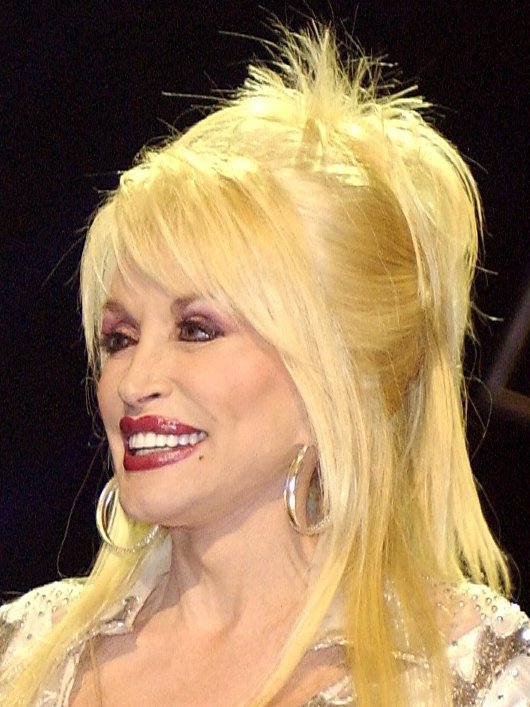
It lasts barely two and a half minutes. It contains only about 200 words, and a remarkable share of them are the same word repeated. Yet Jolene, released in the autumn of 1973, became the song Dolly Parton would be asked about more than any other — a plea sung to a beautiful rival, begging her not to steal a husband “just because you can.” It reached number one on the country chart, crossed the Atlantic, and eventually earned a place in the Grammy Hall of Fame. It was also, improbably, the product of two complete strangers: a little girl at a concert, and a bank teller who smiled too warmly at Dolly Parton’s husband.
This is the story of how a running marital joke and a child’s pretty name became one of the most covered, quoted, and beloved songs in American music.
A Name She Could Not Stop Saying
The name came first, and it had nothing to do with romance. In 2008, Parton told NPR about a young fan who had come up to her at a show years earlier asking for an autograph. The girl had red hair, fair skin, and green eyes. “She was the prettiest little thing I ever saw,” Parton recalled. When the child said her name was Jolene, Parton kept repeating it — Jolene, Jolene, Jolene, Jolene — partly so she would not forget it, and partly because, as she told the girl, it sounded like a song. She promised the child she would write one about it.
She was as good as her word. The hypnotic fourfold chant of the name became the song’s chorus, and the little girl’s colouring — the auburn hair, the ivory skin, the eyes of emerald green — became the description of the rival in the lyric. Parton has always been frank that the two inspirations were fused together: the name and the face came from the fan, while the story came from somewhere much closer to home.
The Woman at the Bank
The story belonged to Parton’s own young marriage. She and Carl Dean had wed in 1966, when she was twenty and still fighting for a foothold in Nashville. Not long after the wedding, Parton noticed her husband was spending an unusual amount of time at their local bank. The reason, she discovered, was a tall red-headed teller who had developed a serious crush on him — and who made sure he felt welcome every time he came in. Parton was not genuinely threatened. She turned it into a running joke between them, teasing that he was spending more time at the bank than they had money in it. But she was a songwriter, and songwriters file everything away.
Years later, on stage and in interviews, she told the tale with a laugh, saying she put a stop to the flirtation and got rid of “that redhead woman in a hurry” — and that something good can come from anything, because without the teller she would never have written the song or earned the money it brought in. The genius of the lyric is how it transforms a joke into genuine dread. The singer does not rage or threaten. She pleads, and she flatters: your beauty is beyond compare, she tells Jolene, and my happiness depends on you. It is a song about insecurity so honest that nearly everyone who hears it recognises the feeling.
One Extraordinary Writing Day
Remarkably, Jolene appears to have been written on or around the most productive day of Parton’s songwriting life. For years she maintained that she wrote Jolene and I Will Always Love You — the farewell she composed for her mentor Porter Wagoner as she prepared to leave his show and go solo — on the very same day. In later interviews she softened the claim slightly, explaining that when an old cassette tape of her work songs surfaced, the two songs were on it together, written within days of each other at most.
Either way, the pairing is astonishing. One song begged a rival not to take her man; the other said a graceful goodbye to the man who had made her famous. Together they announced that the young woman from the Smoky Mountains was no longer anybody’s protégée. She was a songwriter of the first rank, and she was about to prove it on her own.
Into Studio B
Parton recorded Jolene on May 22, 1973, at RCA Studio B in Nashville, the storied room where Elvis Presley and Roy Orbison had made classics. Her producer was Bob Ferguson, and the arrangement he and Parton built around the song was daringly spare. At its centre is a rolling, fingerpicked guitar figure — played by session guitarist Chip Young beneath Parton’s own rhythm work — that circles and circles like a mind that cannot rest. Against that restless pattern, Parton’s vocal is pure controlled desperation, rising on the chorus as she chants the name over and over.
The lyric’s economy is part of its power. With almost no wasted words, the song paints the rival in mythic colours — hair like autumn leaves, a smile like a breath of spring, a voice like summer rain — and then admits the singer cannot compete. Released as a single on October 15, 1973, ahead of the album Jolene the following February, it climbed to number one on the Billboard Hot Country Singles chart in February 1974. Two years later it travelled: in 1976 it reached number seven in Britain, an almost unheard-of feat for a Nashville story-song.
It was Parton’s second number one country single as a solo artist, following Joshua three years earlier, but it was the one that announced what the first had only hinted: she could write a song so complete, so emotionally exact, that other singers would spend the next fifty years wanting to live inside it. Parton herself has admitted to mixed feelings about performing it, precisely because its origins were real. The joke at the bank had been harmless. The fear the song imagines — that love can simply be taken by someone more dazzling — was not invented at all, and audiences have always been able to tell the difference.
The Song Everyone Had to Sing
From there, Jolene simply never stopped. Olivia Newton-John recorded it in 1976 and took it to the top of the charts in Japan. The White Stripes made it a ferocious live staple, and Jack White’s anguished rendition introduced it to a generation of rock fans. Parton’s goddaughter Miley Cyrus sang it in a stripped-back garden performance in 2012 that has been viewed hundreds of millions of times. In 2016, Parton re-recorded it a cappella with Pentatonix, and the result won a Grammy Award — forty-three years after she first sang it in Studio B.
In 2014, the original recording was inducted into the Grammy Hall of Fame, and Rolling Stone placed the song at number 63 on its list of the 500 greatest songs of all time. Then, in 2024, Beyoncé rewrote it from the other side of the confrontation on her album Cowboy Carter, turning the plea into a warning — with Parton herself appearing on the record to bless the transformation. Few songs can survive being answered by a superstar half a century later. Jolene could, because its question has never gone away.
By most counts, more than thirty artists have recorded the song, and television has claimed it too: in 2019, Parton’s Netflix anthology series Heartstrings devoted an entire episode to dramatising the story behind it, with Parton appearing as a character in Jolene’s world. It remains the single most requested song of her career, the one strangers name when they can name only one.
Parton still tells the story of the bank teller with a grin, and still thanks her. A crush, a joke, a child’s name repeated four times so it would not be forgotten: that is all Jolene was made of. It was enough.
Leave a Reply