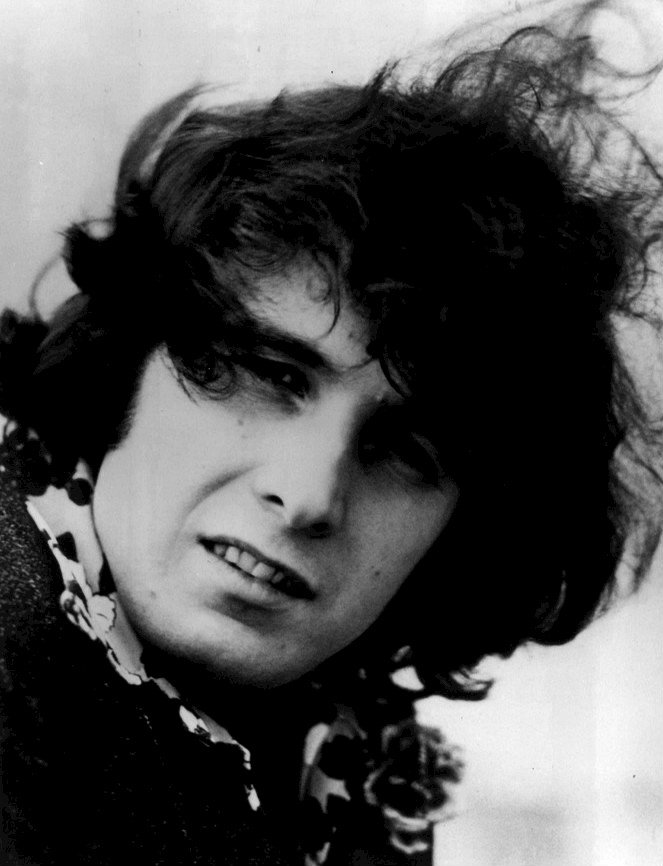
Don McLean will always be introduced the same way: the man who wrote American Pie. But ask singers rather than fans, and a different title keeps coming up. And I Love You So, a quiet love ballad from his debut album, may be the most recorded song he ever wrote. Perry Como took it into the charts, Elvis Presley sang it through his final years, and it was still being played at a royal wedding in 2018. Yet McLean’s own version began life in the humblest place a song can start: on the B-side of his first single, on an album the record industry had rejected dozens of times.
This is the story of how that ballad was made — in a Berkeley studio while student riots raged outside, by a twenty-three-year-old folksinger nobody would sign — and how it then travelled from singer to singer until it quietly became a standard.
An Album Nobody Would Release
McLean recorded his debut album, Tapestry, in 1969, cutting the tracks that June at Sierra Sound Laboratories in Berkeley, California, with producer Jerry Corbitt. Berkeley that summer was a city in turmoil, convulsed by student protests and riots, and McLean has recalled making this gentle, inward-looking music while the world outside the studio windows seemed to be coming apart. He was no complete unknown in folk circles — a protégé of Pete Seeger, he had sung and sailed aboard Seeger’s Hudson River sloop Clearwater, absorbing the older man’s faith that a song plainly sung could carry real weight. He had worked on the album’s songs for a couple of years. Getting them released was another matter entirely.
By McLean’s own oft-told account, Tapestry was rejected seventy-two times by record labels before it finally found a home at Mediarts — a label so new that it had not even existed when he first started shopping the record around. Mediarts released the album in 1970. The reviews were kind, the sales were not: outside the folk community, Tapestry attracted little notice, though its Castles in the Air found a foothold on the Easy Listening chart, and the album was eventually pulled into the charts in the wake of American Pie.
Tucked among its folk songs was a ballad of simple gratitude. And I Love You So is sung by a man looking back over an empty life that love has rescued: “The people ask me how / How I’ve lived till now / I tell them I don’t know.” Even the song’s construction is quietly unusual. Its verses use an ABBA rhyming scheme — the first line rhyming with the fourth, the second with the third — where most popular songs follow a far simpler pattern. The folded, inward rhyme gives the lyric the feel of something turning gently in on itself, like a prayer said twice. The answer the singer finally gives his questioners is the song’s whole philosophy in four lines: he guesses that they understand how lonely life has been — “but life began again / the day you took my hand.” It is a resurrection described in the plainest possible words.
The Flip Side of the First Single
When Mediarts issued McLean’s debut single in January 1971, the A-side was Castles in the Air. And I Love You So was placed on the B-side, the traditional home of songs a label does not expect to matter. In commercial terms, the judgement seemed sound: the single, like the album, made little impression, and McLean’s breakthrough, when it came later that year, arrived with a very different song.
But songs travel by other routes than the charts. Singers listen to each other, producers trade tips, and a good ballad on an obscure album does not stay secret for long. Bobby Goldsboro recorded And I Love You So for his 1971 album Come Back Home, and his single release reached the Canadian charts. In March 1972, Ed Ames released it as a single, with Billboard‘s reviewers recommending it to radio stations. That same year Shirley Bassey made it the title song of an entire album, while Bobby Vinton and Helen Reddy — who placed it on her hit album I Am Woman — also recorded it. Within two years of its release, McLean’s B-side had become a quiet industry favourite: a song that singers sang to each other long before the public caught up.
Perry Como Takes It to Nashville
The recording that carried the song to the world belonged to Perry Como. In January 1973, Como was sixty years old and three decades into a recording career that stretched back to 1943, enjoying an unlikely late resurgence on the back of hits like It’s Impossible. Between January 17 and 19, 1973, he recorded And I Love You So at RCA Studio B in Nashville, with the legendary Chet Atkins producing. Where McLean’s original ran four minutes and sixteen seconds, Como’s version came in at three minutes and fourteen — the folk ballad smoothed, not softened, into an elegant pop performance.
RCA Victor released it in April 1973, as a single and as the title track of Como’s album And I Love You So. It reached number twenty-nine on the Billboard Hot 100 — the rival trade papers Cash Box and Record World ranked it higher still, at number eighteen — and spent a week at number one on the Easy Listening chart. In Britain it climbed to number three and stayed on the chart for thirty-five weeks — the longest run of any hit in Como’s entire career — while reaching number two in both Ireland and South Africa. It was also, though nobody could know it yet, the last Top 40 hit Como would ever have, closing a chart story that had begun thirty years earlier. He was so taken with the song that he recorded a Spanish version, Y te quiero así, taking personal lessons in the language from the head of RCA International to get it right.
McLean, meanwhile, finally got his own version promoted: in 1973 United Artists, which had absorbed Mediarts, reissued And I Love You So as an A-side in its own right, with If We Try on the flip. The writer had been moved from the back of the record to the front.
Elvis, and Everyone After
On March 11, 1975, Elvis Presley recorded the song at RCA Studio C in Hollywood, California, and released it on his album Today — among the last studio albums he would ever make. Presley, then deep into the big romantic ballads of his final period, recognised a kindred piece of writing: a song about a wasted life redeemed, sung by a man who sounded as if he meant it as testimony. He kept And I Love You So in his concert repertoire through his last tours, and for the audiences of his final years it became one of the tender fixtures of the show, a moment of stillness in the spectacle.
Nor did the song rest there. The list of those who have recorded it runs like a roll call of twentieth-century popular singing: Harry Belafonte, Johnny Mathis, Engelbert Humperdinck, Olivia Newton-John, Emmylou Harris and Nana Mouskouri among them, and in later years Glen Campbell, Rick Astley and Harry Connick Jr. In 2018, nearly half a century after it was cut in Berkeley, the song was played at the wedding of Prince Harry and Meghan Markle.
McLean himself has said that Tapestry, for all its rejections, unlocked the door of his career precisely because of And I Love You So and Castles in the Air. American Pie made him famous in a blaze of riddles and argument; this ballad did slower, steadier work, passing from voice to voice, decade to decade, asking nothing and offering everything it had. The man who demanded to know what happened the day the music died had already, two years earlier, written his simplest answer to a simpler question — how he had lived till now. He didn’t know. He just knew the day it began again.
Leave a Reply