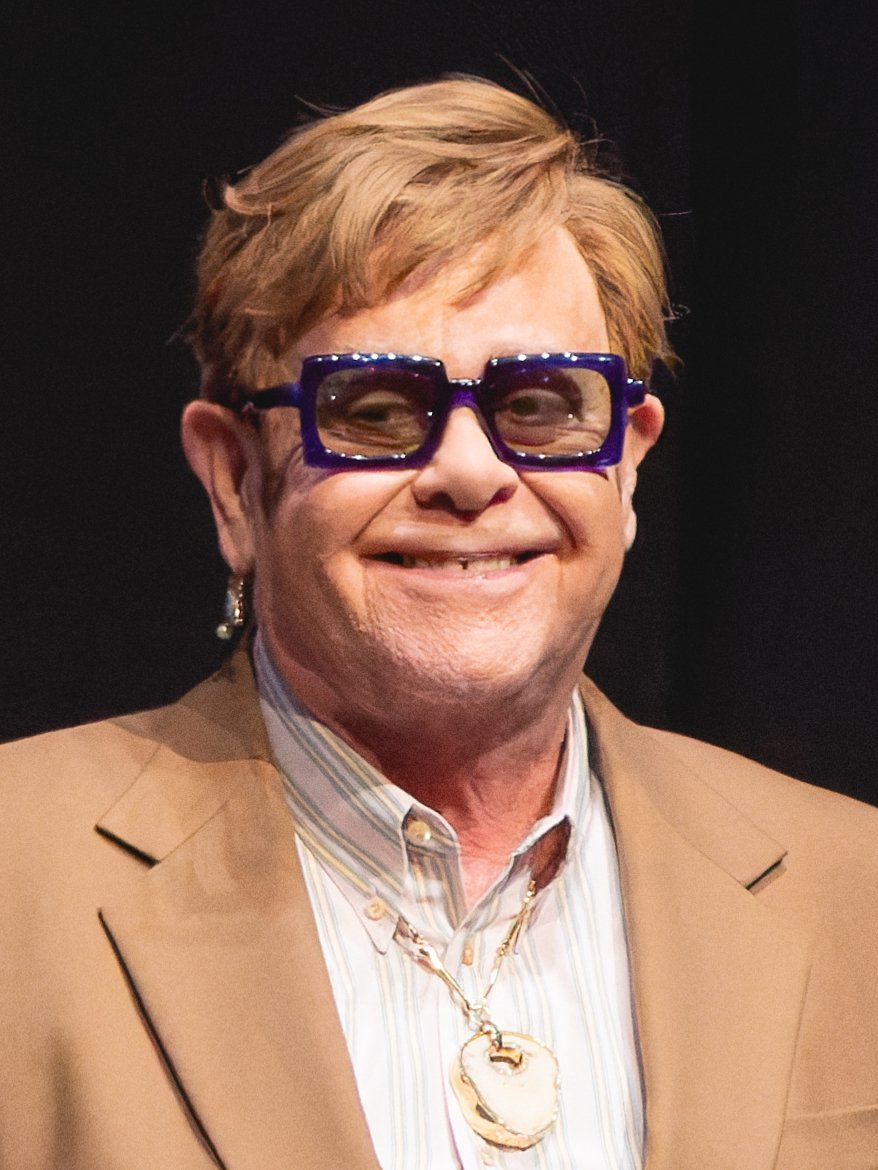
Few singers have argued with their own masterpiece as stubbornly as Elton John argued with this one. “Don’t Let the Sun Go Down on Me” is now one of the defining ballads of his career — a vast, pleading song about a relationship going dark, built to be sung back at him by thousands of people at once. Yet in 1974 Elton became so frustrated trying to record it that he told his producer to take it off the album and give it to somebody else. Seventeen years later, when George Michael turned it into a live duet and wanted to release it as a single, Elton argued again, warning that the record was not strong enough and might end his friend’s career. Both times, Elton was gloriously wrong. The song he twice tried to stop became a hit in two different decades — and eventually reached No. 1 as a live duet with the younger star who had loved it all along.
Written in Ten Days in the Rockies
The song was born at altitude. In January 1974, Elton and his lyricist Bernie Taupin travelled to Caribou Ranch, a recording studio set in the mountains near Nederland, Colorado, to make the album that would become Caribou, Elton’s eighth studio album. The pair were working at the speed that defined their partnership in those years: Taupin and Elton wrote the songs for the album, this one among them, in a burst of about ten days.
Taupin’s lyric is a last appeal from someone who can feel a love being withdrawn. The singer has tried to change, has offered everything he has, and is begging not to be cast aside as the light fails — the setting sun standing in for a partner turning away. It is one of Taupin’s most direct lyrics of the period: no characters, no scenery, just a voice asking to be allowed to stay. Elton set it as a slow-building piano ballad, the melody rising in long, hymn-like phrases toward a chorus designed to sound less like a pop hook than a plea delivered in front of a congregation.
The people around him heard its size immediately. Producer Gus Dudgeon later recalled that the song gave him chills the first time Elton played it for him. Drummer Nigel Olsson, listening from another room at the ranch while Elton was still working on it, ran downstairs to tell him it would be a number one hit. He was right about the song, if optimistic about the timetable: it took seventeen years.
The Vocal That Nearly Killed the Song
Dudgeon and Elton had an ambitious sound in mind. Elton’s own website describes the aim as a Beach-Boys-meets-Phil-Spector feel, in the spirit of the Beach Boys’ Let’s Go Away for Awhile and the Righteous Brothers’ You’ve Lost That Lovin’ Feelin’ — a record that would wash over the listener in waves of voices, horns and piano. The problem was the man in the middle of it. Try as he might, Elton could not sing the lead vocal to his own satisfaction. Take after take left him dissatisfied with a performance everyone else thought was extraordinary, and his frustration curdled into rejection of the song itself. He told Dudgeon to leave it off the album altogether and to give it away — to Engelbert Humperdinck, he suggested, or to Lulu.
Thankfully, Dudgeon did neither. Instead, once the sessions moved on, he set about building the record up around the vocal Elton had wanted to throw away, deepening the Spector and Beach Boys colours until the song’s scale matched its lyric. It was a producer’s act of faith: where the singer heard only his own shortcomings, Dudgeon heard a classic that simply needed the right frame.

Beach Boys in the Chorus
The frame, in the end, was made of voices. For the choruses, Dudgeon brought in Carl Wilson and Bruce Johnston of the Beach Boys — the very group whose harmonies the track had been designed to evoke. Johnston did more than sing: he helped arrange the backing vocals, alongside Daryl Dragon. Toni Tennille, Dragon’s wife, also sang on the record; within a year or so, the couple would be famous in their own right as Captain & Tennille. Billy Hinsche completed the backing-vocal line-up, while a horn arrangement by Del Newman, played by the Tower of Power horn section, answered the singers across the choruses. Ray Cooper added percussion and Dave Hentschel played mellotron, with Elton’s own band — guitarist Davey Johnstone, bassist Dee Murray and Olsson — underneath it all.
One tiny detail survived because Tennille defended it. In the second verse, Elton pronounces the word “discard” in an exaggerated American drawl — “dis-cord” — and Dudgeon considered fixing or burying it. Tennille told him she loved it, and it stayed: a small, human quirk preserved inside one of the most polished productions of Elton’s career.
So Close to the Top
Released as the first single from Caribou — in May 1974 in Britain and on 10 June in the United States — the song climbed steadily through the American summer. It spent two weeks at No. 2 on the Billboard Hot 100, held off the top by John Denver’s “Annie’s Song,” and reached No. 1 in Canada. In Britain, more surprisingly, it stalled at No. 16. The album itself went to No. 1 in America, and Elton’s performance earned him a Grammy nomination for Best Pop Vocal Performance, Male. The record he had wanted to give away had become the emotional centrepiece of his year — everywhere, that is, except at the very top of the chart his drummer had promised him.
There it might have rested: a beloved near-miss, a permanent showstopper in concert, but never quite a champion. What it needed, it turned out, was not a better recording. It needed a second singer.
Live Aid, Then Wembley Arena
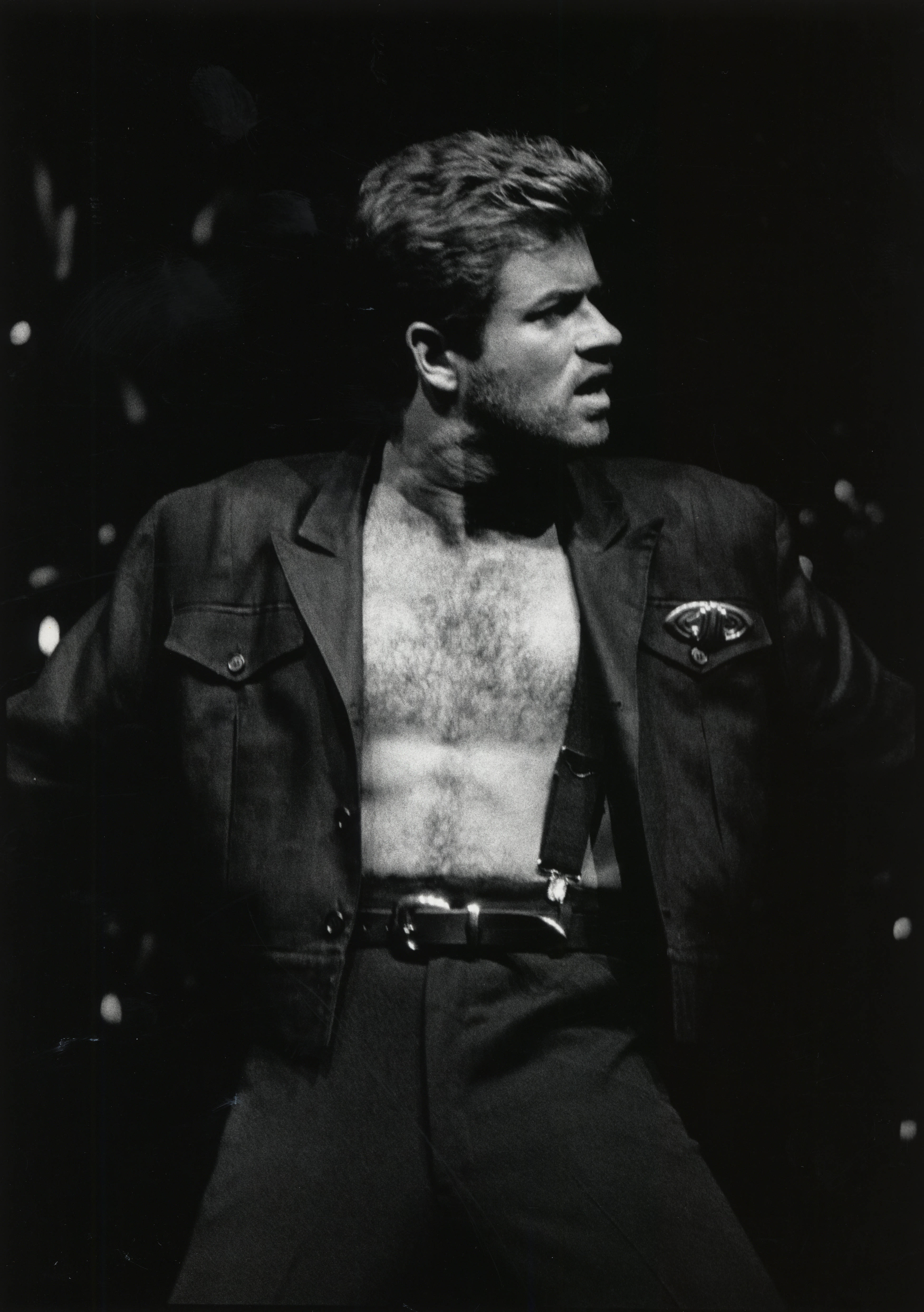
George Michael had grown up loving the song, and on 13 July 1985 he sang it at Live Aid at Wembley Stadium in London, with Elton himself at the piano — accompanying, not singing — and Michael’s Wham! partner Andrew Ridgeley among the backing singers. The performance lodged the song in Michael’s repertoire, and when he set out on his Cover to Cover tour in 1991 — a tour built around the songs he loved by other artists — it was in his set every night.
On 23 March 1991, at Wembley Arena in London, two days before Elton’s 44th birthday, Michael brought his hero out as a surprise guest, and for the first time the two men sang the song together as a true duet, trading its verses while an arena roared around them. The recording of that night was the one Michael believed in. Elton, true to form, did not: on hearing that Michael planned to release it as a single, he left a message on his answering machine saying the song was not strong enough, and that releasing it would mean the end of George Michael’s career.
The Voicemail, the No. 1, and the Ten Charities
Michael released it anyway, in November 1991, and the proceeds from the single were divided among ten charities working for children, AIDS causes and education — a cause close to both men’s hearts at the height of the AIDS crisis. The public delivered its verdict within weeks. The duet spent two weeks at No. 1 in Britain in December 1991, then completed the journey the original had begun seventeen years earlier by reaching No. 1 on the Billboard Hot 100 on 1 February 1992. It topped the charts in seven countries altogether, stayed on the Hot 100 for twenty weeks, and spent two weeks at No. 1 on Billboard‘s Adult Contemporary chart. Along the way, its climb into the American Top 40 allowed Elton to tie Elvis Presley’s record of twenty-three consecutive years with a song in the US Top 40 — a record he would break the following year. The duet, like the original, was nominated for a Grammy, this time for Best Pop Vocal Performance by a Duo or Group with Vocal. Nigel Olsson’s prediction, made in a corridor at Caribou Ranch in 1974, had finally come true in full.
The story has a tender final chapter. After George Michael’s death on Christmas Day 2016, Elton took to dedicating the song to him in concert, introducing it as a tribute to the kind, generous friend who had made one of his biggest hits his own. It is a fitting ending for a song that was always, at heart, about refusing to let the light go out on someone you love. Elton John tried to give it away, then tried to talk his friend out of releasing it — and “Don’t Let the Sun Go Down on Me” outlasted every doubt its creator ever had about it.
Leave a Reply