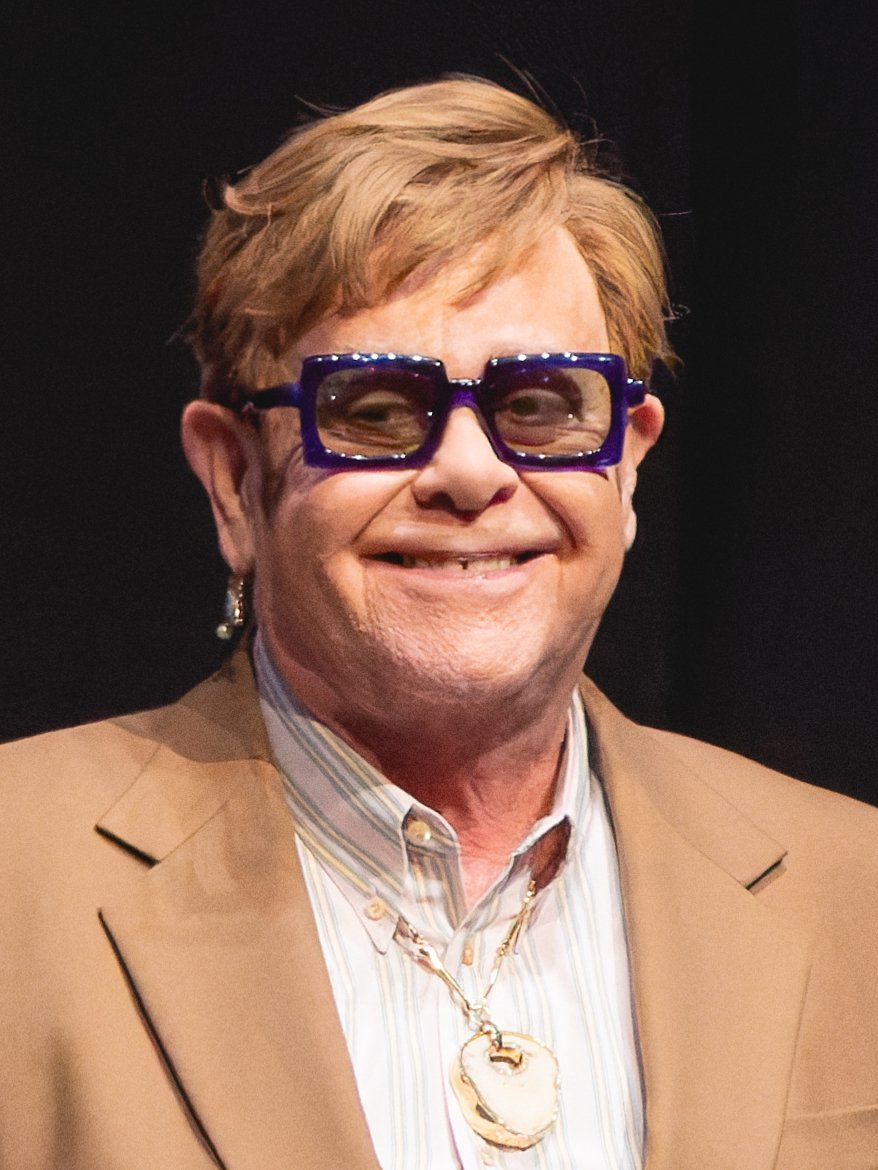
Almost every great love song pretends to experience. Your Song is the opposite: it is a love song written by a seventeen-year-old who had never been in love, set to music in about twenty minutes by a twenty-two-year-old who was still living in his mother’s flat, and first recorded by somebody else entirely. It should have been a footnote. Instead it became the record that introduced Elton John to the world, the song he has opened and closed eras with for more than fifty years, and — in John Lennon’s famous judgement — the first genuinely new thing to happen in popular music since the Beatles themselves.
Breakfast in Northwood Hills
The setting matters, because the song is exactly as unglamorous as its birthplace. In 1969, Bernie Taupin was a Lincolnshire farm boy of seventeen who had answered a record company’s advertisement and been paired, almost by administrative accident, with a young pianist and songwriter named Reg Dwight, who performed as Elton John. The two were living and working in the flat in Northwood Hills, in suburban London, belonging to Elton’s mother and stepfather. Taupin wrote lyrics and passed them under the door; Elton sat at the piano and turned them into songs at frightening speed.
One morning in the autumn of 1969, at the kitchen table, over breakfast, Taupin scribbled the lyric of Your Song onto a sheet of lined paper — a sheet he later remembered as grubby and coffee-stained. His own account could not be plainer: “I scribbled the lyric down on a lined notepad at the kitchen table of Elton’s mother’s apartment in the London suburb of Northwood Hills, breakfast time sometime in 1969. That’s it. Plain and simple.”
Taupin has never pretended the words were sophisticated. He calls them naive and childish, the work of a virginal teenager who had, as he put it, never really experienced love at all — a boy imagining what a person in love ought to say. The lyric’s famous clumsiness, its apologies for having no money and nothing grand to offer, its sculptor who doesn’t exist and its house that was never bought, is not a device. It is a transcript of sincerity from someone with nothing to hide behind. Elton took the sheet into the front room, sat at the piano — the upright the family called the birdcage — and had the melody in roughly twenty minutes. He said later that he knew, reading the words, that he could not mess this one up.
Trident Studios, January 1970
The song was recorded in January 1970 at Trident Studios in London, during the sessions for Elton’s self-titled second album, with producer Gus Dudgeon and arranger Paul Buckmaster, whose strings would give the record its particular ache. Where the duo’s first album had been tentative, this one was a declaration, and Your Song was its heart: Elton’s piano and voice out front, Caleb Quaye’s guitar, and Buckmaster’s orchestra entering like somebody quietly opening a door.
Even then, the song’s route to the public was not Elton’s alone to control. He was still a jobbing musician, opening shows in America for the established rock band Three Dog Night, and — as was his habit in those hungry years — he offered them material. Three Dog Night recorded Your Song for their album It Ain’t Easy, released in March 1970, a month before Elton’s own album appeared. The first released version of the most famous Elton John song is not by Elton John.
The album itself appeared in April 1970, with Your Song placed as its opening track — the first sound most listeners ever heard from Elton John. It was a bold piece of sequencing. The record that followed ranged across country, gospel and full-blown orchestral rock, but the statement of intent came first: a piano, a young voice, and a love song with its heart entirely unguarded. Critics noticed the songwriting before they noticed anything else, and when Elton made his American live debut at the Troubadour in Los Angeles that August — introduced to the audience by Neil Diamond, and reviewed in terms that compared the evening to the arrival of a major new talent — it was Your Song that functioned as his calling card, the number by which strangers in a foreign country could measure what this unknown Englishman was.
The Single Three Dog Night Refused to Release
What happened next is the part of the story the music business almost never produces: an act of deliberate generosity by a bigger act toward a smaller one. Three Dog Night, a hit machine that had built its career spotting great songs by unknown writers, recognised exactly what they were holding. Released as their single, Your Song would very likely have been a major hit for them. They declined to release it as a single at all, precisely so that the young Englishman who had written it — and who was sleeping in his mother’s flat an ocean away — could have his chance with it first.
Elton’s own label nearly fumbled the gift anyway. In America, Your Song was first issued as the B-side of Take Me to the Pilot. Disc jockeys, exercising the ancient prerogative of the B-side, began playing it instead, and the record was flipped. By the beginning of 1971 the song had reached No. 8 on the Billboard Hot 100 and the Top 10 in Britain — the first hit of Elton John’s career, and the foundation of everything that followed. Lennon, meeting him not long afterwards, paid the compliment that has trailed the song ever since: it was, he said, the first new thing to happen since the Beatles.
A Song That Belongs to Whoever Sings It
The title proved prophetic. Of all Elton’s songs, Your Song is the one he explicitly gave away in its own lyric — “you can tell everybody this is your song” — and the world took him at his word. It has been recorded and performed by generations of singers, from Rod Stewart to Lady Gaga, and in 2010 Ellie Goulding’s recording of it reached No. 2 in Britain, introducing the breakfast-table lyric to listeners younger than Taupin’s grandchildren’s generation. Elton sang it at the close of the century’s great public moments, and on the night of Diana, Princess of Wales’s funeral in 1997 it was Your Song‘s companion piece from the same pen — the rewritten Candle in the Wind — that the world heard; but it is Your Song that has remained the everyday one, the wedding song, the dedication, the message in a card.
The record was inducted into the Grammy Hall of Fame in 1998 and has been a fixture of greatest-songs lists ever since. Its endurance poses a small puzzle that Taupin himself has solved best. The lyric was written by a boy who knew nothing of love, about gifts he did not have, in a flat he did not own, on paper stained with coffee. Every subsequent love song by the partnership — and they would write masterpieces of experience and disillusion — is measured against its innocence. Taupin has described Your Song and the weary Sacrifice, written twenty years later, as bookends of a life. Between them stands the whole career.
That may be why Elton has never been able to drop it from his shows, through all the costumes and reinventions, down to the final farewell tour that ended in 2023. Stripped of everything else, there is still the piano, the young man’s melody, and the oldest promise in pop, offered by two teenagers at a kitchen table: I don’t have much, but what I have is yours. The rival band that handed the song back understood before anyone else that it was too good to keep. They were right. It belonged to everybody — which is to say, exactly as its authors always insisted, it was your song.
Leave a Reply