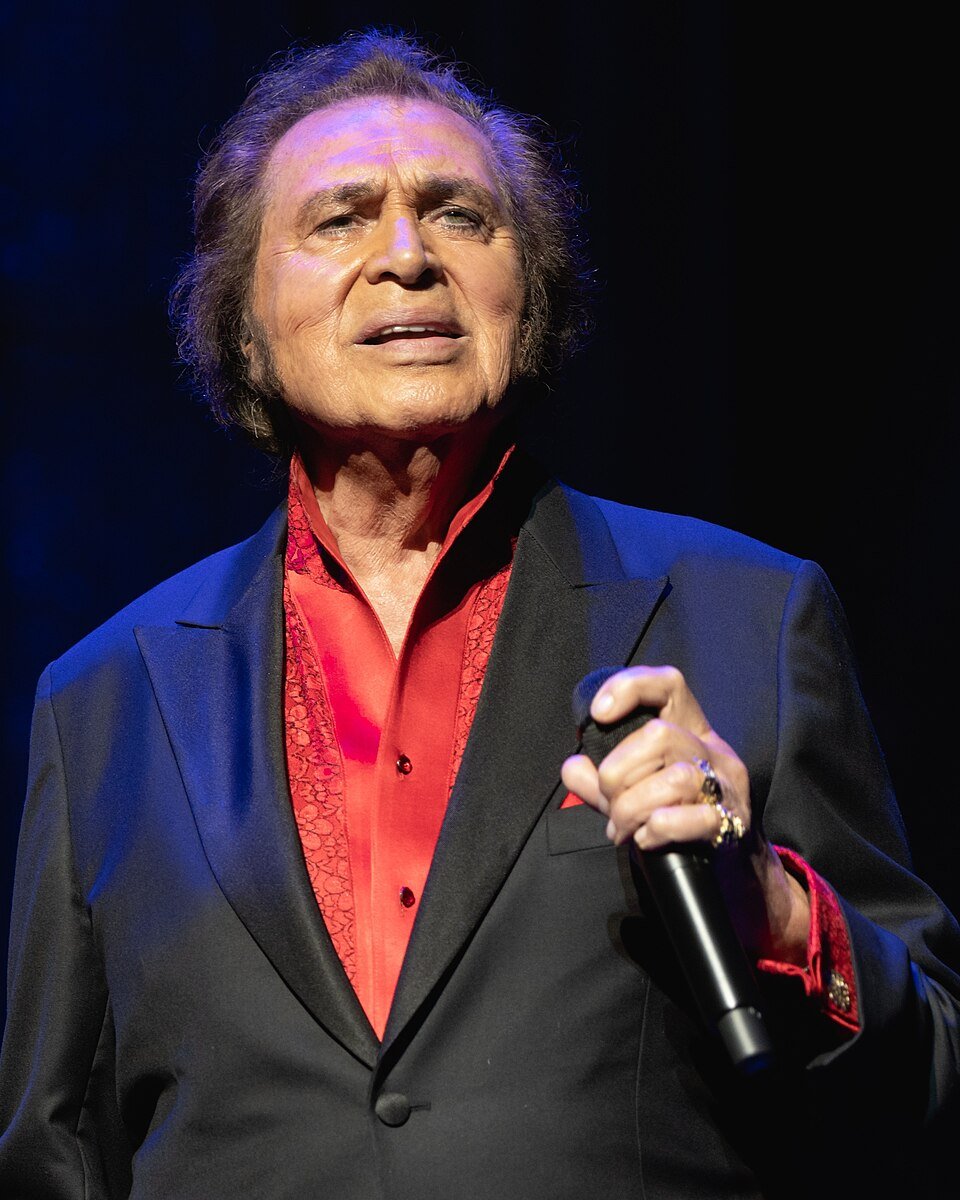
Every great record has a moment when it stops being a song on a demo and starts being a part of people’s lives, and for Engelbert Humperdinck that moment arrived with Release Me. It is a song of quiet desperation and dignified surrender, a plea to be set free from a love that has already ended in all but name, and in 1967 it did something almost unthinkable: it held The Beatles off the top of the British charts. But the story of how Release Me was made is even more fascinating than its chart success, because it involves a song written years earlier, a singer still searching for his breakthrough, and a recording session in which restraint mattered more than drama.
A Song Waiting for Its Singer
Release Me was written by Eddie Miller, Robert Yount and Dub Williams, and it had already been recorded by several artists before Engelbert found it, including country singers who treated it as a straightforward country ballad. The lyric is simple and devastating: a lover asks to be released, to be allowed to go, because staying would only prolong the pain for both people. There is no anger in it, only weariness and honesty, and that emotional restraint is what made it so universal. When Engelbert’s team heard the song, they recognised that its power lay not in vocal fireworks but in sincerity. It needed a singer who could sound wounded without sounding bitter, and Engelbert, with his warm baritone and natural phrasing, was exactly that singer.
Finding the Right Arrangement
The arrangement of Release Me is a masterclass in understatement. A gentle, swaying rhythm, soft strings and a restrained backing allow the vocal to sit at the centre of the record, unhurried and uncluttered. The producers understood that the song’s drama comes from its lyric, not from orchestral excess, and they left space around Engelbert’s voice so that every word could be heard. Listen closely and you will notice how he lingers on key phrases, how he lets a note fade rather than forcing it, and how the band follows his breathing rather than the other way around. That sense of space is why the record still sounds intimate today, even on a modern speaker. It feels less like a studio production and more like a confession overheard in a quiet room.
The Vocal Performance That Made It His Own
Engelbert’s vocal on Release Me is remarkable for what it does not do. He does not shout, he does not ornament every line, and he does not try to prove how powerful his voice can be. Instead, he sings with a kind of controlled ache, as though he is holding back tears while remaining polite and dignified. That choice transformed a country song into a pop classic, because listeners in Britain and around the world recognised the feeling instantly: the moment when love becomes a kindness that says goodbye. His phrasing, honed over years in clubs and dance halls, gave the song its conversational truth. He sounds like a man speaking directly to one person, not performing for a chart, and that intimacy is why the record sold in such extraordinary numbers.
Beating The Beatles, Week After Week
When Release Me reached number one in Britain in March 1967, it stayed there for six weeks, a run that became legendary because it kept The Beatles’ double A-side Penny Lane and Strawberry Fields Forever at number two. In the story of popular music, that fact is often repeated with a smile, but it deserves to be taken seriously. It showed that the public appetite for a beautifully sung ballad was just as strong as its appetite for psychedelic experimentation. Teenagers, parents and grandparents all bought the same record, and Engelbert became a rare artist who could unite generations. The chart battle was not a rivalry in any bitter sense; it was proof that great songs, in very different styles, could share the same extraordinary moment in music history.
A Worldwide Phenomenon
Release Me was not only a British success. It became a worldwide hit, reaching the top ten in America and selling millions of copies internationally, and it opened doors for Engelbert in Las Vegas, on television and in concert halls across the globe. The song’s simple lyric travelled well across languages and cultures, because heartbreak needs little translation. Audiences who had never heard of Engelbert Humperdinck suddenly knew his voice, and his name, once considered unusual, became synonymous with romance. The record also changed how the industry saw him. He was no longer a promising singer waiting for a break. He was a proven star with a signature song, and every subsequent single would be measured against the standard Release Me had set.
Why the Recording Still Works Today
Part of Release Me’s longevity lies in its production, which has aged gracefully because it never relied on fashionable studio tricks. There are no gimmicks to date it, no effects that sound quaint, just a voice, a melody and an arrangement that serves them both. Modern listeners, discovering the song through streaming or through their parents’ record collections, often remark on how contemporary its emotional honesty feels. The song does not try to be clever. It tries to be true, and truth does not go out of style. That is why it remains a staple of Engelbert’s concerts, greeted with recognition and applause before he has sung a single note, and why it continues to be covered and referenced by younger artists.
The Legacy of a Single Song
For Engelbert, Release Me was both a blessing and a challenge. It gave him a career, but it also created expectations that every ballad should reach the same heights. He met that challenge by building a long, varied catalogue, refusing to become a one-song artist while always honouring the song that made him famous. In interviews, he has spoken of Release Me with affection rather than resentment, understanding that few singers are lucky enough to have a record that defines an era. It is a song that taught him, and taught audiences, that vulnerability can be a strength, and that a quiet plea can be more powerful than a loud declaration.
Listening Again, With Fresh Ears
Put Release Me on today, close your eyes, and listen not for nostalgia but for craft. Notice the patience of the vocal, the space in the arrangement, the way the lyric unfolds like a letter written with great care. You will hear a singer at the exact moment when years of hard work met the right song, and you will understand why millions of people kept that record at number one. It is a reminder that hits are not only made in studios. They are made when a song, a singer and a moment in history align, and when the singer has the courage to sing simply and honestly. Engelbert Humperdinck did exactly that, and Release Me remains his timeless proof.
That is how Engelbert Humperdinck made Release Me: not with spectacle, but with patience, restraint and a voice that understood heartbreak from the inside. The Beatles may have been the sound of the future in 1967, but for six unforgettable weeks, the sound of the present belonged to a Leicester lad singing a plea for release, and the world, quite rightly, stopped to listen.
Leave a Reply