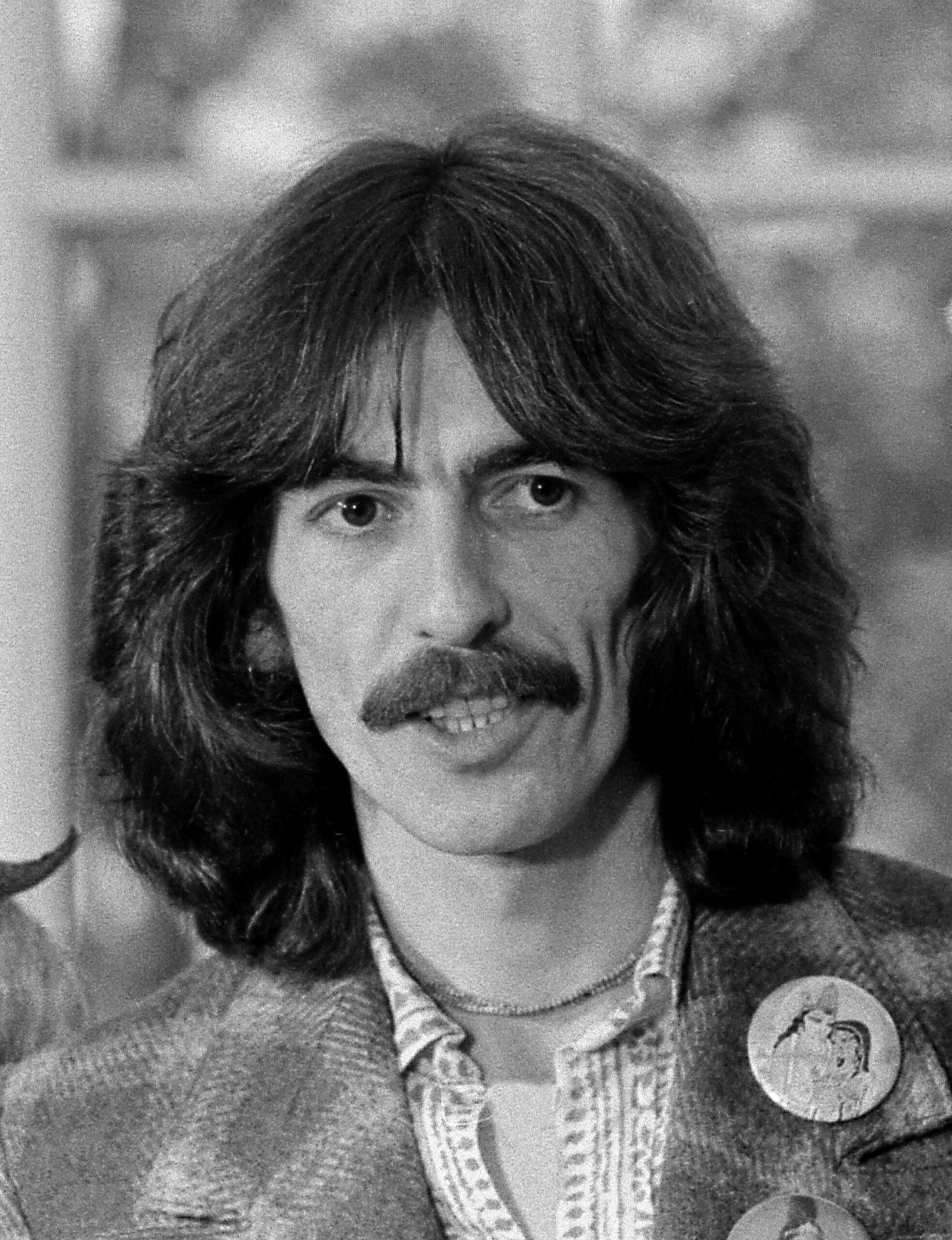
The comeback began with a record George Harrison had bought twenty-four years earlier, in a shop in Illinois, before anyone outside Liverpool and Hamburg had heard of the Beatles. In the summer of 1963, Harrison travelled to Benton, Illinois, to visit his sister Louise — five months before the Beatles’ era-defining appearance on The Ed Sullivan Show — and spent part of the trip doing what he always did: trawling record shops for American music. Among the albums he carried home was a 1962 LP by a young singer named James Ray. On it sat a bouncy, horn-driven track called I’ve Got My Mind Set on You, written by Rudy Clark. Harrison never forgot it. In January 1988, a quarter-century later, his version of that song stood at No. 1 in America — the last chart-topper of his life, and, to this day, the last US or UK No. 1 by any solo Beatle.
The distance between those two moments is the story. When Harrison rediscovered the song, he was rock’s most famous recluse: five years without an album, his last record, 1982’s Gone Troppo, having sunk almost unnoticed. His public energies had gone into his film company, HandMade Films, and into his garden at Friar Park. The music business assumed he was finished. He very nearly was himself.
James Ray’s Forgotten Single
Rudy Clark, the songwriter, was part of the New York writing stable around Bobby Darin’s publishing operation, and I’ve Got My Mind Set on You was given to James Ray, a slight, high-voiced singer from Washington, D.C., whose career burned briefly and hot. Released in December 1962 with the Hutch Davie Orchestra, Ray’s original is a joyous oddity — part R&B, part pop, decorated, improbably, with a Chinese lute. Ray had a genuine hit with If You Gotta Make a Fool of Somebody, but the Clark song was not it, and Ray himself was dead within a few years, his records left to collectors and to visiting English guitarists with good ears.
What Harrison heard in it, in 1963, was a hook that behaved like a mantra: the title phrase repeated until it becomes a vow. The young Beatle filed it away in the great mental archive he built from American records. It would stay there through Beatlemania, through All Things Must Pass, through the whole of his solo fame — waiting for the moment when he needed a song that was nothing but pure, uncomplicated pleasure.
The Comeback Takes Shape at Friar Park
When Harrison finally decided to make another album in late 1986, he made one condition: he wanted a producer who would push back. He found Jeff Lynne, the Electric Light Orchestra leader and fellow devotee of classic pop craft, and the two set up at Harrison’s home studio at Friar Park in Henley-on-Thames. Work on the album that became Cloud Nine began in January 1987, in an atmosphere deliberately unlike the tortured sessions of Harrison’s seventies: relaxed, funny, and song-focused.
The James Ray song was among the first things they tackled, and its selection was a statement of intent. Harrison could have led his comeback with a heavyweight original freighted with meaning. Instead he chose a cover — the oldest trick in his personal history, since the Beatles themselves had conquered America partly by covering American R&B. Lynne rebuilt Clark’s song as gleaming modern pop-rock: his own bass and keyboards underpinning the track, Jim Keltner on drums, Ray Cooper on percussion, and a honking saxophone break from Jim Horn where the original had its lute. Harrison’s slide guitar and sly, cheerful vocal did the rest. The recording is engineered joy — a man who had spent years sounding weary suddenly sounding twenty years younger.
Number One, at Last — and a Tie Broken
Got My Mind Set on You was released as the lead single from Cloud Nine on October 12, 1987, with the B-side Lay His Head, a rescued outtake from the Somewhere in England sessions. The response startled everyone. The single climbed steadily through the winter and reached No. 1 on the Billboard Hot 100 in January 1988 — the chart week immediately before the Beatles were inducted into the Rock and Roll Hall of Fame, which meant Harrison entered the Hall with a current American No. 1 to his name, a feat almost no inductee has matched. In Britain it spent four weeks at No. 2 and ended 1987 as the country’s fifth best-selling single. Billboard ranked it the No. 3 song of 1988 in America.
The statistics carry a quiet drama. It was Harrison’s third US No. 1 as a solo artist, after My Sweet Lord and Give Me Love (Give Me Peace on Earth) — but the only one he did not write himself. Reaching the top broke a three-way tie among the ex-Beatles: Harrison, John Lennon and Ringo Starr had each stood at two solo US No. 1s. And time has only sharpened the record. As of today, no former Beatle has topped the US or UK singles chart as a solo artist since. The last word in the Beatles’ forty-year conversation with the top of the charts belongs to George — and he spoke it with somebody else’s song, pulled from a record he bought as a twenty-year-old tourist.
The Chair, the Squirrel, and the Backflip That Wasn’t
The song’s two music videos chart 1987’s strange video economy perfectly. The first, directed by Willy Smax, sets the song in an amusement arcade, with a teenage boy trying to win a ballerina doll for a girl who is watching Harrison perform inside a kinetoscope viewer. It was sweet, and it was completely eclipsed by the second. Director Gary Weis, inspired by the horror-comedy Evil Dead II, filmed Harrison deadpanning in a wood-panelled study while the room came alive around him: a mounted stag and warthog, a stuffed squirrel, a suit of armour and a chainsaw all singing and dancing along. Midway through, Harrison appears to leap from his chair, execute a backflip and perform a dance routine — in fact a double, choreographed into the sequence by Vincent Paterson — before settling back into his seat mid-strum, not a hair out of place.
That video became one of the defining clips of the era, earning three MTV Video Music Award nominations and fixing Harrison’s late image in the public mind: not the brooding mystic of the seventies, but the driest wit in rock, happily letting a roomful of taxidermy steal his own comeback video. Even “Weird Al” Yankovic got his turn, parodying the record in 1988 as (This Song’s Just) Six Words Long — an affectionate jab at the lyric’s glorious repetitiveness, and backhanded proof of how completely the song had saturated the culture.
The Song That Reopened the Door
Cloud Nine was a hit, and Got My Mind Set on You did more than top a chart: it reopened a career. Within a year Harrison had co-founded the Traveling Wilburys with Lynne, Bob Dylan, Tom Petty and Roy Orbison, beginning the warmest and most playful chapter of his musical life. None of it was inevitable. It hinged on a twenty-year-old’s afternoon in an Illinois record shop, and on the patience of a hook.
Harrison died in 2001, and the song has settled into its permanent place: it anchors compilations like Let It Roll, and AOL Radio listeners voted it among the ten best songs of his solo career. But its meaning is in its timing. The quiet Beatle’s final No. 1 was not a grand statement or a spiritual testament. It was a cover of a record almost nobody remembered, made at home, with friends, for fun. After all the years of striving to be taken seriously, George Harrison’s last trip to the top was the sound of a man who had finally stopped trying — and remembered exactly why he had started.
Leave a Reply