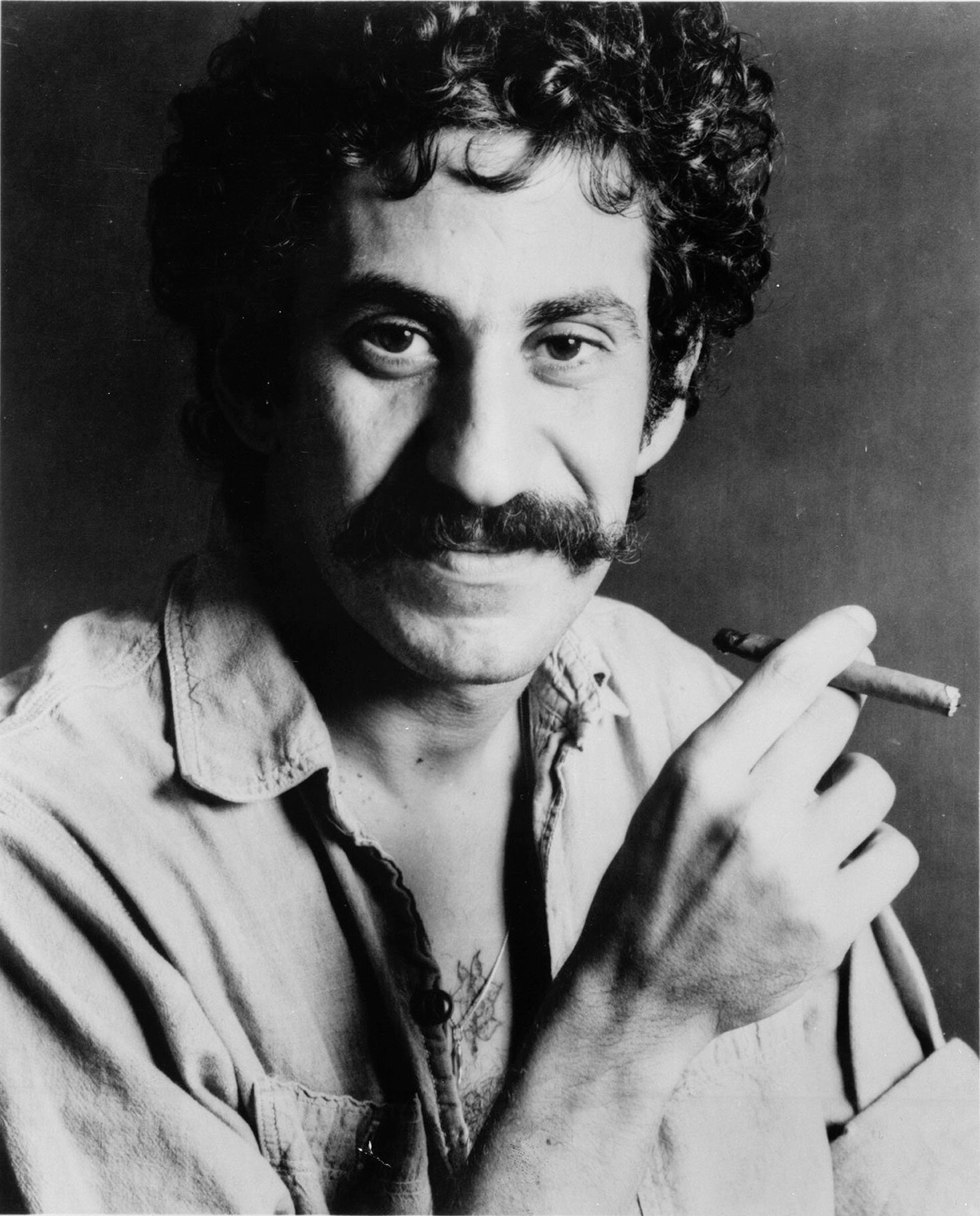
The baddest man in the whole damn town was a real man, and Jim Croce met him in the Army. In the summer of 1973, Bad, Bad Leroy Brown — a swaggering, piano-pounding story song about a six-foot-four Chicago tough who finally picks the wrong fight — spent two weeks at number one in America and became the biggest hit of Croce’s life. Audiences assumed the character was invented, another of Croce’s pool-hall storytellers in the line of You Don’t Mess Around with Jim. In fact Croce built him out of a soldier he had known in the National Guard in 1966, a man whose real-life comeuppance was not a barroom beating but something funnier and sadder: he went AWOL, then came back at the end of the month to collect his paycheck, and was led away in handcuffs while Croce watched and took notes for the future.
Croce joined the Army National Guard in 1966 hoping the part-time service would keep him out of Vietnam while he got married, finished his education, and chased the music career that had so far produced only a flop folk album and a trail of day jobs. The Army had other plans — he was sent almost immediately to basic training, was by his own account not a great soldier, and had to repeat basic. But the service gave him something no label ever had: material.
Fort Dix, 1966: A Man Named Leroy Brown
Croce told the story on stage and on television for the rest of his career, most famously on The Helen Reddy Show in July 1973, with the song sitting at number one. “This is a song about a guy I was in the army with,” he said. “It was at Fort Dix, in New Jersey, that I met this guy. He was not made to climb the tree of knowledge, as they say, but he was strong, so nobody’d ever told him what to do, and after about a week down there he said ‘Later for this’ and decided to go home. So he went AWOL — which means to take your own vacation — and he did. But he made the mistake of coming back at the end of the month to get his paycheck. I don’t know if you’ve ever seen handcuffs put on anybody, but it was SNAP and that was the end of it for a good friend of mine, who I wrote this tune about, named Leroy Brown.”
The two men had been in lineman school together, training to string telephone wire. In other tellings Croce placed the school at Fort Jackson, South Carolina, and the character as he describes him across interviews is best understood as a composite: Croce’s wife Ingrid confirmed to Songfacts that there really was a Leroy Brown — a funny, likeable guy Jim sang with and related to — while the song’s physical menace drew on a feared sergeant Croce had also encountered in training. What is certain is the detail Croce could not stop retelling: the man talked endlessly about how bad he was. “Just to listen to him talk and see how ‘bad’ he was,” Croce said, “I knew someday I was gonna write a song about him.”
Building a Legend Bigger Than the Man
Seven years later, Croce made good on the promise — and then some. For the song, he transplanted his AWOL lineman to the South Side of Chicago, “the baddest part of town,” and inflated him into folklore: taller than a tree, dressed in fancy clothes and diamond rings, driving a custom Lincoln Continental and an Eldorado, carrying a .32 gun in his pocket for fun and a razor in his shoe, with all the downtown ladies calling him “Treetop Lover” and all the men just calling him “Sir.”
Then, in the song’s final turn, Croce did what he always did to his braggarts. Leroy makes a pass at a married woman named Doris in a bar, her jealous husband takes offense, and by the end of the fight the baddest man in town is lying on the floor looking like a jigsaw puzzle with a couple of pieces gone. It is the same moral geometry as You Don’t Mess Around with Jim — the tough guy always meets the one person unimpressed by the legend — but played this time as broad, grinning vaudeville rather than back-alley menace. The real Leroy’s handcuffs had become, in Croce’s alchemy, a whole town’s worth of myth and a punch line with a body count of one reputation.
Back to the Hit Factory
Croce recorded Bad, Bad Leroy Brown in New York with the team that had made his breakthrough: producers Terry Cashman and Tommy West, engineer Bruce Tergersen, and his inseparable musical partner Maury Muehleisen, whose lead guitar had become half of Croce’s signature sound. The song anchored Life and Times, the follow-up to his chart-topping debut You Don’t Mess Around with Jim, and its arrangement was a deliberate change of weight. Where the earlier hits leaned on acoustic guitars, Leroy Brown is driven by a rollicking, barroom piano and a rhythm section that bounces like a juke joint on a Saturday night — the sound of a character too big for the folk clubs Croce had come from. The record is all forward motion: verse, chorus, verse, chorus, and out, with Croce’s warm storyteller’s baritone riding on top like a man telling the tale in a bar he owns.
Two Weeks at Number One
Released as a single in the spring of 1973, Bad, Bad Leroy Brown climbed through the summer and reached number one on the Billboard Hot 100 on July 21, 1973, holding the top for two weeks. Billboard would rank it the number two song of the entire year. It earned Croce the only two Grammy nominations of his lifetime — Record of the Year and Best Pop Vocal Performance, Male — and it made him, briefly and completely, a mainstream pop star rather than a cult folk singer with a couple of hits.
He had almost no time to enjoy it. On September 20, 1973, the small chartered plane carrying Croce, Muehleisen, and four others from a concert in Natchitoches, Louisiana, struck a tree on takeoff and crashed, killing everyone aboard. Croce was thirty years old. Bad, Bad Leroy Brown was still on the charts.
The Grammy nominations arrived in that shadow. When the awards were presented in March 1974, Croce’s name was read out for Record of the Year — the prize went to Roberta Flack’s Killing Me Softly with His Song — and for Best Pop Vocal Performance, Male. He won neither, and the industry moved on with the briskness it always shows. But the nominations fixed something important in the record books: the truck driver and ex-lineman who had been rejected by forty labels had, in the judgment of his peers, made one of the finest singles of the year, out of a seven-year-old memory of a soldier who could not stop talking about how bad he was.
The Legend Outlives the Man
In the strange afterlife that followed — the posthumous number ones Time in a Bottle and I Got a Name, the decades of compilations — Leroy Brown remained the calling card, the song strangers could sing back word for word. Frank Sinatra, no less, covered it on his 1974 album Some Nice Things I’ve Missed, a saloon singer’s salute across the generations to the baddest man in town. The song passed into the permanent furniture of American pop: sports arenas, karaoke nights, movie soundtracks, the shared jukebox of the culture.
And somewhere beneath all of it sits the original: a strong young soldier at Fort Dix who decided the Army was not for him, walked away after a week, and made the one mistake Croce never let him forget — he came back for his paycheck. Croce promised him, in effect, immortality, and delivered it in the most Croce way possible: not as the hero of the story, but as its beloved, blustering fool, badder than old King Kong and meaner than a junkyard dog, forever.
Leave a Reply