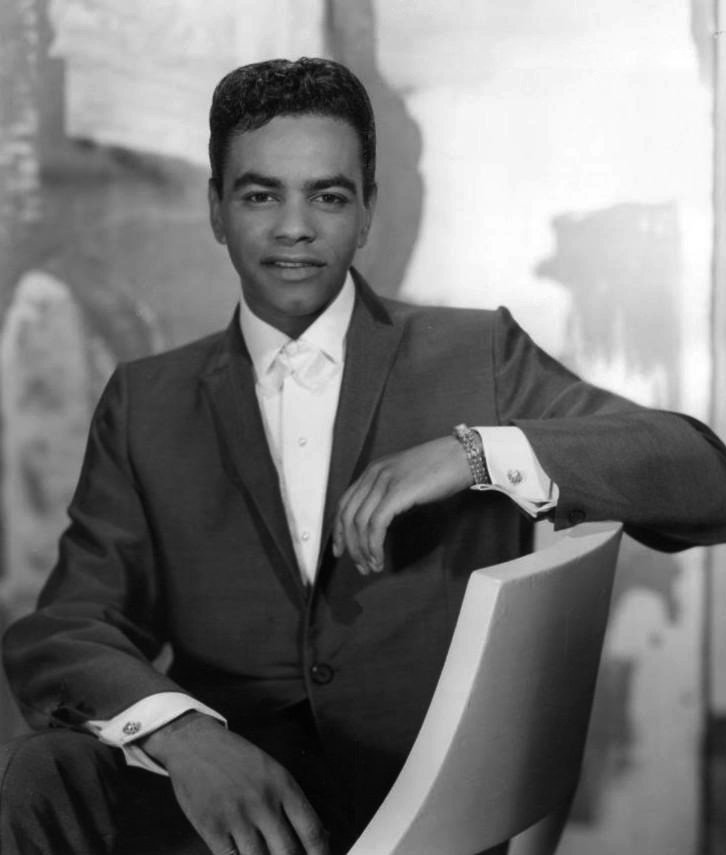
Long before he was famous, Johnny Mathis made a promise to a pianist in a San Francisco jazz club, and Misty is the sound of him keeping it. As a teenager, Mathis heard Erroll Garner play a new instrumental tune at the Black Hawk club and was so taken with it that he went up to the composer afterward. There were no lyrics yet, he knew that much. It hardly mattered. “Mr. Garner,” he blurted out, “I am going to record your song if I ever make a record.” Several years later, Mathis walked into one of the great recording rooms in America with Garner himself in attendance, and sang the song so completely that the two men’s names have been joined ever since. Of all Mathis’s recordings — and few singers have made more — Misty is the one the world reaches for first. It is worth asking how a jazz piano piece, composed on an airplane by a man who could not read music, became the signature of the most romantic voice of its generation.
A Rainbow Through the Haze at 30,000 Feet
Erroll Garner composed the melody in 1954, in the air. He was flying from San Francisco to Chicago through a thunderstorm when, as the plane descended toward O’Hare, he looked out of the window and saw a rainbow glowing through a haze. The tune arrived on the spot. Garner, who had taught himself piano entirely by ear and could neither read nor write music, began working it out in his seat — humming the notes and playing imaginary keys on his knees, earnestly enough that a concerned fellow passenger summoned a flight attendant to help the apparently unwell man. He memorized the melody and played it on a real piano when he got home.
Garner recorded the tune on July 27, 1954, with his trio — Wyatt Ruther on bass and Eugene “Fats” Heard on drums — in a single take, by his account, and released it on his album Contrasts. It was an instrumental then, built in the traditional thirty-two-bar form, and it attracted respectful attention without becoming famous. What it needed was words, and words were a problem. The melody spans nearly two octaves, a range that makes it a punishing assignment for a lyricist and a risky one for a singer.
Johnny Burke, the veteran lyricist who had written for Bing Crosby with Jimmy Van Heusen, was reluctant. He was argued into it by his own pianist, Herb Mesick, who took to playing Garner’s tune every single time Burke entered the room, until Burke finally surrendered: “Alright, give me the damn music, and I’ll do it.” He wrote the lyric in two or three hours. It is a masterpiece of fit — a confession of helpless, happy disorientation that rides Garner’s long lines as if the words had always been there. Singers began to take the song up. Sarah Vaughan recorded it in Paris in 1958 with an arrangement by Quincy Jones for her album Vaughan and Violins, and her single edged onto the Bubbling Under chart in the summer of 1959 — proof that the song was beginning to move through the singing world, gathering momentum. Mathis, who admired Vaughan’s version, was listening. By the end of the decade Misty was a standard waiting for its definitive singer.
Choosing the Song Himself
The definitive singer had, in a sense, already volunteered. Mathis, a San Francisco native, had frequented the Black Hawk as a teenager precisely because Garner played there three or four times a year, and the tune had stayed with him through his own sudden rise — by 1959 he was one of Columbia Records’ biggest young stars, the voice of Chances Are and The Twelfth of Never. For his next album, he wanted to record the kind of material he had grown up admiring from singers like Vaughan and Ella Fitzgerald. The result was Heavenly, produced by Mitch Miller and Al Ham, and its making contained an unusual act of artistic self-determination: Mathis was told to choose twenty potential songs, demo them with just a guitar, and hand the demos to arranger Glenn Osser to build the album around. Misty was among his choices — the teenage promise, submitted as homework.
Osser’s arrangement is the frame that lets the picture float: strings and orchestra arranged with a jazz musician’s patience, leaving the long melody room to breathe. The session took place on April 9, 1959, at Columbia’s 30th Street Studio in New York — the converted church known simply as “The Church,” famous for the warm natural bloom its high ceiling gave to everything recorded in it, with engineer Frank Laico capturing the sound and pianist Andy Ackers at the keyboard. And there, in the room, was Erroll Garner, come to hear the boy from the Black Hawk make good. Mathis sang the nearly two-octave melody in his unmistakable high tenor — smooth, weightless, and entirely without strain, as if Burke’s confession of being lost had been written for exactly one throat.
A Signature Is Born
Heavenly was released on August 10, 1959, and became the most successful regular album of Mathis’s career — a fixture of the album charts for years, spending more than five years in them by the usual reckoning. Columbia spun Misty off as a single on September 14, 1959, backed with The Story of Our Love, and it climbed to number 12 on the American pop chart — his biggest hit in two years — on its way to selling well over two million copies in the United States alone. Critics have since noted that when the album appeared, the track was a revelation: a jazz composition, with a lyric most male singers of the era could not have carried, delivered so naturally that it sounded inevitable.
Inevitable is the right word for what followed. Mathis had sung hits before, but Misty did something different — it fused with his identity. The song’s opening image, of a man getting misty in his beloved’s presence, became inseparable from the Mathis persona: elegance, vulnerability, and romance without a trace of irony. The public voted with its weddings, its anniversaries, and its slow dances, and never really stopped.
Misty, Forever
The song’s afterlife kept widening. Clint Eastwood built his 1971 directorial debut, Play Misty for Me, around it — the film’s title and plot turn on a radio request for the tune, and it carried Garner’s music to a whole new audience. Singers from Frank Sinatra and Ella Fitzgerald to Etta James and Aretha Franklin recorded their own versions, and Ray Stevens took an up-tempo country reading of it into the Top 20 in 1975. The institutions recorded their verdict too: Garner’s original instrumental entered the Grammy Hall of Fame in 1991, and Mathis’s recording followed it in 2002. The song was ranked number 174 in the RIAA and National Endowment for the Arts list of the Songs of the Century.
Mathis, for his part, simply kept singing it — in concert after concert, decade after decade, long after most of his contemporaries had left the stage. He was still performing Misty in his late eighties, the voice remarkably intact, the song unchanged and unchangeable. That may be the deepest truth about how Misty was made. It was not manufactured by a label or workshopped by a committee. A pianist saw a rainbow from an airplane window and memorized what he heard. A lyricist was nagged into two hours of perfect work. And a teenager from San Francisco heard a tune in a jazz club, made a promise out loud, and grew into the one singer who could keep it. Some signature songs are assigned. This one was sworn to, years in advance, by the only person who turned out to be right for it.
Leave a Reply