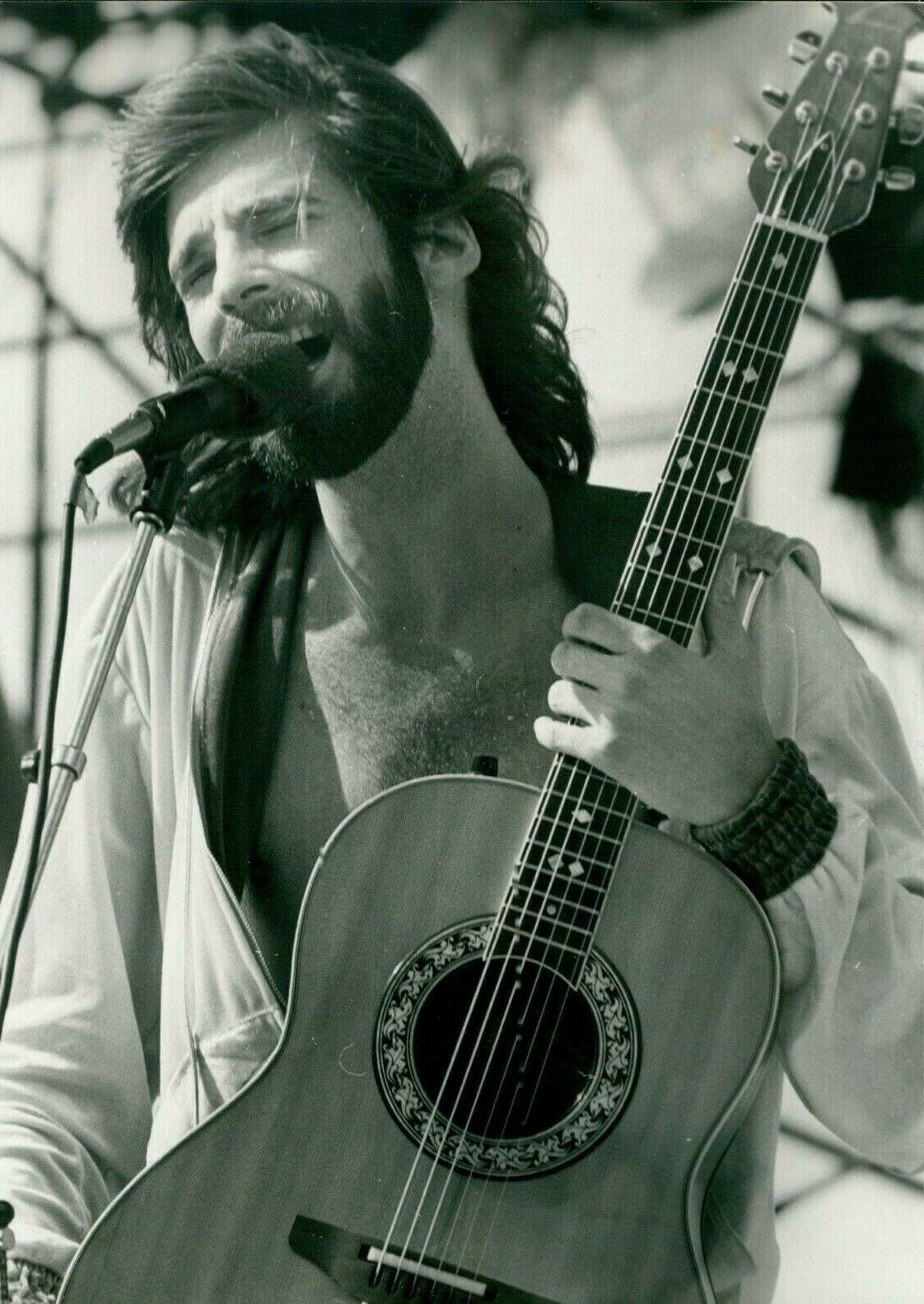
Every reign starts somewhere, and Kenny Loggins’s began on a golf course, in a film that did not yet have an ending — or a gopher. Before Footloose, before Danger Zone, before he was crowned the king of the eighties movie soundtrack, Loggins was simply a solo artist four years out of Loggins and Messina, looking for his next move. The move found him in a screening room, watching a rough cut of a scruffy comedy about caddies, and hearing a Bob Dylan record playing where his own song was supposed to go. What he wrote in response, I’m Alright, became the biggest solo hit of his career to that point — and quietly invented a job that he would hold for a decade.
A Producer Remembers
Loggins had written for the movies before anyone called it his specialty. In 1976 he co-wrote I Believe in Love for A Star Is Born, the Barbra Streisand and Kris Kristofferson film produced by Jon Peters, and released his own version as his first solo single the following year. His writing stock was high for other reasons, too: he had co-written the Doobie Brothers’ What a Fool Believes with Michael McDonald, a record that had taken the Grammy for Song of the Year. Peters remembered him. A few years later, setting up his first film as a solo producer — a lowbrow golf comedy in the Animal House vein called Caddyshack — Peters called Loggins and asked if he wanted to write a song for it.
Loggins was driving home from Los Angeles when he stopped in to watch the rough cut. The film was unfinished: no ending, and none of the gopher business that would later define it. None of that mattered. He thought it was hilarious, and he took the assignment home with him — one scene in particular stuck in his head.
He was not writing from a career low, exactly. His solo records were selling, This Is It had just become one of his biggest solo singles — a Grammy for his singing on it would follow — and the Messina catalogue still followed him everywhere. But he was four albums into being a solo act without a solo signature — the song that people would name if you said his name. Soundtracks were not yet a career; they were a sideline, a favour for a producer he liked. That is what makes the story satisfying: Loggins did not take the Caddyshack job because he had a strategy. He took it because the rough cut made him laugh, and he wrote his signature song anyway.
The Temp Track Told Him Everything
The opening of the film is deliberately ordinary. Danny, the teenage caddy played by Michael O’Keefe, rides his bicycle through a quiet suburb on his way to the country club. But the filmmakers had laid a temporary track under the scene: Bob Dylan’s Gotta Serve Somebody, all swagger and defiance. Loggins read the clue exactly as it was meant. The director, he realised, wanted Danny played as a rebel who had not yet become one — a kid carrying an attitude the picture had not caught up with.
So Loggins wrote the song from inside the character’s head. I’m Alright is Danny talking back to every adult in his life at once: the parents, the judges, the club members, all of them worrying, warning and pushing. Loggins even built that crowd into the record’s design, arranging the track so that voices come at the lead vocal from all directions, a whole committee of concern pressing in on one unbothered kid. The chorus is a shrug set to music — nobody needs to worry about him, and why does everybody have to give him a fight? Loggins has described the approach himself: while the character listened to everybody else, the song would stick in the songwriter’s opinion too. Listen to your heart. He later summed the record up, with a musician’s shorthand, as himself doing Gerry Rafferty doing Bob Dylan.

Eddie Money in the Chorus
Loggins produced the track with Bruce Botnick, and he built the record to sound like an argument the singer is winning. He cut it with his own road band — guitarists Mike Hamilton and Mark Wittenberg, bassist George Hawkins, keyboard player Brian Mann and drummer Tris Imboden — and the lead vocal stays cool while voices pile in around it, as if the whole adult world were talking at once and Danny were answering all of them. The chorus has a genuine second star in it: Eddie Money, then riding his own run of hits, sang backing vocals and stepped forward to share the lead on the bridge. It is a small thing, a few lines, but it gives the record the feel of a gang forming behind the kid on the bicycle.
Released as a single on July 7, 1980, a few weeks before the film opened, I’m Alright was credited simply to Loggins as writer, and it had the loose, sunlit confidence of a singer who had found his material. Columbia issued it from the Caddyshack soundtrack album, with another Loggins song, Lead the Way, on the B-side.
The Gopher Problem
Then Peters told him about the gopher. By Peters’s own later admission, the production did not really have a movie — it had a pile of scenes that did not play together — so the producers went to George Lucas’s effects company and shot extra material with a puppet gopher tormenting Bill Murray’s greenskeeper, purely to tie the film together. The song would return at the end under a scene of the creature dancing amid the wreckage of the course. Loggins, by his own cheerful admission, intensely disliked the idea.
History sided with the puppet. Caddyshack earned close to forty million dollars and grew into one of the most beloved comedies of its era, and the dancing gopher became its mascot — with I’m Alright as its theme in every sense. Loggins came around completely. Seeing the finished film, gopher and all, he decided the sequence genuinely worked: the chaos of the film, he concluded, was exactly what the song’s shrug had been about all along. The record bookends the picture, opening Danny’s story and closing the gopher’s, and for most viewers the two are now impossible to separate.

Number Seven, and a Kingdom
The single peaked at No. 7 on the Billboard Hot 100 in October 1980, and went to No. 5 in Canada. It was, at that moment, the biggest solo hit of Loggins’s career, bigger than anything he had managed since the Messina years. More importantly, it proved something the industry had not quite believed: an original song written for a broad comedy could carry a film’s identity and climb the charts doing it.
The lessons compounded. The decade that followed reads like a filmography: Footloose itself, a No. 1 in 1984; Danger Zone for Top Gun, No. 2 in 1986; Meet Me Half Way for Over the Top; Nobody’s Fool for Caddyshack II in 1988. Between 1980 and 1988 Loggins scored four Top 10 hits on the Hot 100, every one of them from a movie soundtrack. Writers on the soundtrack era have since argued that I’m Alright effectively created the template — the original hit song commissioned for a broad comedy — that records like Holiday Road and Ghostbusters would follow later in the decade. Loggins himself, looking back in his 2022 memoir Still Alright, placed the song at the very beginning of the era of big pop soundtrack records, which is where it belongs: not the biggest of his movie hits, but the first, and the one that showed him — and Hollywood — what the job was. But he never dropped the first one. I’m Alright appears on all three of his official live releases and remains a fixture of his concerts more than forty years on — and somewhere along the way it also became, improbably, the unofficial anthem of golf itself, piped over tournament broadcasts and charity scrambles by people who may never have seen the film. It is the sound of a kid on a bicycle, a temp track by Bob Dylan, and a songwriter who heard, in a banal little scene, exactly who the character wanted to be.
Leave a Reply