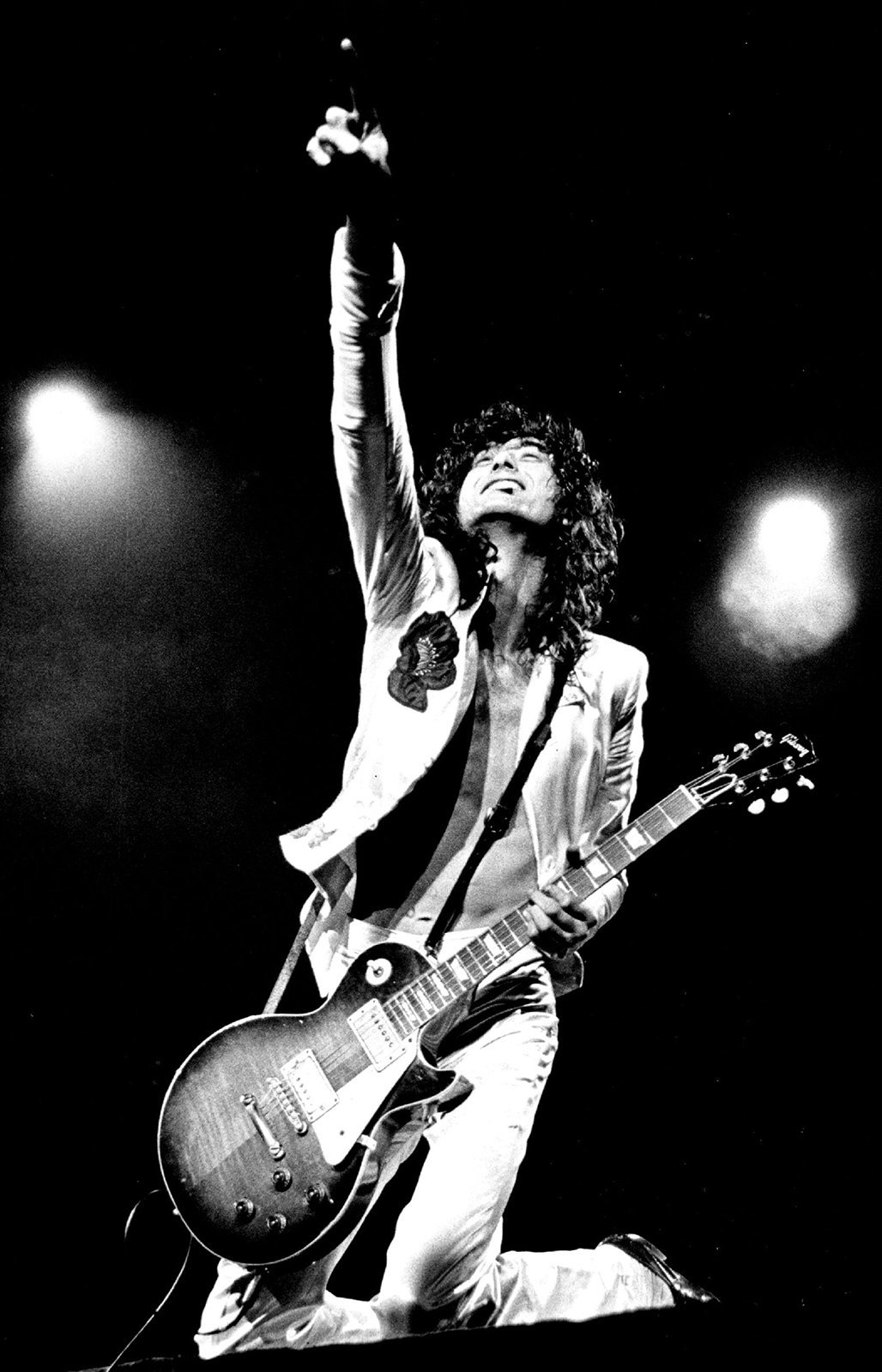
By 1974, Led Zeppelin was the biggest band on the planet, and they had a problem most bands would kill for: too much great music. They had recorded eight powerful new songs, far more than a single vinyl LP could hold. Rather than leave half of it in the vault, they did what only the biggest band in the world could do. They raided their own past, pulled the best unreleased tracks from the sessions for “Led Zeppelin III,” “Led Zeppelin IV,” and “Houses of the Holy,” and assembled a fifteen-track, eighty-two-minute double album that remains the most sprawling statement of their career.
“Physical Graffiti,” released on February 24, 1975, was the first album on the band’s own Swan Song label. It became the first album in history to go platinum on advance orders alone. At its heart sits “Kashmir,” an eight-and-a-half-minute epic that Jimmy Page and Robert Plant both called their single greatest achievement together. This is the story of how it was made: in a draughty Hampshire poorhouse, in a car crossing the Sahara, and in a studio where a drummer and a guitarist chased a riff for two years until it became immortal.
The Poorhouse with a Truck Outside
The new material was recorded at Headley Grange, a run-down former workhouse in Hampshire that had become the band’s musical refuge. They had made parts of their three previous albums there, working in the big, echoing rooms that gave John Bonham’s drums their cannon-like thunder. This time, instead of the Rolling Stones’ mobile studio they had used before, they hired a recording truck built for Faces bassist Ronnie Lane by American engineer Ron Nevison, parked it on the gravel outside, and ran the cables in.
Sessions began in late 1973 and ran through January and February 1974. The atmosphere was loose and experimental. With no record company clock ticking, the band could chase ideas for days. Page would work up riffs alone with Bonham, Plant would disappear to write, and John Paul Jones would quietly build the keyboard and string arrangements that gave the album its grandeur. Eight songs came out of those months, including “Kashmir,” “Trampled Under Foot,” “In My Time of Dying,” and “Ten Years Gone,” alongside rockers like “Custard Pie,” “The Rover,” and “Sick Again.” It was magnificent, and it was far too long for one record.
There was another reason for the band’s confidence that winter. In May 1974, right in the middle of this creative burst, Led Zeppelin had launched Swan Song Records, their own label. For the first time, they answered to no one: no release schedules imposed from above, no executives asking for a single. “Physical Graffiti” would be the first album released on Swan Song, and the band treated it as a declaration of independence, a double album because a double album was what the music demanded.
The solution was characteristically bold. Instead of cutting, they expanded. The band went back through the tapes from previous albums and rescued the orphans: songs recorded for “Houses of the Holy” that had never found a home, including the album’s own title track, plus leftovers from the “IV” and “III” sessions like “Down by the Sea” and the acoustic instrumental “Bron-Yr-Aur.” Fifteen tracks. Four sides. Nothing wasted.
“Kashmir”: A Riff from Nowhere
No song on “Physical Graffiti” took longer to become itself than “Kashmir.” Its story begins in 1973, when Jimmy Page was experimenting with DADGAD, an open, modal guitar tuning more common on Middle Eastern stringed instruments than on rock records. Fooling around with it one day, he stumbled onto a riff: cyclical, hypnotic, rising and falling like something ancient. He put it on a home demo tape and let it sit.
Late that year, with John Paul Jones running behind schedule, Page found himself alone at Headley Grange with John Bonham. The two of them worked the riff into shape in a two-man session, Bonham adding his thunderous, elemental drumming, complete with a phasing effect conjured by engineer Ron Nevison using an early Eventide phaser. The skeleton was enormous. It needed words.
Those came from the most unexpected place: a car in the desert. After the band’s 1973 American tour, Plant and Page traveled through southern Morocco, and Plant wrote the lyrics while they drove the single-track road from Goulimine to Tan-Tan through the Sahara. He later described the landscape to journalist Cameron Crowe: ridges of sand rock two miles to each side, a dilapidated road cutting through the desert with seemingly no end. The working title was “Driving to Kashmir,” and here is the beautiful irony neither man had ever been to Kashmir. The name was chosen for its sound, for the sense of remote, mystical enormity it carried, a perfect match for a lyric about a journey that is really about the traveling, not the destination.
Early in 1974, John Paul Jones added the final layer: sweeping string and brass arrangements, with Mellotron choirs swelling beneath Page’s riff. The result was eight and a half minutes of pure scale, a song that sounds like a caravan crossing a continent that exists outside of time. Page later said he wished the band were known more for “Kashmir” than for “Stairway to Heaven.” Plant called it the finest thing they ever did together.
Funk, Blues, and Everything Else
What makes “Physical Graffiti” extraordinary is not just its centerpiece but its range. Across four sides, the album touches nearly every kind of music the band could play, and some they had never tried.
“Trampled Under Foot” is a driving funk workout built on Jones’s clavinet, with Page’s wah-wah guitar answering every phrase. It showed a band listening to the rhythm and blues of the moment and bending it to their own weight. “In My Time of Dying” stretches past eleven minutes, a traditional blues dragged through amplifiers and Bonham’s avalanching drums until it becomes something apocalyptic. “Ten Years Gone” is one of Plant and Page’s most reflective pieces, all layered guitars and backward glances. “Houses of the Holy,” the title song that had missed its own album two years earlier, finally found its home, bright and punchy. And “Bron-Yr-Aur,” a two-minute acoustic guitar miniature named for the Welsh cottage where so much of the band’s magic had been written, sits among the epics like a quiet clearing in a forest.
This was the point of the double album. Led Zeppelin had always refused to be one kind of band, and “Physical Graffiti” was the proof: hard rock, folk, funk, Eastern-tinged orchestral music, country-rock, and blues, all sequenced so that each side felt like its own journey.
The Windows on St. Mark’s Place
The album’s cover was as ambitious as its contents. Designer Peter Corriston created a die-cut sleeve showing a New York tenement building at 96 and 98 St. Mark’s Place, with windows cut out of the outer sleeve so that different inner sleeves, each showing the building’s tenants in various states of undress and activity, could be swapped and revealed. It was playful, slightly seedy, and utterly distinctive.
It was also a manufacturing nightmare. The intricate die-cutting delayed the album’s release by months, pushing it from late 1974 into February 1975. The band, already on tour in America, had to wait while factories wrestled with cardboard and razor blades. When it finally arrived, the cover became one of the most recognizable in rock, a perfect visual echo of the music: layer upon layer, with surprises behind every window.
Platinum Before It Existed
No album in history had ever been anticipated quite like this one. Advance orders were so enormous that “Physical Graffiti” was certified platinum in America before a single copy had been sold in a shop, the first album ever to achieve that. It debuted at number three on the Billboard chart and climbed to number one within weeks, where it stayed for six weeks. In Britain, it went straight to number one.
Then came the statistic that says everything about Led Zeppelin’s dominance in 1975. In the weeks after “Physical Graffiti” was released, all five of the band’s previous studio albums re-entered the Billboard Top 200 at the same time. “Houses of the Holy,” “Led Zeppelin IV,” “Led Zeppelin II,” the debut, and “III” were all back in the chart simultaneously, as if the new album had dragged its entire family along with it. Almost no band before or since has managed that. The album has since been certified sixteen times platinum in America, the highest certification of any Zeppelin studio record.
The band celebrated the only way they knew how: on stage. The 1975 tour that accompanied the album found them at the absolute peak of their live powers, playing five sold-out nights at London’s Earls Court that May, with “Kashmir” as the towering centerpiece of the set. Jones, who had arranged the song’s strings and brass in the studio, recreated them live on keyboards, his feet working the bass pedals to fill the low end. It was, by every account, Led Zeppelin as an unstoppable force, the biggest band in the world playing the biggest music of their career.
The Peak of the Mountain
“Physical Graffiti” is the sound of the biggest band in the world with nothing left to prove and everything left to play. It has no concept, no grand narrative, no gimmick. It is simply fifteen songs recorded across five years, assembled with total confidence, sequenced by musicians who trusted their instincts completely.
Think about how it was made: a riff discovered while fooling around with an odd tuning, drums recorded in a Hampshire hallway, lyrics written in a car crossing the Sahara, strings arranged months later in London, and a handful of rescued outtakes given a second life. None of it should have cohered. All of it did. That is the strange alchemy of Led Zeppelin at their peak: four musicians who could take fragments from anywhere, a desert road, a workhouse, a forgotten tape, and fuse them into something monumental.
Put on “Kashmir” today, fifty years on, and it still sounds like the future arriving from the past. Eight and a half minutes, no chorus to speak of, a tuning most guitarists had never heard, lyrics written in a car crossing the Sahara about a place the writers had never seen, and it became one of the most beloved rock recordings ever made. “Physical Graffiti” proved that Led Zeppelin’s ambition had no ceiling. They just kept building, higher and wider, until the whole rock world fit inside.
Leave a Reply