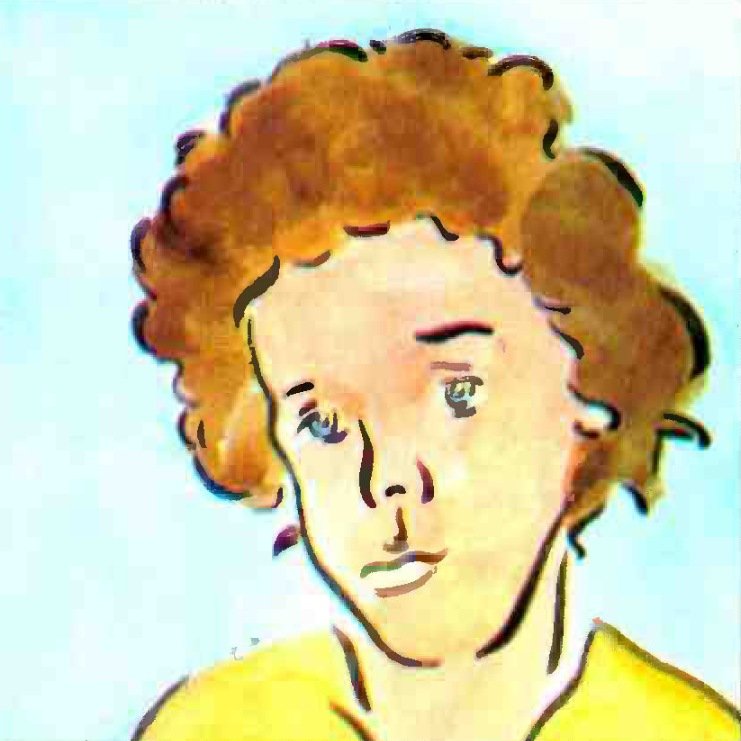
In the autumn of 1976, a twenty-eight-year-old Englishman with a halo of curls and a voice like a fire alarm walked into a converted RCA studio on Melrose Avenue in Hollywood and bet his career on America. He’d had hits in Britain — four of them had stalled at number two — but the United States was still unconquered. The album he made that autumn, “Endless Flight,” would give him two consecutive American number ones, a Grammy, and the biggest year of his life. This is the story of the sessions where the clown became a king.
The Clown Lands in Hollywood
By 1976, Leo Sayer had already lived several show-business lives: the busker, the Pierrot clown, the songwriter behind Roger Daltrey’s solo hits, the chart regular with “Moonlighting” and “One Man Band.” But his third album, “Another Year,” had suggested he was treading water, and his American label, Warner Bros., wanted something bigger — a record built for US radio, with US muscle behind it.
The label’s answer was Richard Perry. If you wanted a hit in mid-seventies Los Angeles, Perry was the man you called: he’d produced Carly Simon’s “You’re So Vain,” Ringo Starr’s “Photograph,” Harry Nilsson’s “Without You,” and a string of Barbra Streisand and Diana Ross records that defined the era’s studio pop. He was tall, commanding, and utterly sure of his own taste — and his first act as Sayer’s producer was to deliver some brutal news. Very little of the material Sayer had been writing would make the record. If Leo wanted America, he’d have to trust Perry’s songbook, Perry’s musicians, and Perry’s instincts. It was the kind of ultimatum that ends careers — or makes them.
The Assassins of Studio 55
Perry’s chosen room was Studio 55, the converted RCA Records space at 5505 Melrose Avenue in Hollywood — his preferred laboratory, and the same room where Sayer had cut his previous American sessions. Into it, Perry assembled what one writer later called a group of session-musician assassins: the absolute elite of the Los Angeles studio scene.
On guitars: Steve Lukather, three years before his band Toto would debut, and Ray Parker Jr., two years before “Ghostbusters” would make him a household name. On piano: Larry Knechtel of the legendary Wrecking Crew. On drums: Jeff Porcaro, the groove machine who would soon anchor Toto. On bass: Lee Sklar, he of the famous beard and the even more famous pocket. Add Ernie Watts on saxophone, Bobby Keys — the Rolling Stones’ horn man — on the brass sessions, a young James Newton Howard on synthesizers, and Gene Page arranging the strings, and you had, quite simply, the best band money could buy in 1976. Sayer, the former busker who’d learned his trade on London pavements, was suddenly fronting the musicians who played on everyone else’s hits. He’d never sounded so supported — or so exposed.
The Jam He Didn’t Remember
The album’s first single arrived the way all the best stories do: by accident. During the Studio 55 sessions, the band started jamming, and Sayer began improvising a bouncy, joyous tune on the spot, hammering it into shape with songwriter Vini Poncia while Ray Parker Jr. played guitar. They cut it quickly, almost as an afterthought — a palate cleanser between the serious takes.
When Perry later told Sayer the throwaway jam was the album’s obvious hit single, Sayer’s response became legend: he didn’t even remember recording it. “You Make Me Feel Like Dancing” — all falsetto, handclaps, and weightless joy — was released as the first single and shot to number one in America in January 1977. It won Sayer and Poncia the Grammy for Best R&B Song in 1978, a gloriously unlikely trophy for an Englishman who’d started the decade in clown makeup. The song Sayer tossed off between takes became his signature; the songs he’d laboured over became album tracks. Pop has a sense of humour like that.
The Tape in Perry’s Pocket
But the album’s real masterstroke was still to come, and it began with a tape Richard Perry had been carrying around the Warner Bros. offices on Burbank’s Warner Boulevard since the autumn. On it was a song almost nobody had heard: “When I Need You,” the title track of a September 1976 album by the Anglo-Gibraltarian songwriter Albert Hammond — five years past his own hit “It Never Rains in Southern California,” and going nowhere with this one.
Hammond had written it with the New York lyricist Carole Bayer Sager — who’d co-written “A Groovy Kind of Love” as a teenager — as a touring musician’s lament: life on the road, a lover far away, the magical thinking of closing your eyes and being somewhere else. Hammond’s own version was a mellow, downbeat ballad, and his album sank without trace. But Perry heard something in it, played it for Sayer in the studio one afternoon, and watched the singer’s face change.
Sayer had something no one else could bring to the song: he was living it. Recording in California, thousands of miles from home, he was missing his own wife with an ache the lyric described exactly — the lonely guy closing his eyes and conjuring his lover across the distance. He cut it at Studio 55 with the assassins at full strength — Willie Weeks on bass, Porcaro on drums, David Bowie’s guitarist Earl Slick, Michael Omartian and James Newton Howard on keys — and Perry built the arrangement around a slow piano figure that rose into swelling strings, the definitive late-night FM ballad. When it was released as a single in February 1977, it did what four previous Sayer singles had failed to do: it went to number one in Britain, holding the top spot for three weeks, and then to number one on the Billboard Hot 100 in May. Two consecutive American chart-toppers from one album. The clown had conquered both sides of the Atlantic.
The Title Track From Elton’s Camp
With two monsters on the record, it’s easy to overlook the rest — but “Endless Flight” is stacked. The title track itself was written by Andrew Gold, the “Lonely Boy” singer-songwriter, and Sayer’s version borrowed shamelessly — and brilliantly — from Elton John’s camp: Nigel Olsson on drums and Paul Buckmaster on strings, the very men who’d built Elton’s seventies sound. It’s a standout, a widescreen ballad that showed Sayer could do grandeur as well as joy.
Elsewhere, the album ranged confidently across the map: “Hold On to My Love,” co-written by Sayer with the legendary Brill Building team of Barry Mann and Cynthia Weil; “Magdalena,” a Danny O’Keefe song given the full Perry gloss; “How Much Love,” another Sayer-Mann collaboration. The common thread was Perry’s song selection — a producer’s album in the best sense, every track chosen to show off a different facet of that extraordinary voice. Sayer may have arrived in Hollywood with his own material rejected, but he left having proved he could sing anyone’s song better than anyone else.
Two Men, One Street
There’s a famous photograph from the sessions — or rather, from around them — showing the tall, commanding Richard Perry walking down a Los Angeles street with the much smaller-framed Sayer beside him. It captures the whole dynamic: the producer as the visionary architect, the singer as the live wire he was trying to conduct. Their working relationship reached its commercial zenith on “Endless Flight,” and everyone who was there describes the same atmosphere — Perry’s absolute certainty about what would work, Sayer’s total commitment once he was convinced.
It couldn’t have been easy. Sayer was a songwriter being told his songs weren’t wanted, a star being treated as raw material, an Englishman thousands of miles from home in a city that ate Englishmen for breakfast. But the tension produced something neither man could have made alone: Perry’s polish gave Sayer’s wildness a frame, and Sayer’s wildness kept Perry’s polish from turning sterile. When they reunited for 1977’s “Thunder in My Heart,” the frame was still there but the lightning had moved on — proof, if any were needed, that “Endless Flight” was a moment, not a formula. Moments can’t be repeated. They can only be remembered, preferably at full volume.
The Biggest Year of His Life
“Endless Flight” was released on October 29, 1976 — on Warner Bros. in America and Canada, on Chrysalis in Britain — and it detonated exactly as Perry had planned. The two number ones made 1977 the peak of Sayer’s career: chart-toppers in the US, the UK, and Canada, a Grammy for Best R&B Song, and an album that stayed on the charts through most of the year. He was living the dream in Los Angeles, with number ones on both sides of the Atlantic, the former busker now a transatlantic star — and, for the first time, the British number one that four earlier singles had denied him.
Perry and Sayer tried to catch the lightning twice with 1977’s “Thunder in My Heart” — same producer, same studio system — but the magic, as everyone involved later admitted, wasn’t quite the same. “Endless Flight” remains the one: the album where the biggest voice in British pop met the biggest machine in American pop, and neither blinked. Decades later, when a DJ named Meck looped “Thunder in My Heart” into a 2006 UK number one, it was the “Endless Flight” era the world remembered — the voice, the joy, the sheer lift of it.
The Record That Flew
What makes “Endless Flight” more than a hits-plus-filler artefact is what it proved about its singer. Sayer had arrived in Hollywood as a songwriter who sang; he left as a singer, full stop — an interpretive artist in the Sinatra mould, able to take Albert Hammond’s failed album track and turn it into the defining ballad of 1977. Perry’s brutal news — your songs aren’t good enough — turned out to be the making of him. Freed from the typewriter, Sayer concentrated on the only instrument that mattered: the voice.
Listen to the album now and you hear a masterclass in seventies studio craft: Gene Page’s strings, Porcaro’s drums, Knechtel’s piano, and above it all that feral, soaring wail, disciplined at last into something precise and devastating. The busker had learned to fly in formation — and the flight, as the title promised, never really ended. Every time “When I Need You” plays at a wedding, every time a dance floor fills for a remix of his voice, every time a new generation discovers what that throat could do, “Endless Flight” takes off again. Some albums are of their time. This one simply refused to land.
Leave a Reply