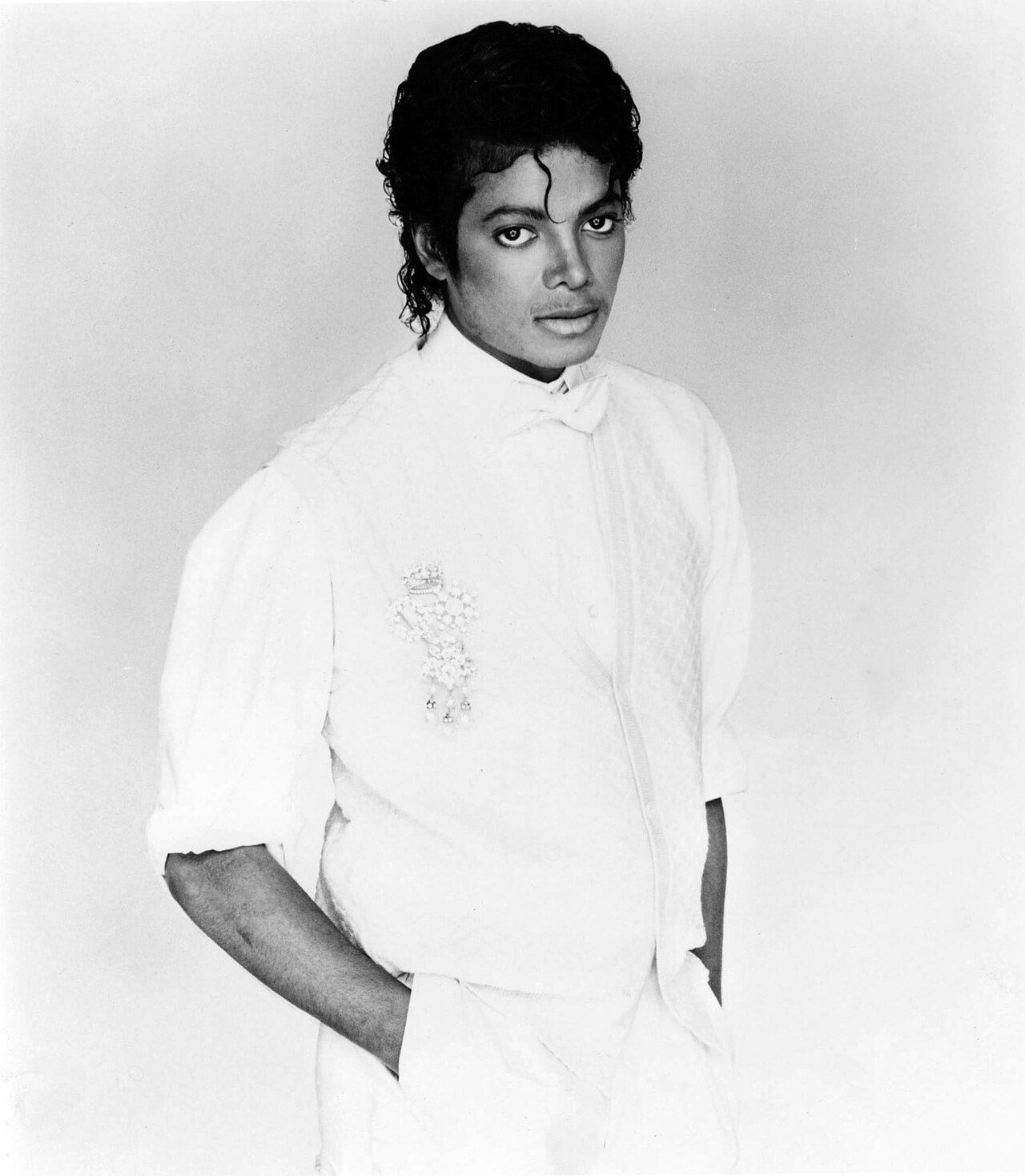
Of the eleven songs on Bad, Michael Jackson wrote nine. For an artist guarding the follow-up to Thriller, outside material was close to unthinkable — Quincy Jones warned songwriters that Jackson had not accepted an outside song in two years. Yet the album’s most enduring anthem came from two writers he had never worked with: a session singer named Siedah Garrett, who had been carrying a phrase in her notebook for a year, and her partner Glen Ballard, who found its music at a keyboard one afternoon in 1986.
The phrase was about a man looking in a mirror and deciding to change. Within a week it was a finished demo. Within two years it had given Jackson a No. 1 single, a Grammy performance people still describe in whispers, and the song the world would reach for when he died.
The Notebook and the Keyboard
In 1986 Jones invited a small group of songwriters, Garrett among them, to his home and set them a task: bring him songs for Michael Jackson. Garrett was then known as a voice, not a writer — a member of Jones’s group Deco and a busy backing singer who, by her own account, had never really written a song before being talked into it. But she kept a book of overheard phrases and half-ideas, and in it sat a line about a man in a mirror that she had been carrying for about a year, waiting for the music it belonged to.
She took the brief to Glen Ballard, her writing partner. As Garrett recalled, Ballard began playing a keyboard figure, her notebook line fell across it, and the song arrived almost at once — music and lyric locking together faster than their collaborations usually did. “The song came all at once,” she later said; it was the quickest thing they ever wrote, as if the phrase had spent its year in her notebook simply waiting for Ballard’s chords to come and collect it. By the end of the week they had a demo, with Garrett singing the lead in the soulful, church-rooted style she would later become known for. The demo was finished on a Friday evening. Jones’s office would not reopen until Monday. Garrett called him anyway and told him he should not wait.
“The First Outside Song in Two Years”
Jones listened, and called back within hours: the song was great. Then came the harder test. Jackson had built Bad as a writer’s album, answering Thriller with his own compositions, and Jones told Garrett plainly that Michael had not accepted an outside song for two years. Three days later the answer came: Jackson loved it and wanted to record it.
He also wanted it bigger. At Jackson’s request, Garrett and Ballard wrote a longer middle eight and adjusted lyrics, expanding the song’s climb from private resolve to public crusade. And in a gesture Garrett never forgot, Jackson asked her to guide his vocal sessions — he wanted to sing it the way she had sung the demo. The unknown writer found herself coaching the most famous singer on earth through her own song, while also joining the record’s background voices alongside gospel family group the Winans. Jones completed the architecture by bringing in the Andraé Crouch Choir, whose massed voices turn the final choruses into a revival meeting. The arrangement saves its boldest stroke for the end: after the bridge, the whole record lifts by a semitone, a classic gospel modulation that feels less like a key change than a door opening, and Jackson rides it upward, ad-libbing over the choir as the song leaves the ground. When the album appeared, Man in the Mirror stood as one of only two tracks Jackson had not written himself — the other being Just Good Friends, his duet with Stevie Wonder — and, remarkably, Jackson also chose Garrett as his duet partner on the album’s first single, I Just Can’t Stop Loving You. The session singer had arrived twice on the biggest album of the year.
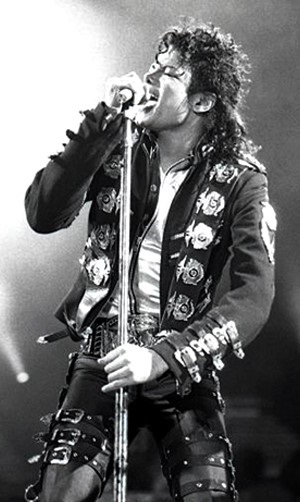
A Video Without Its Star
Recorded in May 1987 and released as the fourth single from Bad on January 16, 1988, Man in the Mirror climbed steadily — entering the Billboard Hot 100 at No. 48 on February 6 and reaching No. 1 on March 26, where it stayed for two weeks as Jackson’s ninth American chart-topper. Its success was part of a run that has never been repeated: Bad became the first album in history to produce five No. 1 singles on the Hot 100, and Man in the Mirror, arriving between The Way You Make Me Feel and Dirty Diana, was the fourth of them — proof that a slow gospel ballad about self-examination could hold its own in a sequence of state-of-the-art pop singles. In Britain it initially stalled at No. 21, a modest showing that history would correct in the starkest way.
Its video, conceived and directed by Don Wilson, broke every rule of the Jackson playbook: the most electrifying performer alive barely appears in it. Instead, the song plays over a montage of the century’s wounds and healers — famine in Africa, the assassinations of the Kennedys and Martin Luther King Jr., the Ku Klux Klan and the Kent State shootings, set against Mother Teresa, Mahatma Gandhi, Desmond Tutu and Nelson Mandela. Jackson reportedly counted the song among his personal favourites, and he understood its staging instinctively: this was not a song about a star. It was a mirror held up to everyone watching.
The point was sealed at the Grammy Awards in March 1988, when Jackson performed it live with a gospel choir, shedding his fedora-and-glitter persona to sing the final choruses on his knees, overcome. The recording was nominated for Record of the Year at the following year’s Grammys — a nomination for a song its writers had finished in a week and its singer had almost never been offered at all.

The Song the World Reached For
For two decades Man in the Mirror held a special place in Jackson’s catalogue: the sermon among the dance records, the track other artists covered when they wanted to honour his conscience rather than his footwork. He sang it to close concerts, and it followed him to the end. Then, in June 2009, Jackson died — and the song became a global reflex. It surged back up the charts everywhere, reaching No. 2 in Britain, twenty-one places higher than its original peak, and became the most downloaded song of his in the days after his death, as if millions of listeners had independently decided that this, of all his records, was the one that said what they felt. At his Los Angeles memorial service, it was Man in the Mirror that played as his casket was carried out — the anthem of self-examination escorting the most examined life in pop out of the building.
Garrett, who performed it at tributes for years afterwards, had written the lyric as a private resolution: change begins with the person in the glass. Jackson kept faith with his discovery, too — for his next album, Dangerous, he returned to Garrett and Ballard for Keep the Faith, another gospel-charged anthem built with Andraé Crouch’s singers. The partnership that began with a notebook phrase had become his chosen route to a certain kind of song: the kind he could not have written alone, because its whole point was surrendering the mirror to other hands. Jackson’s genius was to hear a demo sung by an unknown backing vocalist and recognise a stadium anthem hiding inside it — then to insist that the woman who wrote it stand beside him and teach him how it went. Bad was the album on which Michael Jackson set out to out-write the world. Its most immortal song is the one he let the world write for him.
Leave a Reply