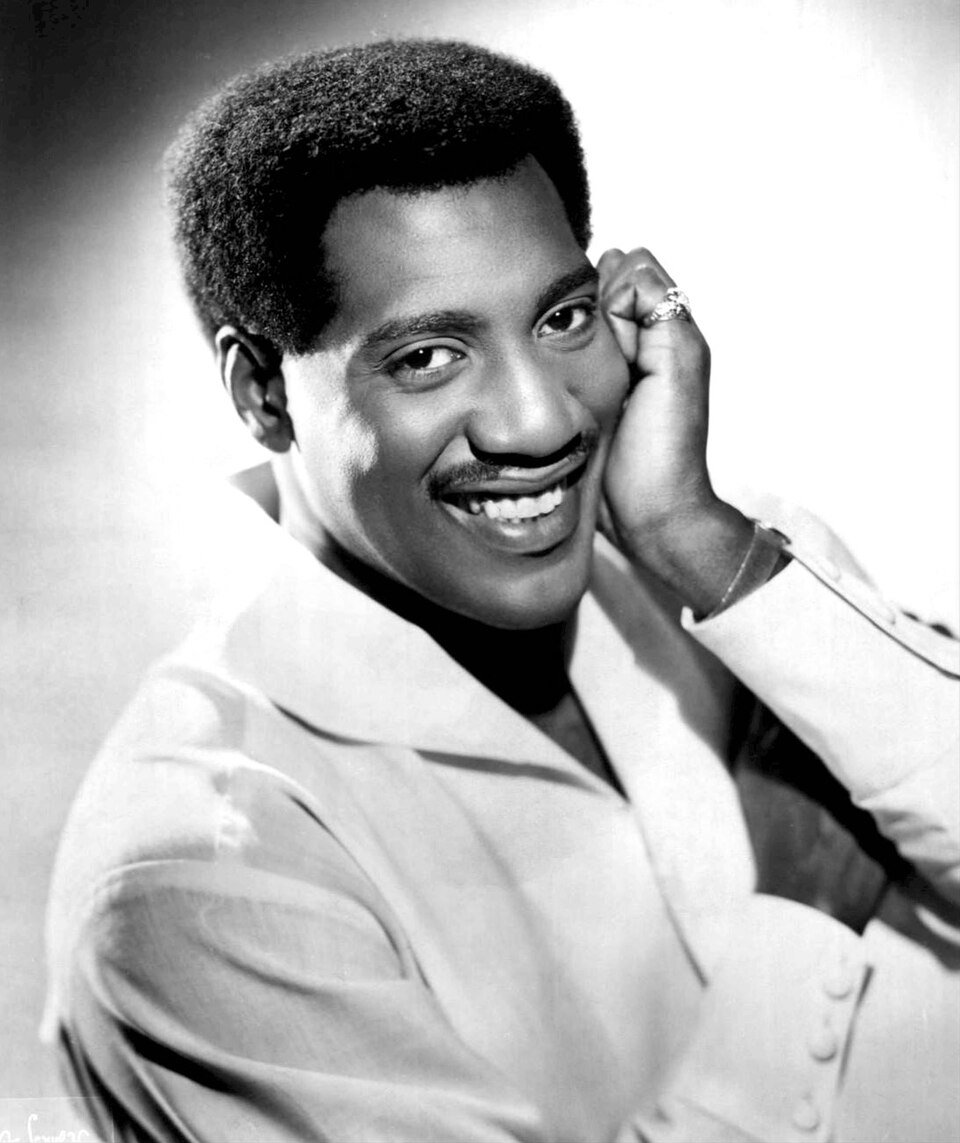
It starts like a lullaby and ends like a building coming down. For the first two minutes of Try a Little Tenderness, Otis Redding does something almost no one expected of the shouting soul man from Macon: he whispers, he pleads, he croons a song older than he was. Then the horns begin to lean on him, the drums start to insist, and the record detonates — “sock it to me” — into the most famous crescendo in soul music. When it was released in late 1966, it became Redding’s signature performance, the song he would close shows with, the one he rode onto the stage at Monterey Pop the following summer. It was also thirty-four years old, written for the tea rooms of 1932, and Redding had learned it from a Sam Cooke album.
A Standard from Another Lifetime
Try a Little Tenderness was written in 1932 by Harry M. Woods with Jimmy Campbell and Reg Connelly, the latter pair publishing under the joint pseudonym “Irving King.” It was first recorded on December 8, 1932, by the Ray Noble Orchestra with vocalist Val Rosing, and was quickly taken up by Ruth Etting and Bing Crosby. It was, by design, a polite song: a gentle lecture advising young men that women grow weary, that their dresses may be shabby, but that a little tenderness goes a long way. For three decades it lived the quiet life of a standard, sung straight by crooners.
Redding’s doorway into the song was not Crosby. It was Sam Cooke — his idol, his model, the singer whose smoothness Redding spent his whole career roughing up with Georgia gravel. Cooke had performed Try a Little Tenderness live at New York’s Copacabana, and that performance, preserved on the 1964 album Sam Cooke at the Copa, was the version Redding knew. It is also why, on Redding’s recording, the song runs only two verses deep: he sang the verses he had learned from Cooke, and built his cathedral on that modest foundation.
Skeptics in the Studio at Stax
The idea of recording it at Stax met resistance. By 1966 Redding was the label’s biggest star, the engine of the Memphis sound, famous for pleading ballads of his own and for tearing the roof off uptempo numbers. A 1932 parlor song, crooned straight, struck some of the musicians as a step backwards — too old-fashioned, too sweet, too close to the supper-club world Cooke had worked in and Redding had deliberately left behind. Guitarist Steve Cropper later admitted the band did not want to do it.
What changed their minds was the arrangement, worked out with Isaac Hayes, then a Stax staff writer and pianist on the verge of his own stardom. The insight was structural: the song would be sung twice, in effect — first as the tender ballad it had always been, then as a celebration that kept accelerating until tenderness turned into testimony. Producer Jim Stewart, Stax’s co-founder, oversaw the session at the label’s studio on McLemore Avenue in Memphis, a converted movie theater whose sloped floor gave the room its distinctive sound.
Two Minutes of Whisper, One Minute of Fire
Listen to how the record is built. The Memphis Horns open with a soft fanfare. Booker T. Jones’s organ and Hayes’s piano settle underneath, Cropper’s guitar picks out gentle chords, and Donald “Duck” Dunn’s bass and Al Jackson Jr.’s drums keep a heartbeat pulse so restrained it feels like a ticking clock. Redding enters almost shyly: “Oh, she may be weary — young girls they do get weary, wearing the same old shabby dress.” He follows the lyric’s own advice. He tries tenderness.
Then, verse by verse, the band begins to nudge the tempo and dynamics upward, in the way Redding’s live show had taught them. The horns punch harder. Jackson’s drumming grows more insistent. Redding’s pleading turns to preaching, the words breaking into exhortations, until the finale arrives — a joyous, stomping coda, flecked with echoes of Duke Ellington’s Just Squeeze Me, in which Redding is no longer asking for tenderness at all but commanding the whole room to feel it. The whole performance runs barely three and a half minutes, and the distance it travels — from 1932 tea room to a Memphis tent revival — is the entire story of soul music in miniature.
The design was partly an accident of arithmetic. Because Redding only had Cooke’s two verses to sing, the lyric ran out long before a record could end — and that shortage became the song’s genius. A conventional singer would have repeated a verse and faded. Instead, Hayes and the band built the long runway the studio performance still rides: a vamp that keeps restarting the plea at higher and higher pressure, Redding testifying over the top — try a little tenderness — until the words stop being advice and start being an event. The band had essentially arranged the way Redding performed live: begin in a croon, end in a frenzy, and let the audience feel the temperature rise degree by degree. Rob Bowman’s definitive history of Stax, Soulsville U.S.A., devotes some of its warmest pages to this record, and no wonder — it is the Stax method made perfect: a converted cinema, a house band that trusted each other completely, and a singer who treated every take as if it were the last song of the night.
The song anchored Redding’s 1966 album Complete & Unbelievable: The Otis Redding Dictionary of Soul, the last solo album released in his lifetime, and it was issued as a single on November 14, 1966. It climbed to No. 25 on the Billboard Hot 100 and into the Top 5 of the R&B chart — a hit, but a modest one beside the explosion it caused on stage.
Monterey: The Night It Conquered the Rock World
Because Try a Little Tenderness was, above all, a live weapon. Redding made it his closing number, the peak of a set already famous for its intensity, and on the Stax/Volt revue’s European tour in the spring of 1967 audiences heard it at tempos that made the record sound tame. Then, on June 17, 1967, Redding walked onto the stage of the Monterey International Pop Festival — a soul singer from Georgia, backed by Booker T. & the M.G.’s and the Mar-Keys, in front of a rock audience that largely did not know him.
His five-song set is now legend, and he closed it the only way he knew how: with Try a Little Tenderness, taken faster and harder than the studio version, the crowd rising as the song built to its frenzy. Monterey made Redding a star to the counterculture in a single night, and the song was his coronation. Six months later, on December 10, 1967, he was dead in a plane crash in Wisconsin, at twenty-six. The recording he left behind reads, in retrospect, like a complete statement of his art: the Cooke inheritance honored, then transcended, in under four minutes.
The Slow Burn That Never Went Out
The song’s afterlife has been long and strange. Three Dog Night took it back into the pop Top 40 in 1969, smoothing its edges for a new audience. In 1986, John Hughes put it at the heart of Pretty in Pink, where Jon Cryer’s Duckie lip-syncs Redding’s record in a record store — one of the most beloved music scenes in eighties cinema, and a whole generation’s first encounter with Otis. In 2011, Jay-Z and Kanye West built their hit Otis around a chopped sample of Redding’s voice from the song, carrying those 1966 exhortations onto twenty-first-century radio. And in 2015, Redding’s version was inducted into the Grammy Hall of Fame.
All of it begins with a gamble made by a skeptical band in a sloped-floor studio: that a song written to be sung politely could bear the weight of everything Otis Redding had in him. He started it the way the songwriters of 1932 asked — tenderly. He finished it the only way he knew how. In between is the sound of soul music discovering how big a small song could be.
Leave a Reply