
Most of Patsy Cline’s great records were fought over. Producer Owen Bradley would bring her a polished pop-leaning ballad, Cline would push back in favour of something harder and more country, and the records that made her immortal — I Fall to Pieces, Crazy — often came out of that friction. She’s Got You is the famous exception. It arrived at her house in the arms of its songwriter, she learned it the same night, and for once singer, writer and producer all agreed instantly: this was a hit. Released at the start of 1962, it became her second country number one and one of the defining performances of her short career — a three-minute waltz in which a woman stands in an empty room, cataloguing everything her lover left behind, and slowly understands that she has kept all of it except the only thing that mattered.
A Phone Call and a Bottle of Liquor
The songwriter was Hank Cochran, who with Harlan Howard had already written I Fall to Pieces for Cline. According to the account Cochran gave to Cline’s biographer Ellis Nassour, he telephoned her one day in 1961 with a bold announcement: he had just written her next number one hit. Cline told him to prove it — to come over to the house with a bottle of liquor and play it for her on the guitar. Cochran did exactly that, performing the new song for Cline and her friend Dottie West, who was visiting that afternoon.
Cline was, by Cochran’s telling, emotionally moved by what she heard. The song is built on a simple, devastating device: a list. The singer has kept his picture, his record collection, his class ring — all the physical evidence of a love affair — and each item still looks and sounds exactly as it did when he was there. The only thing different, the only thing new, is that she has these little things, and someone else has him. It is a lyric any working songwriter would envy: no metaphors, no scenery, just an inventory of ordinary objects that turns, item by item, into an accusation. Cochran was barely into his twenties and already writing like a man who understood that heartbreak is mostly administrative — the sorting of what remains.
Cline learned the song that very night, and then rang her manager, Randy Hughes, and her producer and sang it down the telephone line to them. The detail tells you everything about her instincts. Singers of her generation waited for publishers and producers to anoint material; Cline, hearing a hit once, in her own front room, set about selling it to her own organisation before the evening was out.
The Rare Song Everybody Agreed On
That telephone performance mattered because agreement was not the house custom. Cline and Bradley famously clashed over material: she had resisted I Fall to Pieces, worried the Jordanaires’ backing vocals would swamp her, and Crazy had needed Willie Nelson’s strange, jazz-tilted phrasing to be coaxed into her style. Bradley was steering her toward the smooth Nashville Sound — strings, choruses, pop polish — while Cline, a honky-tonk singer at heart, kept reaching for something rawer.
She’s Got You ended the argument before it started. It was, in the phrase used in accounts of that night, a rare instance: Cline and Bradley disagreed about almost everything material-wise, but this time they both heard a hit in the same song at the same moment. It helped that the song sat exactly at the crossroads Bradley had been mapping for her — country in its bones, with a melody and a sentiment broad enough for pop radio, and a lyric built around the everyday objects his audience lived with.
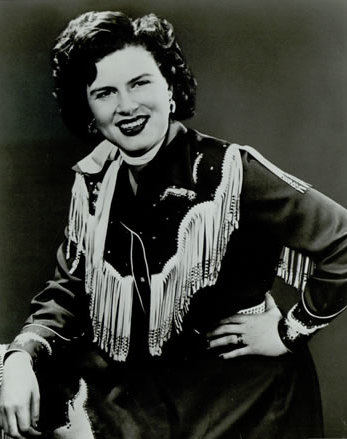
December 17, 1961: A Waltz at the Quonset Hut
Cline recorded She’s Got You on 17 December 1961 at Bradley Studios in Nashville, the converted Quonset hut where Bradley had pioneered the Nashville Sound. She was still, that winter, rebuilding her life and career after the head-on car crash of the previous June that had nearly killed her — the accident that struck while I Fall to Pieces was climbing the charts and that she had answered by returning to the stage with a determination her fans never forgot.
Around her Bradley assembled the A-Team, the same circle of musicians who appear in the album’s liner notes: Floyd Cramer at the piano, Grady Martin on electric guitar, Harold Bradley on six-string bass, Bob Moore on acoustic bass, Buddy Harman on drums, Walter Haynes on steel guitar, Randy Hughes on acoustic guitar and Bill Pursell on organ, with the Jordanaires — the very voices she had once feared — folded gently behind hers. The arrangement moves in three-quarter time, a slow countrypolitan waltz, in an era when Nashville defaulted to the four-four shuffle; the lilting three-beat sway gives the record the feel of a dance remembered rather than danced.
And then there is the performance itself. Cline sings the catalogue of keepsakes almost conversationally, her famous catch and sob held in reserve, letting the lyric’s arithmetic do the damage line by line. Only on the closing phrase does the voice open fully, and by then the listener has assembled the whole picture — the room, the records, the ring, the other woman — from three minutes of understatement. It is the mature style Bradley had been pushing her toward since I Fall to Pieces, and on this record there is no trace of the old argument about whether it suited her. It did, completely.
Number One in Country, Top Twenty in Pop
Decca released She’s Got You as a single in January 1962, with Strange on the B-side, as the follow-up to Crazy. It went straight to number one on Billboard’s Hot C&W Sides chart, crossed over to number fourteen on the Hot 100 and reached number three on the Easy Listening chart. In Britain it climbed to number forty-three — modest in itself, but a landmark: it was Cline’s first hit single in the United Kingdom.
The trade papers agreed with the charts: Cash Box ranked it at number eleven on its own Top 100. The success moved quickly into her working life. In February she appeared on Dick Clark’s American Bandstand, and in November she headlined her own show in Las Vegas. In August 1962 the song anchored her third studio album, Sentimentally Yours — the last studio album she would release in her lifetime, though nobody in that triumphant year had reason to think so. Coming in the middle of the most concentrated run of classics any country singer has ever assembled — I Fall to Pieces, Crazy and She’s Got You inside thirteen months, all from the Cochran-Howard-Bradley orbit — it confirmed that the run was no accident of one or two great songs. It was a method, a sound and a singer in perfect, if temporary, alignment.

The Afterlife: Loretta Lynn Sings It Back
Cline died in a plane crash in March 1963, barely a year after the single’s release, and She’s Got You passed into the keeping of the singers who loved her. The most famous act of custody came in 1977, when Loretta Lynn — whose own breakthrough Cochran had championed, and whose career was intertwined with Cline’s friendship and advice — recorded a tribute album, I Remember Patsy, produced by none other than Owen Bradley. Lynn’s version of She’s Got You, cut at Bradley’s Barn in June 1976, went to number one on the country chart fifteen years after the original, a remake succeeding with the same producer, the same songwriter’s blessing and much of the same spirit.
Others kept arriving: Dean Martin and Brook Benton remade it in gender-flipped form, Elvis Costello recorded it for his country album Almost Blue in 1981, and Rosanne Cash, LeAnn Rimes, Timi Yuro, Lee Ann Womack, Cat Power and Rhiannon Giddens have all taken their turn with Cochran’s inventory of loss. Don McLean even carried it back onto the country chart in 1987 retitled He’s Got You. Few songs of the era have proved so portable, and the reason is the one Cline heard down a telephone line’s distance, in her own living room, in a single hearing: anybody who has ever kept the records and lost the person already knows the whole story by heart.
Leave a Reply