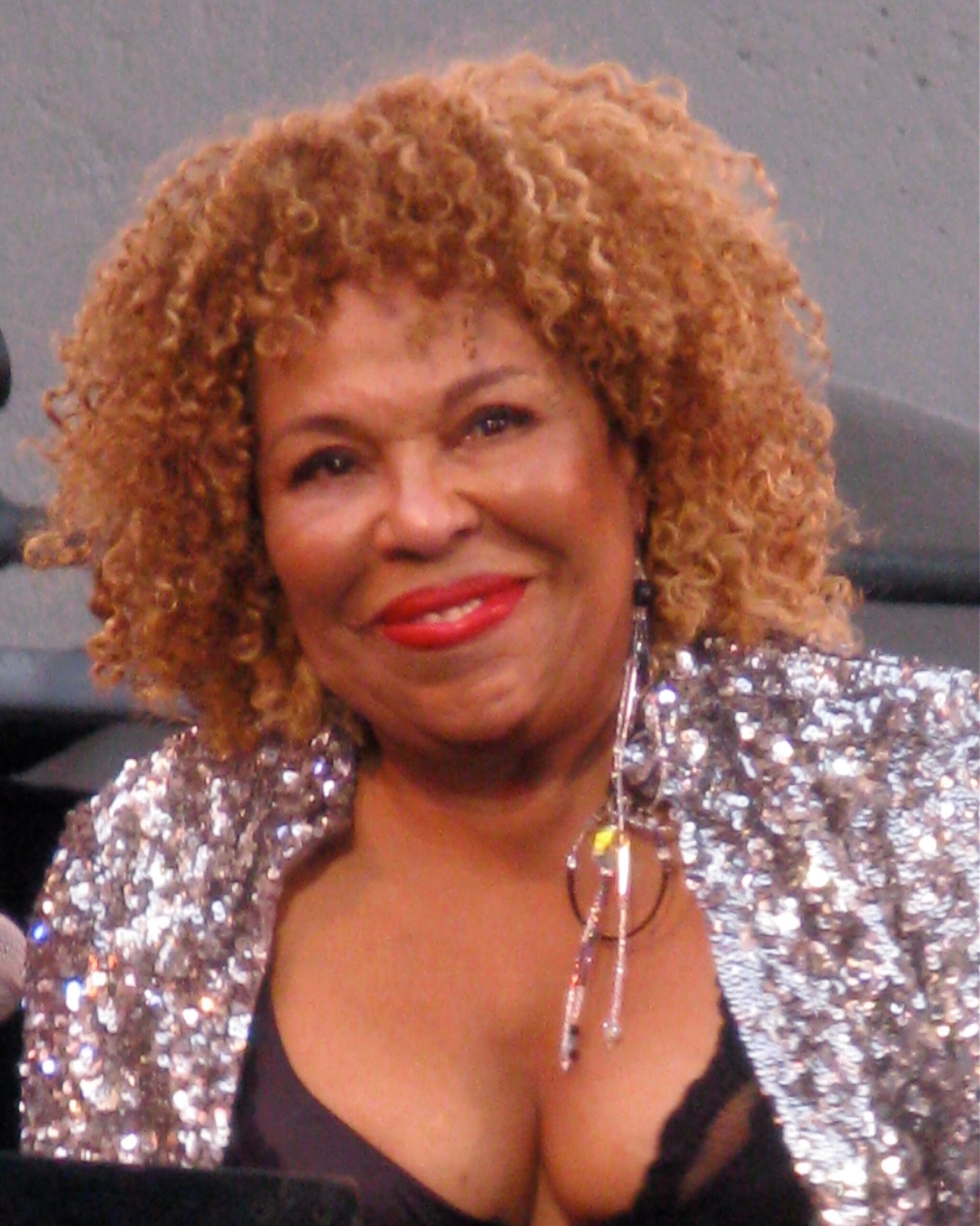
Some songs are about being understood so completely that it hurts. Killing Me Softly with His Song is one of them — and the eerie thing is that its own history keeps re-enacting its lyric. It began with a young singer in a Los Angeles club who felt a stranger on stage was singing her private diary aloud. It reached Roberta Flack through an airplane headset, where she sat listening to another singer’s record over and over, feeling the same uncanny recognition. And it ended with Flack performing it once, live, and being ordered by Marvin Gaye never to sing it again until she had captured it on tape. Few No. 1 records were ever so thoroughly true to their subject before they were even recorded.
A Napkin at the Troubadour
In November 1971, a friend persuaded 20-year-old singer Lori Lieberman to go and hear a rising folk singer named Don McLean at the Troubadour in Los Angeles. McLean’s American Pie was climbing the charts, but the song that undid Lieberman was a quiet album track called Empty Chairs — a song of romantic desolation written after a breakup, which happened to be exactly what Lieberman was living through. She later said it felt as though McLean were reading her diaries. She scribbled her impressions on a napkin: a singer strumming her pain with his fingers, singing her life with his words, killing her softly with his song.
Lieberman was signed to a production deal with two established professionals, lyricist Norman Gimbel and composer Charles Fox, who were guiding her career. She brought them her notes, and the pair built a finished song from them — Gimbel shaping the lyric, Fox composing the melody. The result was Killing Me Softly with His Song, and Lieberman recorded it first, as a gentle, guitar-based folk performance, for her self-titled debut album in 1972. It did not chart. (Lieberman would spend decades publicly maintaining that the song was written from her experience and her notes; Fox and Gimbel denied her a writing credit, a dispute that has never entirely cooled.) The song sat on an album almost nobody heard, waiting for its second singer.
Ten Listenings at 30,000 Feet
Flack was, at that moment, the other artist on Lieberman’s label output — her recordings were featured in American Airlines’ in-flight audio programming, and on a flight in 1972, Lieberman’s album came through Flack’s headset. The title alone stopped her. “The title of the song jumped out at me,” Flack recalled. “I took out a notepad and listened to that song ten times, to get the melody and lyrics. When I landed, I called Quincy Jones, who helped me get the music charts.”
It was a classically trained musician’s way of falling in love: not just swooning, but transcribing. Flack began working the song into shape with her band, rebuilding it around her piano and her own sense of time. Where Lieberman’s version drifted like a folk confession, Flack slowed the whole thing into a stately, suspended ache, letting the spaces between phrases do as much work as the phrases themselves. She had a finished arrangement in her repertoire months before any record existed, and she was in no hurry — which is why the song’s first public performance happened almost by accident.
An Interpreter at Her Peak
To understand why Flack, of all singers, could hear one flight’s worth of a stranger’s album track and know exactly what to do with it, consider where she stood in 1972. She was a Howard University-trained pianist who had taught school in North Carolina and Washington, D.C., sung in church, and spent her twenties accompanying opera singers and playing club dates before Atlantic signed her at the end of the decade. Her debut album, First Take, had been recorded in a single ten-hour session in 1969. Then, in 1971, Clint Eastwood placed her recording of The First Time Ever I Saw Your Face in his film Play Misty for Me, and in the spring of 1972 that three-year-old performance went to No. 1 for six weeks. By the time the airplane headset delivered Killing Me Softly to her, Flack was famous for precisely the gift the song required: taking someone else’s material and inhabiting it so completely that the original seemed like a rehearsal. She was not looking for a song to cover. She was the most dangerous interpreter alive, and the song had just found her.
“Baby, Don’t Ever Do That Again Live Until You Record It”
In September 1972, Flack was opening for Marvin Gaye at the Greek Theatre in Los Angeles. The set went so well that she was called back for an encore beyond the one she had prepared. Needing another song, she offered the room her work-in-progress. She later told the story with relish: “I said, well, I’ve got this song I’ve been working on called ‘Killing Me Softly,’ and he said, ‘Do it, baby.’ And I did it — and the audience went crazy.” Gaye walked over, put his arm around her, and delivered the most famous piece of advice in her career: “Baby, don’t ever do that song again live until you record it.”
Flack obeyed. With producer Joel Dorn at Atlantic, she recorded the song built exactly on her road-tested arrangement: her own piano at the centre, her voice unhurried to the point of daring, entering the famous lines as if she were still listening to the stranger sing. Crucially, she kept the performance’s restraint. Nothing in the record lunges. The emotion is all in the poise — in a singer so in command of the song that she can afford to let it nearly whisper. Released as a single in January 1973 and anchoring her album Killing Me Softly that summer, the record went to No. 1 on the Billboard Hot 100 and stayed there for five non-consecutive weeks across February, March and April — more weeks at the top than any other single managed in 1973.
Two Records of the Year in a Row
At the Grammy Awards in March 1974, Flack’s Killing Me Softly with His Song won Record of the Year and Best Pop Vocal Performance, Female, while Gimbel and Fox took Song of the Year. The first of those trophies carried a distinction no artist had ever achieved: Flack became the first performer in Grammy history to win Record of the Year in two consecutive years, having taken the same award twelve months earlier for The First Time Ever I Saw Your Face. A former schoolteacher who had spent years singing in Washington, D.C. clubs had, in the space of two singles, set a standard for interpretive singing that the industry itself had to invent new superlatives to describe.
The Song Kills Softly Again
The story refused to end. In 1996 the Fugees — with Lauryn Hill singing lead over a hip-hop arrangement built on a sample of Flack’s own aesthetic of stillness — released their version as Killing Me Softly. It topped charts in some twenty countries, won the group a Grammy of its own, and sent a new generation back to the 1973 record; Flack and the Fugees later performed the song together on stage, the interpreter and her inheritors sharing the circle the song describes. Flack’s recording entered the Grammy Hall of Fame in 1999 and has remained on greatest-songs lists ever since.
There is a final symmetry worth savouring. The song describes a listener undone because a performer seemed to know her life. Lieberman felt it about McLean. Flack felt it about Lieberman’s record, ten times through an airline headset. Audiences at the Greek felt it about Flack, and Gaye knew instantly that what they felt had to be preserved. Killing Me Softly with His Song was never really written once. It was recognized, repeatedly, by one listener after another — until the listener with the patience, the training and the touch to make it immortal got her turn at the piano.
Leave a Reply