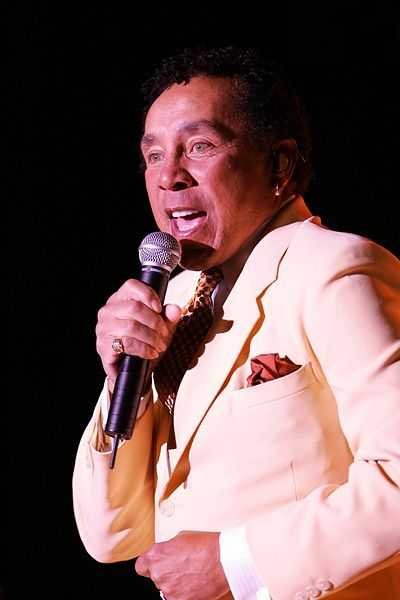
In 1962, Smokey Robinson — all of twenty-two years old — went to New York on business for Motown, the young Detroit label where he was simultaneously star singer, chief songwriter and vice president, and came home with one of the most honest love songs ever written. Sam Cooke’s Bring It On Home to Me was riding the charts that year, and its slow-burning plea had lodged in Robinson’s head. Alone in his hotel room, he sat down and answered it: not with a plea for a lover to return, but with a confession from a man who cannot leave a lover who treats him badly. The opening paradox he found that night — a man admitting he does not like the woman he loves madly — became You’ve Really Got a Hold on Me. Motown then released it as a B-side. It took the nation’s disc jockeys about five minutes to fix that mistake.
Written Under Sam Cooke’s Spell
The debt to Cooke was freely admitted and structural. Robinson had absorbed Bring It On Home to Me — its unhurried pace, its close-harmony pleading, the way Cooke’s voice seemed to argue with itself — and he built his answer in the same emotional shape, then inverted it. Cooke begged a departed lover to come home; Robinson’s narrator has the opposite problem. She is right there, treating him badly, and he still cannot walk out the door. It was a grown-up, uncomfortable idea for a pop song in 1962, and Robinson set it to a melody that sways like a slow dance at closing time.
What he did in that hotel room also shows why Berry Gordy’s protégé became Motown’s defining writer. The lyric is built entirely from contradiction, each verse another turn of the same screw: dislike and devotion, mistreatment and surrender, a man listing his grievances in the tone of a love letter. There is no plot, no scenery, nothing but a man reasoning his way to a conclusion he has already reached in the first line. Robinson would later say Gordy taught him that a song should work like a little story, with a beginning, a middle and an end. This one is a story told in a single locked room — and the door never opens.
Studio A, 16 October 1962
Back in Detroit, Robinson took the song into Hitsville U.S.A.’s Studio A — the converted garage the musicians called the Snakepit — on 16 October 1962, producing the session himself. He sang lead, but the record’s ache comes from the second voice woven through his: Bobby Rogers, the Miracles’ second tenor, singing a harmony co-lead that shadows Robinson like his own conscience. When the two voices lock together on the title line, it sounds less like backing vocals than like the argument inside one man’s head, finally sung out loud.
Around them, the machinery of early Motown worked at full stretch. Miracles guitarist Marv Tarplin and Funk Brother Eddie Willis shared the guitar parts — Tarplin’s chiming figure is the first thing you hear, a little riff that seems to shrug and plead at once — while the Funk Brothers’ piano triplets toll underneath like a slow bell. Everything is restraint: no strings to sweeten it, no choir to absolve it, just a rhythm section, two guitars, and two men singing a confession in thirds and sixths. The other Miracles — Ronnie White, Pete Moore and Claudette Robinson — fill out the sound, but the record belongs to that central conversation between Robinson and Rogers. And listen for Robinson’s discipline: for most of the song he barely raises his voice above a murmur, saving the ache for the title line, where the two tenors finally strain together at the top of their range. It is a performance of surrender sung by a man who sounds as if he has rehearsed giving up — which, in a sense, was the whole idea.

The Wrong Side of the Single
Tamla released the record on 9 November 1962, and buried it. You’ve Really Got a Hold on Me went out as the B-side of Happy Landing, an upbeat dancer cut at the same session — a pairing that now looks like a clerical error in music history. Even the two sides were cousins: Motown Junkies’ exhaustive session research notes that both songs recorded that day were shaped by Sam Cooke records, the A-side echoing Having a Party, the B-side answering Bring It On Home to Me.
Radio decided otherwise. Disc jockeys across America flipped the single over, listeners followed them, and the B-side rolled past its own A-side into the history books: No. 1 on the R&B chart, No. 8 on the Billboard Hot 100, and sales past a million — the Miracles’ second million-seller, after Shop Around. Tamla hastily built it into the group’s next album, The Fabulous Miracles. The Miracles themselves never pretended about the song’s parentage: on their 1963 live album, recorded at the Apollo and the Regal, their performance of it slips in an excerpt of Bring It On Home to Me — the answer song bowing to its source, on stage, in front of the toughest audience in show business.

A Song That Walked the Stage
The live performance above shows what the Miracles did with the song once it escaped: Robinson loosening his tie, working the confession like a man testifying, the group swaying behind him in perfect drill. They had every reason to polish it. The song became the centrepiece of the group’s stage act at the exact moment Motown’s revue was conquering Black America’s theatre circuit, and the Miracles filmed it twice in quick succession. At New York’s Apollo Theatre in December 1962 — weeks after the session — they performed it for cameras in footage that, according to the liner notes of the group’s definitive performances collection, remains the only known filmed live performance of the original group including Claudette Robinson. In October 1964 they sang it again at the Santa Monica Civic Auditorium for The T.A.M.I. Show, the landmark concert film that put the Miracles on a bill with the Rolling Stones, James Brown and the Beach Boys — and held their own. A B-side, by then, was headlining in the best company in pop.
Liverpool Comes Calling
The record’s furthest journey began with an imported copy in Liverpool. The Beatles — John Lennon above all, a devoted Smokey Robinson disciple — took the song into their live repertoire, and when sessions for their second album began, it was the very first thing they recorded: 18 July 1963, at Abbey Road, with Please Please Me still topping the album chart. Lennon and George Harrison split the vocal exactly as Robinson and Rogers had, George Martin played piano, and the group retitled it, as sung, You Really Got a Hold on Me. When Robinson met them, he said in a 1968 interview, he liked their version — the student work of four Englishmen honouring a Detroit B-side as if it were scripture.
The original kept its grip. The Miracles performed it on Shindig! in 1964 and at the Apollo; Robinson sang it with the group again on the Motown 25 television special in 1983, twenty-one years on, and the audience rose to it like a national anthem; he even rewrote it once, affectionately, for Sesame Street, duetting with a clingy letter U. In 1998 the song entered the Grammy Hall of Fame. But the truest measure is simpler. A frustrated executive wrote it in a hotel room because another man’s record would not leave him alone; a record company filed it as filler; disc jockeys, dancers and four kids from Liverpool dug it out. You’ve Really Got a Hold on Me is the sound of a great song refusing, politely and permanently, to be a B-side.
Leave a Reply