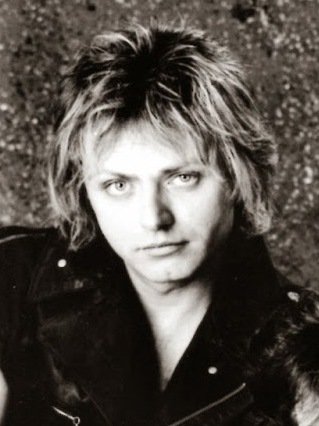
In the summer of 1979, the Cars were the band who were not supposed to have a second act problem — and Let’s Go was the proof they didn’t. A year after their debut album had turned a Boston bar band into new wave royalty, the five of them walked back into the studio with producer Roy Thomas Baker and a stack of brand-new Ric Ocasek songs. The first one they sent to radio was three minutes and thirty-two seconds of handclaps, synth stabs and teenage longing, sung not by Ocasek but by bassist Benjamin Orr. It became the Cars’ first Top 20 single in America, and more than four decades later it still sounds like the exact moment a Friday night begins.
Everything about the record is a hook stacked on a hook. The clapping pattern, the shouted title, the synthesizer riff that seems to bounce off the walls — each element arrived from somewhere specific, and each one had to be argued into place by a band that treated pop songs like precision machinery. This is the story of how a borrowed rhythm from a 1962 instrumental, a state-of-the-art synthesizer and the coolest deadpan in rock produced the Cars’ breakthrough hit.
A Handclap Borrowed From 1962
The engine of Let’s Go is older than the band itself. Its signature figure — a burst of syncopated claps followed by the whole group shouting the title — was derived from Let’s Go (Pony), a 1962 instrumental by the Routers, one of those cheerfully anonymous Los Angeles studio records built for dancing and driving. Ocasek, who wrote the song, took that bones-simple cheerleader rhythm and rebuilt it as new wave: colder, tighter, and aimed at a girl who would rather be anywhere but home.
The lyric is a sketch, not a story. Ocasek rarely wrote confessionally; he built personas, and here the persona is a seventeen-year-old discovering the pull of the night — the lipstick, the earrings, the beautiful refusal to sit still. Ocasek watches her the way his narrators always watch: from half a step behind, equal parts admiration and alarm. Delivered by anyone else it might have sounded lecherous or sentimental. Filtered through the Cars, it became a postcard from the edge of the dance floor.
It is worth remembering what the song had to beat. The debut album had been a phenomenon — it would eventually stay on the American chart for 139 weeks — but its singles had all stopped short of the Top 20: Just What I Needed and My Best Friend’s Girl were beloved, ubiquitous and, in chart terms, near misses. Elektra did not need Candy-O to be respectable. It needed a hit that finished the job, and it needed it first, as the album’s calling card. Ocasek, who had written a whole album of candidates in a matter of months, put the handclap song at track one, side one — and then, cannily, gave it away to the other singer.
The Voice Ocasek Trusted With the Pretty Ones
From the beginning, the Cars ran an unusual division of labour. Ocasek wrote nearly everything, but he routinely handed his most melodic material to Orr, whose voice — smooth, romantic, faintly melancholy — could sell lines that Ocasek’s own reedy deadpan would have turned into irony. Let’s Go is the purest early example: Ocasek’s words, Orr’s warmth, the band’s chrome-plated precision holding both in place.
The arrangement is a small masterclass in economy. Greg Hawkes plays the lead riff on a Sequential Circuits Prophet-5, using the biting oscillator-sync sound — the famous “bow-bow-bow” — that would become one of the most recognisable synth timbres in pop. Hawkes later explained that the break is simply the Prophet doubled with a real guitar, but the synth part itself is untouched: no army of overdubs, just one perfect noise. David Robinson’s drumming snaps the claps into formation, Elliot Easton’s guitar slices through in short, disciplined bursts, and Orr’s bass walks underneath it all, the calm centre of a record designed to feel like motion.
Even the B-side kept the pattern. The single’s flip, That’s It, was a non-album track with Orr singing lead again — a reminder that Elektra Records understood exactly whose voice was carrying the band up the charts.

Back to Cherokee With Roy Thomas Baker
Candy-O, the album Let’s Go opened, was recorded at Cherokee Studios in Los Angeles with Roy Thomas Baker, the producer behind Queen’s grandest records and the Cars’ own debut. The debut had been cut an ocean away, at AIR Studios in London; this time the band worked in California sunshine, but the discipline travelled with them. Baker’s method — stack everything, polish it until it gleams — suited a band whose second album needed to be bigger without being softer. Rhino’s anniversary history of the album notes that virtually all of its songs were written after the debut’s release, which gives some idea of the machine Ocasek was running: no leftovers, no coasting, a completely fresh set of material assembled in under a year.
The band later described Candy-O as their most democratic album, one where the songs survived by consensus. It shows in Let’s Go, a track with not one wasted second: intro, verse, clap-break, chorus, all delivered before most bands of the era had finished tuning up.
The Vargas Cover and the Album That Followed
The album arrived in June 1979 wearing one of the most famous sleeves of the decade: a redhead draped across the hood of a Ferrari, painted by Alberto Vargas, the Peruvian-born pin-up master whose “Vargas girls” had defined an earlier era of American glamour. The painting gave the album its title — Candy-O — and its iconography, and it announced that the Cars’ futurism would always have one foot in classic American pop culture.
The record climbed to No. 3 on the Billboard 200 and was certified platinum before the year was out. Let’s Go, released as a single on 12 June 1979, peaked at No. 14 on the Hot 100 — the first Cars song to crack the Top 20 — and did even better abroad, reaching No. 5 in Canada and No. 6 in Australia. In September 1979 the band hosted an episode of The Midnight Special, on the condition that they could choose the other guests, turning a network variety show into their own curated showcase; Let’s Go opened their six-song set.

The Hundredth Video
The song’s afterlife kept finding new formats. When MTV launched on 1 August 1981, the simple performance clip of Let’s Go became the 100th video played on the channel’s first day — a fitting footnote for a band whose visual identity, all sharp angles and cool surfaces, seemed designed for the video age before the video age existed. The song anchored greatest-hits collections, soundtrack placements and classic-rock radio for decades afterwards. And when the surviving Cars reunited in 2011 for the album Move Like This — their first record together in twenty-four years — Let’s Go was waiting for them, Ocasek singing it himself this time on television stages, the handclaps exactly where he had left them in 1979.
Orr did not live to see most of that afterlife. He died of pancreatic cancer in October 2000, aged 53, still performing weeks before the end. Yet his voice is the one the song is remembered in: of all the great Cars performances, Let’s Go may be the definitive Benjamin Orr record, the nightlife postcard he was born to deliver. But the division of labour that made Let’s Go — Ocasek’s pen, Orr’s voice, Hawkes’s synth, Baker’s gloss — remains the definitive Cars formula, the sound of a band that understood pop music as engineering: borrow the right rhythm, build the right riff, and let the quiet man sing. “She’s so beautiful now,” the song insists, and three minutes later you’re still clapping along, exactly as a studio band in Los Angeles had planned it in 1962.
Leave a Reply