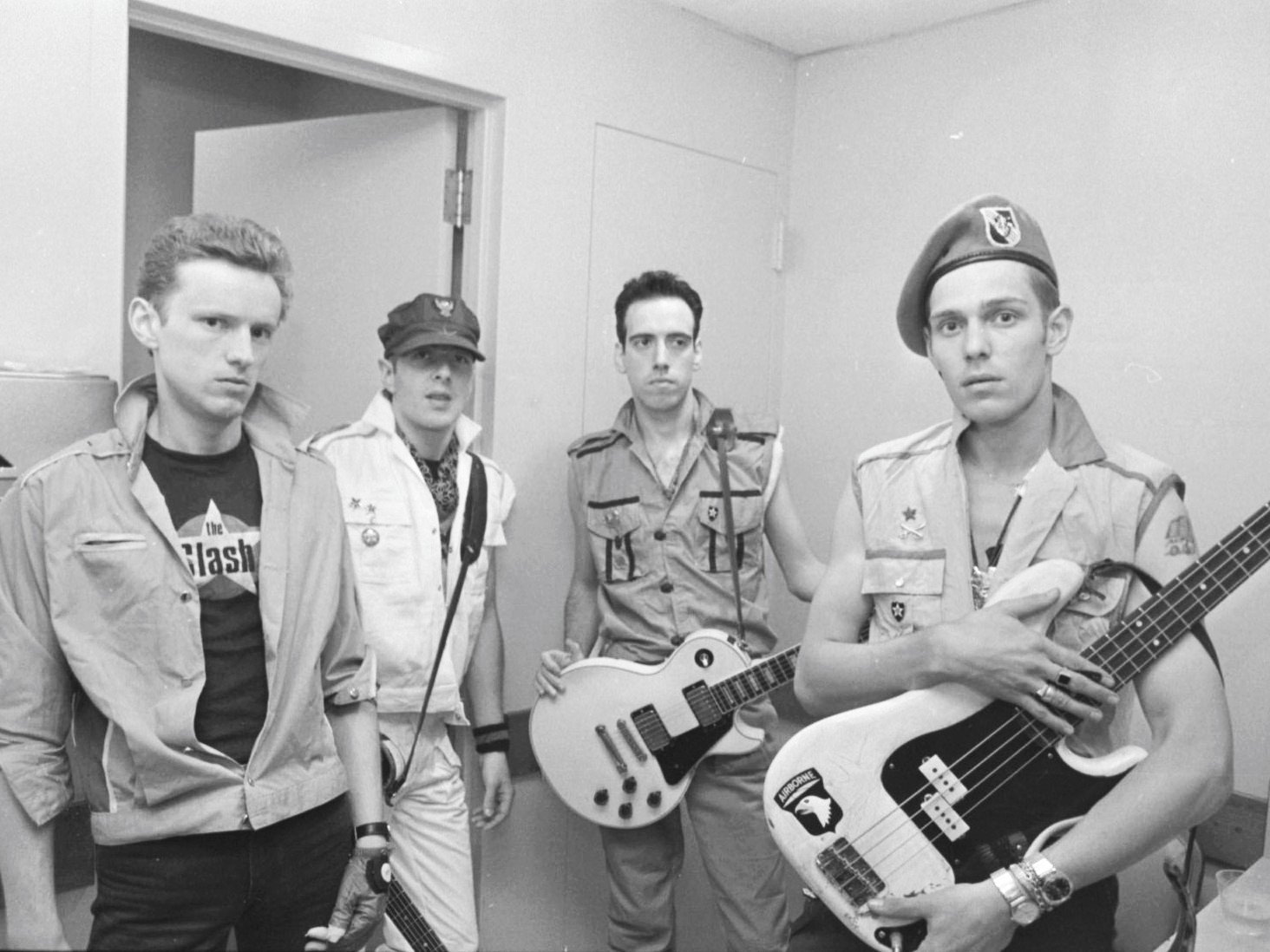
Most young bands spend their first year on a major label trying not to offend it. The Clash spent theirs writing a hit single about what a mistake the whole arrangement had been. Released in September 1977, barely eight months after the band signed to CBS Records, Complete Control is a three-minute act of insubordination: a song complaining, in detail and by name, about the record company that was paying to release it, about the managers who claimed to own the band, and about a punk revolution that already looked to its own soldiers like a con. CBS released it anyway. It became the Clash’s first Top 30 single in Britain, and it is still routinely ranked among the greatest punk records ever made.
The song’s grievances were real, specific and fresh. So was its title, which came from the mouth of the band’s own manager. And in one of punk’s strangest production credits, the session was run not by a London punk insider but by Lee “Scratch” Perry, the Jamaican dub visionary, who nearly destroyed the studio’s mixing desk in pursuit of the perfect bass sound.
They Said Release “Remote Control”
The Clash signed to CBS on 25 January 1977, for an advance of £100,000 that made headlines of its own — a fortune for a band that had played roughly thirty gigs, almost none as headliners. Their debut album, recorded over three weekends with live soundman Mickey Foote producing, arrived that April: raw, fast and unmistakably theirs. Then CBS made its move. In May, without consulting the band, the label lifted Remote Control — one of the album’s slower, weaker tracks, by the group’s own estimation — and issued it as the second single.
To the Clash, this was not a paperwork error. It was proof of concept for everything punk was supposed to be against: decisions about their music being made in offices, by people optimizing for radio rather than truth. Joe Strummer and Mick Jones responded the way songwriters respond. They wrote the whole quarrel down — the label men in their offices, the promises of artistic freedom that had translated into marketing, the police harassment, the fans the band used to sneak into gigs for free through back doors while the business tallied the door receipts. Then they aimed it at the charts.
Two Words in a Soho Pub
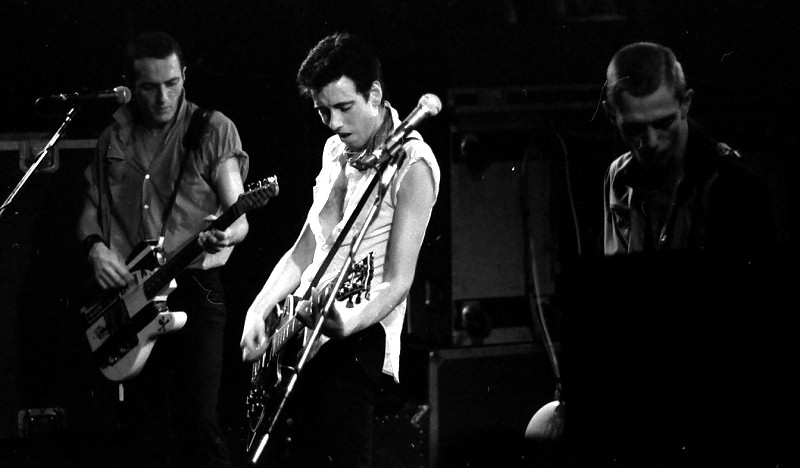
The title came first, and it came from Bernie Rhodes, the band’s manager. Shortly after the Anarchy Tour with the Sex Pistols, Rhodes called a meeting at the Ship, a pub on Wardour Street in Soho, and announced his management philosophy to the room: he wanted complete control. Strummer told the story for years afterwards, always with the same punchline — he came out of the pub with guitarist Paul Simonon collapsing on the pavement in hysterics at the words. Rhodes and the Pistols’ Malcolm McLaren, the two great puppet-masters of British punk, became the song’s twin targets: the men who treated revolution as a brand strategy.
The music was Jones’s, written fast and whole. “I just wrote it in my bedroom at Wilmcote House, standing up,” he later said, referring to his grandmother’s flat in a west London tower block. “It was like write what affects you, and all this stuff was affecting us.” Strummer, who usually shared the labour, claimed he changed nothing: Jones played him the finished song, words and music, and there was, in Strummer’s phrase, not one word to add. It remains one of the few Clash classics credited to a single flash of one man’s anger.
Enter the Upsetter
For the session, the band reached outside punk entirely. Lee “Scratch” Perry, architect of dub and producer of Bob Marley and the Wailers’ foundational records, was in London working with Marley. The Clash had already covered Police and Thieves, Perry’s production for Junior Murvin, on their debut album — and Perry, hearing it, had reportedly hung the band’s picture on the wall of his Black Ark studio in Kingston, a rare honour for white musicians. Rhodes, who leaned toward the reggae side of the band’s instincts, brought him in.
They recorded at Sarm East Studios in Whitechapel, with Foote engineering — a session notable first because it was drummer Topper Headon’s debut recording with the band, the moment the classic Clash lineup clicked into place on tape. Headon, who had replaced Terry Chimes that spring, was a jazz-trained player of a completely different order from punk’s usual thrashers, and you can hear the upgrade instantly: the drumming on Complete Control is explosive but exact, fills tumbling in perfect formation under the guitars. The grievance song had acquired the best rhythm section in British punk.
Perry worked like a man possessed. Strummer remembered him grabbing the equalizer and winding the bass dial deeper and deeper while the whole studio shook; band lore holds that he nearly blew the control room up chasing Simonon’s bass sound. Jones’s guitar playing, Perry declared, was played “with his heart.”
The band, being the Clash, then argued with the result. Perry’s mix swam in echo; afterwards they pulled the guitars back up and dried the track out, keeping his weight and space but restoring punk’s attack. What survived is unmistakably both: a dub producer’s sense of depth underneath the most confrontational three minutes in the band’s catalogue.

CBS Released It Anyway
Complete Control reached the shops on 23 September 1977, backed with The City of the Dead, and accompanied by a band statement framing the song as a conflict between two camps: one trying to make a raw and dangerous culture “safe and predictable,” the other treating change as freedom. The NME dryly noted that CBS had allowed the group to “bait their masters.” The single climbed to No. 28 — the Clash’s first Top 30 hit — and radio’s great tastemaker John Peel adopted it permanently: it placed No. 9 in his 1977 Festive Fifty and No. 2 in the all-time chart he compiled the following year.
There was a final irony waiting in America. When Epic finally issued the debut album in the United States in 1979, the label — the American arm of the same corporation — rebuilt the track listing and put Complete Control on it, selling the protest back to the protesters as a selling point. CBS returned to the song once more in 1999, reissuing the single with a live version on the flip, the grievance now officially heritage.
By then the song had long since escaped its circumstances. It never left the Clash’s live set while the band existed — a fixed point of detonation in concerts from London to New York — and it kept collecting honours from the constituency that mattered most to punk: its listeners. Peel’s audience voted it back into his Festive Fifty year after year, long after the annual chart became an all-time one, and critics’ polls have treated it as a founding text ever since: the moment punk stopped merely snarling at the world outside and documented, from inside the machine, exactly how the music business planned to tame it.
The Song That Outlived the Grievance
Strip the 1977 specifics away and Complete Control keeps working because its subject never went away: it is the definitive song about the moment an artist discovers that the machine that amplifies them also intends to steer them. It even smuggled a small piece of language into the culture — Strummer’s salute to Jones contains one of the earliest recorded uses of the phrase “guitar hero.” Within two years the Clash would make London Calling and become, by acclamation, the only band that mattered. But the terms of that greatness were set here, in a Whitechapel studio with a dub legend at the desk: total commitment, total suspicion, and a refusal — announced on their own label’s stationery — to be controlled.
Leave a Reply