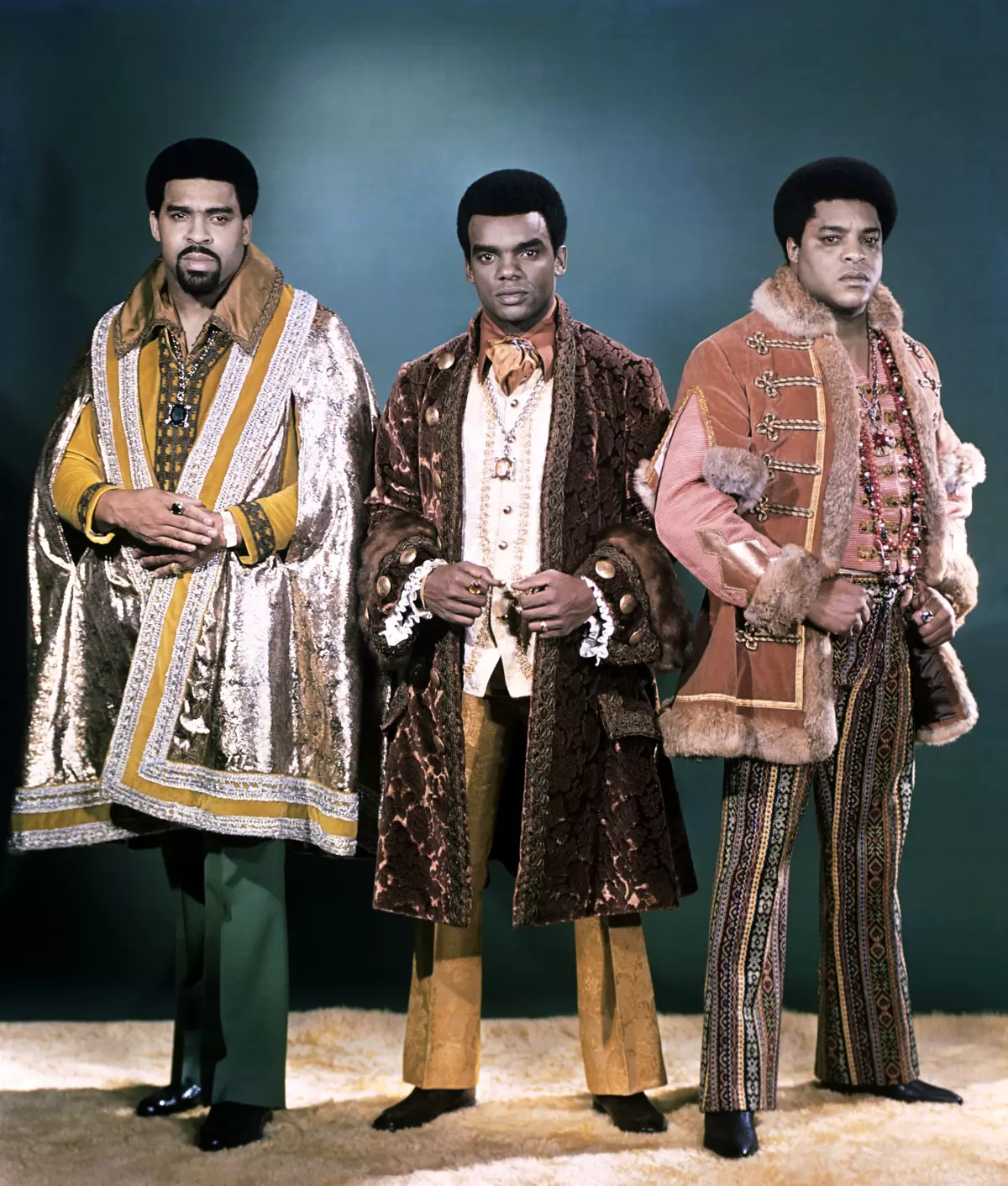
In the spring of 1975, the most unlikely troublemakers in American soul music were a family act nearly twenty years into their career. The Isley Brothers had been scoring hits since the late 1950s, surviving every shift in Black music from doo-wop to Motown. Yet the record that carried them to number one that year was a protest song — an angry, guitar-driven chant against authority with a swear word planted in the middle of it, a word radio stations across America had to bleep before they could play the record at all. It topped the R&B chart anyway, crossed over to number four on the pop chart, and dragged its parent album to number one behind it.
The strangest part is where the song came from. It was not written by the elder brothers whose voices had defined the group since “Shout.” It was written by the youngest musician in the band — twenty-three-year-old guitarist Ernie Isley, who composed it while watching the news — and the famous profanity was not even his idea. It belonged to his big brother Ronald, the lead singer, who slipped the word into the vocal and, when challenged, defended it in a single sentence: because it needed to be said.
The Little Brother and the Evening News
By 1975 the Isleys were really two generations sharing one stage name. Up front stood the three singing brothers — Ronald, Rudolph and O’Kelly — who had been performing together since childhood. Behind them, since 1973, stood a full band of younger family members: Ernie Isley on guitar, Marvin Isley on bass, and their brother-in-law Chris Jasper on keyboards. The arrangement was billed as “3 + 3,” and it had turned a vocal group into a self-contained funk-rock band that wrote, played and produced everything itself.
At sessions held at Kendun Recorders in Burbank, California, for the album that became The Heat Is On, Ernie arrived with two songs he had written in a burst of anger inspired by the news of the day. Ernie was the band’s secret weapon: a guitarist openly shaped by Jimi Hendrix, who had himself played in the Isleys’ touring band a decade earlier before fame took him. Where the elder brothers sang, Ernie attacked — and on the new material, he was increasingly the one doing the writing, too. One was “Fight the Power,” a hard funk attack on the people running things. The other was “Harvest for the World,” a gentle anti-poverty ballad — the same frustration sung at the opposite temperature. The group recorded both songs on the same day, then had to choose which voice to lead with. They picked the furious one. “Fight the Power” would go out as the first single; “Harvest for the World” would wait a year and become the title track of the next album.
“Because It Needed to Be Said”
Ernie played the new song for Ronald on his guitar, and Ronald took it from there, recording a stacked, multi-tracked lead vocal arranged by Ernie and Jasper, his voice layered over itself until the performance sounded less like a singer than a crowd. The track was a family construction throughout: Ernie played electric guitar, drums and congas, Marvin anchored the bass, and Jasper worked the clavinet, electric piano and ARP synthesizer around them — the synthesizer programmed with the help of Malcolm Cecil and Robert Margouleff, the electronic pioneers behind Stevie Wonder’s great seventies records, who gave the Isleys’ funk a sleek, modern machinery underneath the grit.
Then came the moment nobody had planned. In the middle of the vocal, Ronald sang the word “bullshit” — plainly, deliberately, in a hit-bound funk record in 1975. Ernie, the song’s own writer, was taken aback; he had not written that word. Asked why he had used it, Ronald answered simply: “because it needed to be said” — and added, “it’s what people want to hear.” The anger, by all accounts, was genuinely shared across the band; the record’s negative view of authority was the whole family’s, and it sharpened Ronald’s singing into something unusually intense for a man famous for smoothness. As with most of the group’s recordings of the era, Ernie and Jasper shared the official writing credit with the other members of the band.
Bleeped on the Radio, Number One Anyway
Released in May 1975 as “Fight the Power (Part 1 & 2),” the first single from The Heat Is On, the record presented radio with a problem it solved with a razor blade and a bleep: the offending word was censored for airplay. The edited version was the one most of America heard, and it made little difference. Dance clubs, where nobody was censoring anything, played the record heavily, and the word of mouth did the rest.
The charts told the story of a protest song the public refused to let be silenced. “Fight the Power” reached number one on the Billboard R&B singles chart, crossed over to number four on the Hot 100, and climbed to number thirteen on Billboard’s dance chart — making it the first Isley Brothers record ever to reach the top twenty on three different charts at once. A song a younger brother had written off the television news had become one of the biggest records of the group’s entire career.
The Album It Dragged to Number One
The single’s success pulled its album up with it. The Heat Is On, released on 7 June 1975 on the group’s own T-Neck label through Epic, reached number one on the Billboard pop albums chart — the first number one album of the Isley Brothers’ long career. It sold half a million copies in its first month, stayed on the chart for forty weeks, and was eventually certified double platinum.
The album worked because it held the band’s two natures in perfect balance. One face was the uptempo funk of “Fight the Power”; the other was the slow, lush balladry of “For the Love of You,” sung by Ronald in the intimate style that had always been his gift. It was the third album the 3 + 3 lineup had made together, and the formula had fully matured: one side to move the body, one side to slow it down. Critics noticed the split and praised both halves — Rolling Stone‘s Bob Palmer called the result “some of the best body music around.” But it was the angry single — the group’s most overtly political recording to that point — that had opened the door, and the Isleys returned to that vein on later records such as “The Pride,” “Livin’ in the Life” and “Climbin’ Up the Ladder.”
The Chant That Came Back
Fourteen years later, the song’s central line walked into another era. Ronald’s chant — “we gotta fight the powers that be” — was interpolated by Public Enemy for their own “Fight the Power,” the explosive 1989 record made for Spike Lee’s film Do the Right Thing and widely ranked among the greatest hip-hop recordings ever made. The Isleys’ protest had become a foundation stone of the music that succeeded theirs, quoted by a group that treated the brothers as founding fathers.
The original kept circulating on its own terms, too. When The Heat Is On was reissued on CD in 2001, the bonus track chosen was a live performance of “Fight the Power” — the song now serving as the album’s official emblem. It also turned up in films from Out of Sight in 1998 to the opening credits of The Heat in 2013. Its journey remains one of the neatest in the Isley Brothers’ endlessly chaptered career: a song written by the band’s youngest player while watching the news, sung by his brother with a word the writer never wrote and radio could not broadcast intact, that nonetheless reached number one — proof that in 1975, just as Ronald Isley had predicted, it was exactly what people wanted to hear.
Leave a Reply