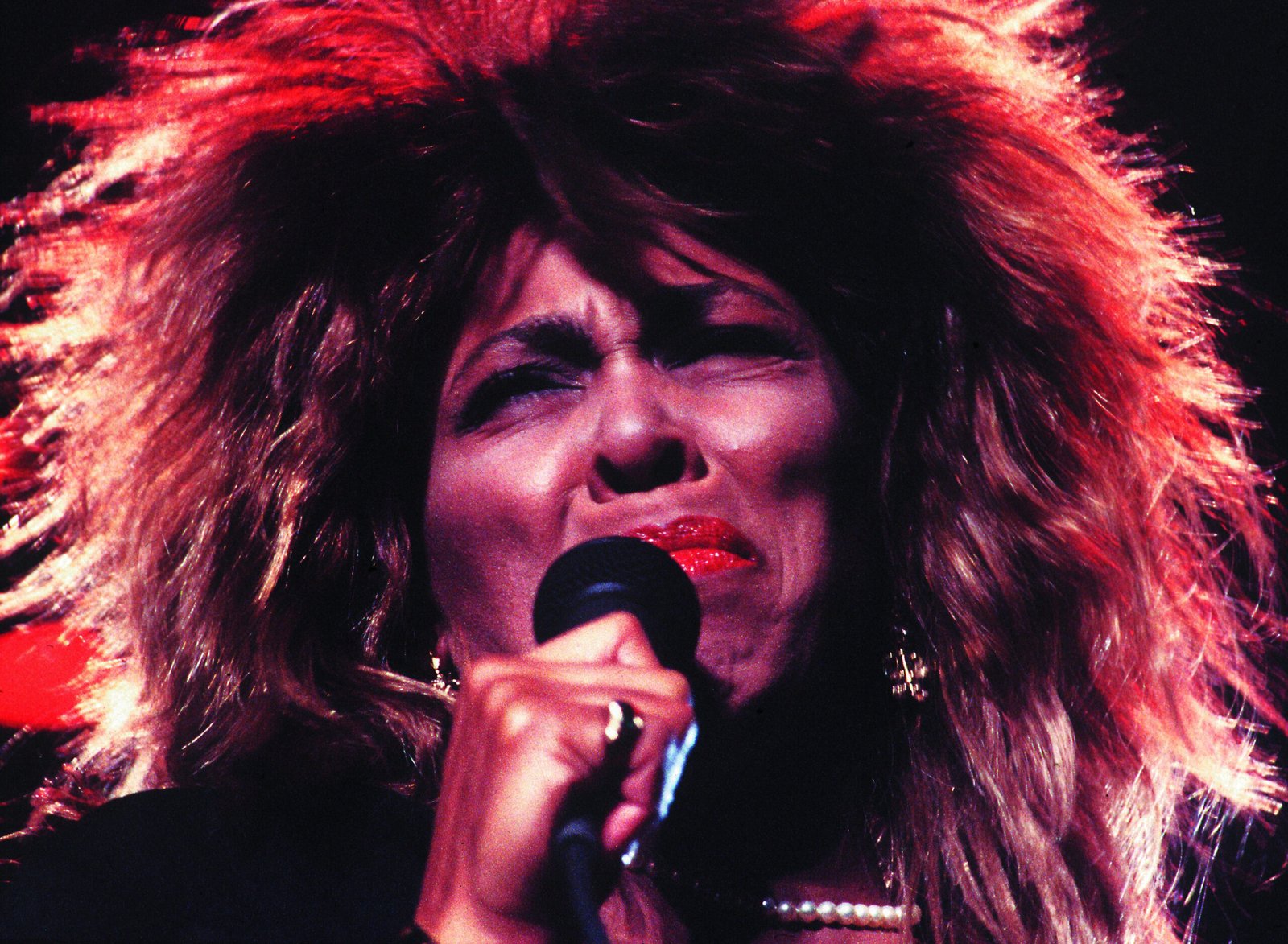
In the summer of 1985, barely a year after Private Dancer had completed the most celebrated comeback in pop history, Tina Turner did something no one expected from a singer in her mid-forties: she went to Australia and played the villain. In Mad Max Beyond Thunderdome, the third of George Miller’s post-apocalyptic road films, Turner starred opposite Mel Gibson as Aunty Entity, the chain-mailed ruler of a desert trading town. And over the film’s closing credits rolled a song she had recorded for the soundtrack — We Don’t Need Another Hero — a sweeping power ballad that climbed to number one in country after country and became one of the biggest singles of her entire career.
The record had a pedigree. It was written by Terry Britten and Graham Lyle, the British songwriting team behind What’s Love Got to Do with It, and produced by Britten himself. But its most distinctive sound belonged to none of the professionals involved. It belonged to a choir of schoolboys from Richmond, in south-west London — one of whom grew up to captain England at rugby.
The Queen of Bartertown
Beyond Thunderdome was an unlikely production from the start. Miller had lost his producing partner, Byron Kennedy, in a helicopter crash in 1983, and he co-directed the film with George Ogilvie while still grieving; the finished picture is dedicated to Kennedy’s memory. It was, at the time, the most expensive Australian film ever made. What it needed at its centre was a presence powerful enough to face down Gibson’s Max — and the filmmakers found it in a singer.
Turner had acted before, memorably as the Acid Queen in Ken Russell’s Tommy a decade earlier, but Aunty Entity was a full co-starring role, and she seized its possibilities. Entity is no victim and no sidekick. She is the founder of Bartertown, a woman who built a working town out of a wasteland, runs it by her own ruthless rules, and intends to keep it. Turner played her with regal calm, in a gown of chain mail that turned the character into an icon before the film was even released. Bartertown itself was a creation worthy of its ruler: a frontier market town powered by methane refined from pig waste in a cavern called the Underworld, where disputes were settled by combat inside the Thunderdome — a steel cage arena governed by the film’s most quoted rule, that two men enter and one man leaves. Roger Ebert singled the Thunderdome out as one of the great creative action ideas in the movies. At the centre of this brutal little civilisation stood Turner, serene and unbending, the one character who never has to raise her voice to prove her power. There was a resonance audiences could feel even if they never named it: this was a story about a survivor who had constructed an empire from nothing, performed by the most famous survivor in show business.
Turner recorded two songs for the film. One of the Living, a hard-rocking number played over the opening titles, announced her arrival in the picture. We Don’t Need Another Hero was held for the end — and it was the one that escaped the film and conquered the charts.
Written for the Children of the Wasteland
Britten and Lyle understood exactly what the film was about. Beneath the car chases, Beyond Thunderdome is a story about children: the tribe of lost youngsters in the desert who spend the film waiting for a hero — a mythical pilot named Captain Walker — to fly them to safety. The songwriters built the film’s theme around those voices. The lyric is a plea from the powerless to the powerful, a rejection of the strongman saviour: out of the ruins and the wreckage, the singer asks for something better than another hero to worship and die for. “All the children say” is the song’s pivotal line, and Britten made sure listeners heard actual children saying it.
That decision shaped the whole recording. Where What’s Love Got to Do with It had been sleek, minimal and cool, the Thunderdome song was built like a cathedral: a slow, stately power ballad, all massed voices and gathering grandeur, designed to swell over the end of a film about the end of the world.
A School Choir from Richmond
The recording was made in December 1984 at Mayfair Studios in London, with Britten producing. For the children’s chorus, the production turned not to session singers but to a real school choir — the boys of King’s House School in Richmond. Their young, untrained voices gave the record its emotional core: Turner, the most battle-tested singer alive, answered phrase by phrase by children asking the adults of the world to do better.
One member of that choir has since become famous in an entirely different arena. Lawrence Dallaglio sang on the record as a schoolboy; he grew up to become a star of English rugby, captain of the national team and a World Cup winner, and he has recalled the session in interviews ever since. It remains one of pop’s happiest footnotes — a future England rugby captain making his recording debut, uncredited, behind Tina Turner.
Nor were the boys mere decoration. Britten placed their voices at the song’s emotional summit, so that the record’s argument is completed not by its star but by the children she has been singing on behalf of — a blockbuster film theme that hands its final word to a school choir.
The children returned for the music video, which put Turner back in Aunty Entity’s chain-mail gown on a platform above them, with her touring saxophonist Tim Cappello alongside. The clip earned an MTV Video Music Award nomination for Best Female Video.
Blocked by Another Movie Song
Capitol released the single on July 8, 1985, two days before the film opened. The full version ran just over six minutes; an edited cut served as the seven-inch single, and in Britain the record was even issued as a shaped picture disc. It became one of Turner’s biggest worldwide hits. In the United States it peaked at number two on the Billboard Hot 100 in September 1985 — kept from the summit, with a certain symmetry, by another film song, John Parr’s St. Elmo’s Fire (Man in Motion). It reached number three in Britain and topped the charts in Australia, Canada, Spain, Switzerland, Poland and West Germany. At home it crossed formats as well, reaching number three on both the R&B and adult contemporary charts, and it sold in quantity — certified gold in Canada and Germany and silver in Britain.
The industry honours followed the same pattern of near-triumph. The song was nominated for a Golden Globe for Best Original Song and for a Grammy Award for Best Female Pop Vocal Performance. In 1986 it won two Ivor Novello Awards, British songwriting’s highest honour, for Best Contemporary Song and Best Film Theme or Song. Turner did take a Grammy home from the Thunderdome project in the end — for the film’s other song. One of the Living won Best Female Rock Vocal Performance at the 28th Grammy Awards.
The Anthem That Outgrew the Film
The film has settled into its place as the gentlest of the original Mad Max trilogy, but the song long ago slipped its moorings. Capitol’s soundtrack album carried an instrumental version of the theme alongside Maurice Jarre’s orchestral score, yet it was Turner’s vocal recording that radio wanted, and it is her version that has endured. We Don’t Need Another Hero became a permanent fixture of Turner’s stadium shows, its children’s refrain turning arena crowds into choirs. It has been covered across the decades — by Seal and Jencarlos Canela in the 2016 television special The Passion, and by the Swedish rock band Ghost on their 2023 covers EP Phantomime — and its title has passed into the language as shorthand for a weary world’s suspicion of saviours.
There is a final irony in that. The song argues, as plainly as a pop record can, that we do not need another hero. It took Tina Turner — a woman who had rescued herself, with no hero coming — to sing it, backed by a choir of schoolboys, over the ashes of a fictional world. She was not asking anyone to save her. She never had.
Leave a Reply